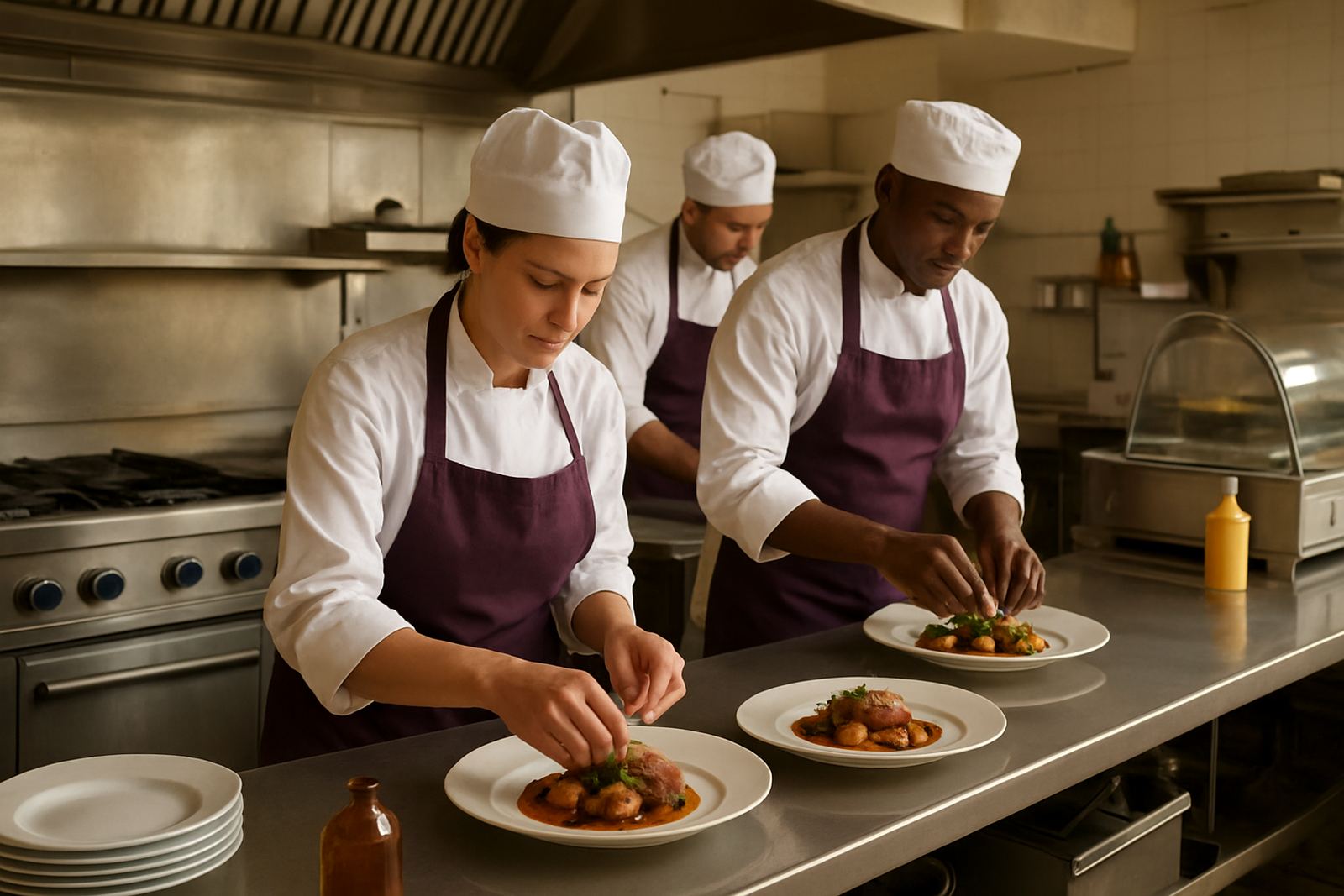
What a spaza kitchen really needs day to day
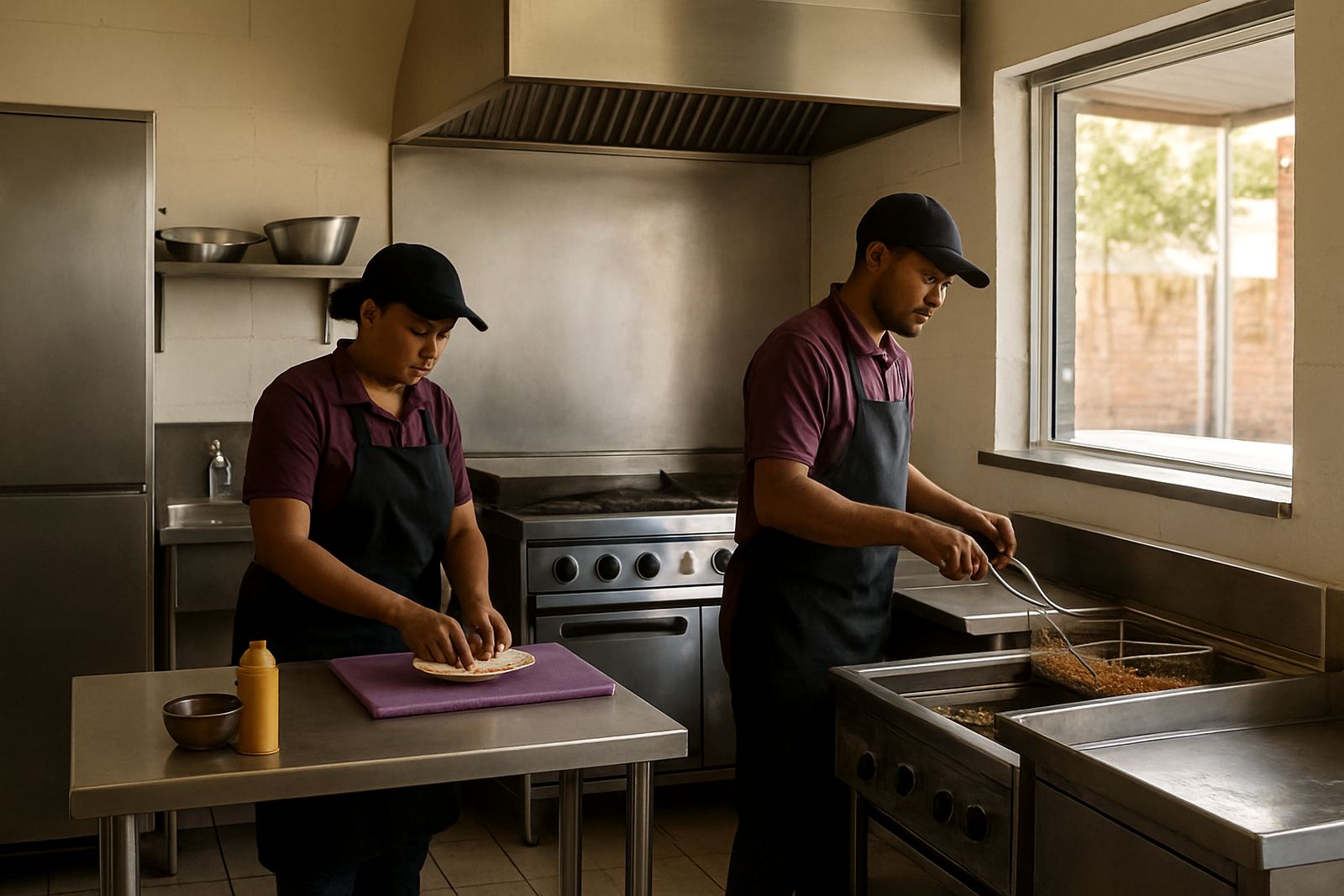
A spaza kitchen is usually working in a small footprint with limited power, a shared service counter and a steady flow of quick meals, vetkoek, chips, breakfast plates or takeaway lunches. The main challenge is not making the space look busy, it is making sure every movement has a purpose. You need to prep, cook, hold, serve and wash up without staff crossing each other every few minutes.
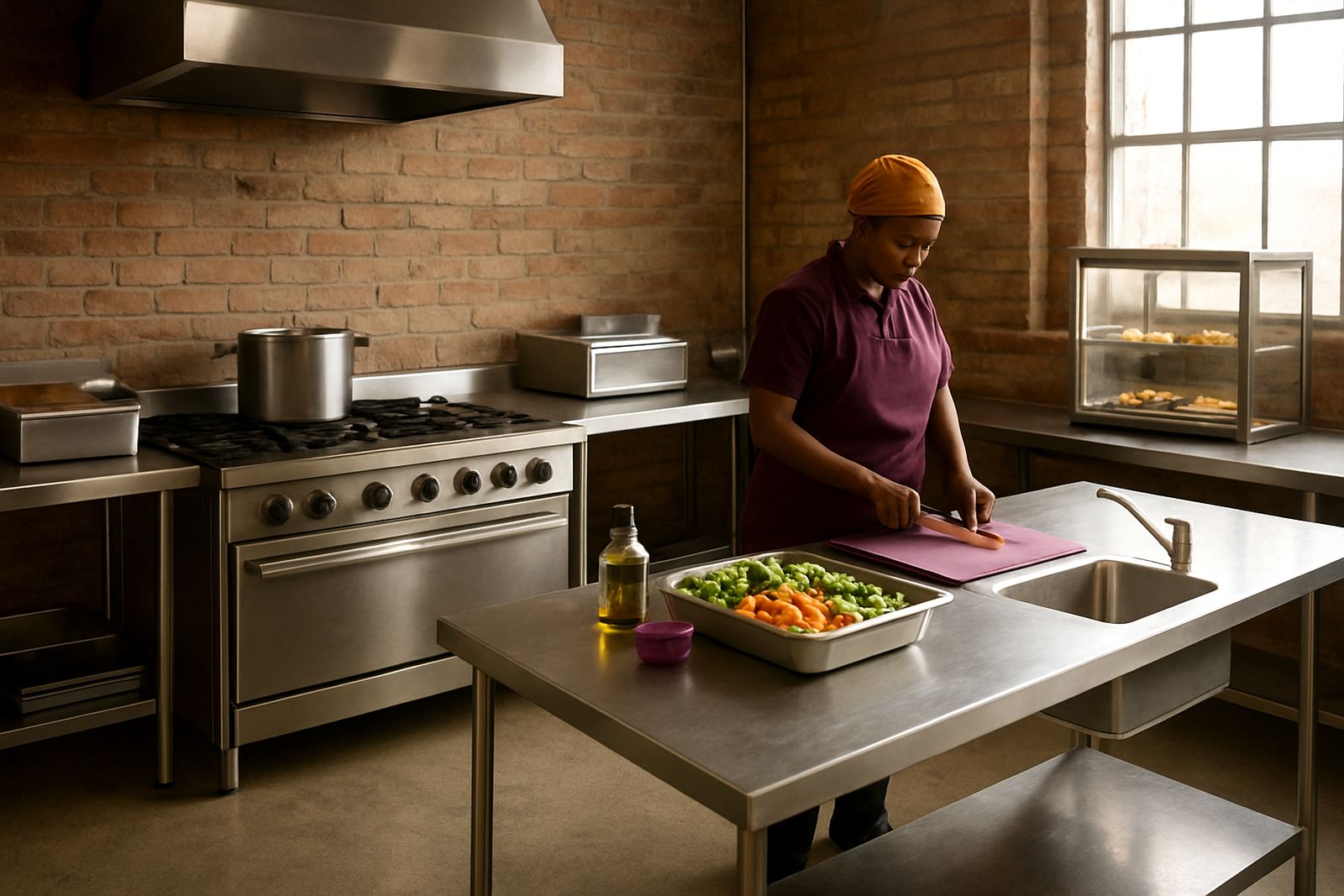
For most operators, the starting point is a stainless prep table, a compact gas range, a bain-marie for hot holding, a handwash or prep sink, and a small display unit at the front. If the business is in a township edge, a forecourt, or next to a school, the setup also needs to cope with load-shedding and hot weather. Stainless steel is a good fit because it cleans quickly and stands up well to constant use and coastal humidity if you are sending stock through Durban, the North Coast or other damp areas.
Typical equipment set for a tight footprint
The equipment list changes with the menu, but a practical spaza kitchen usually runs on a simple core. You do not need oversized units that eat floor space. A better approach is to choose the smallest workable size for each station and keep the flow straight from raw prep to cooking to service.
- Compact stainless prep table for chopping, packing and plating
- Two or four burner gas range for boiling, frying and quick reheats
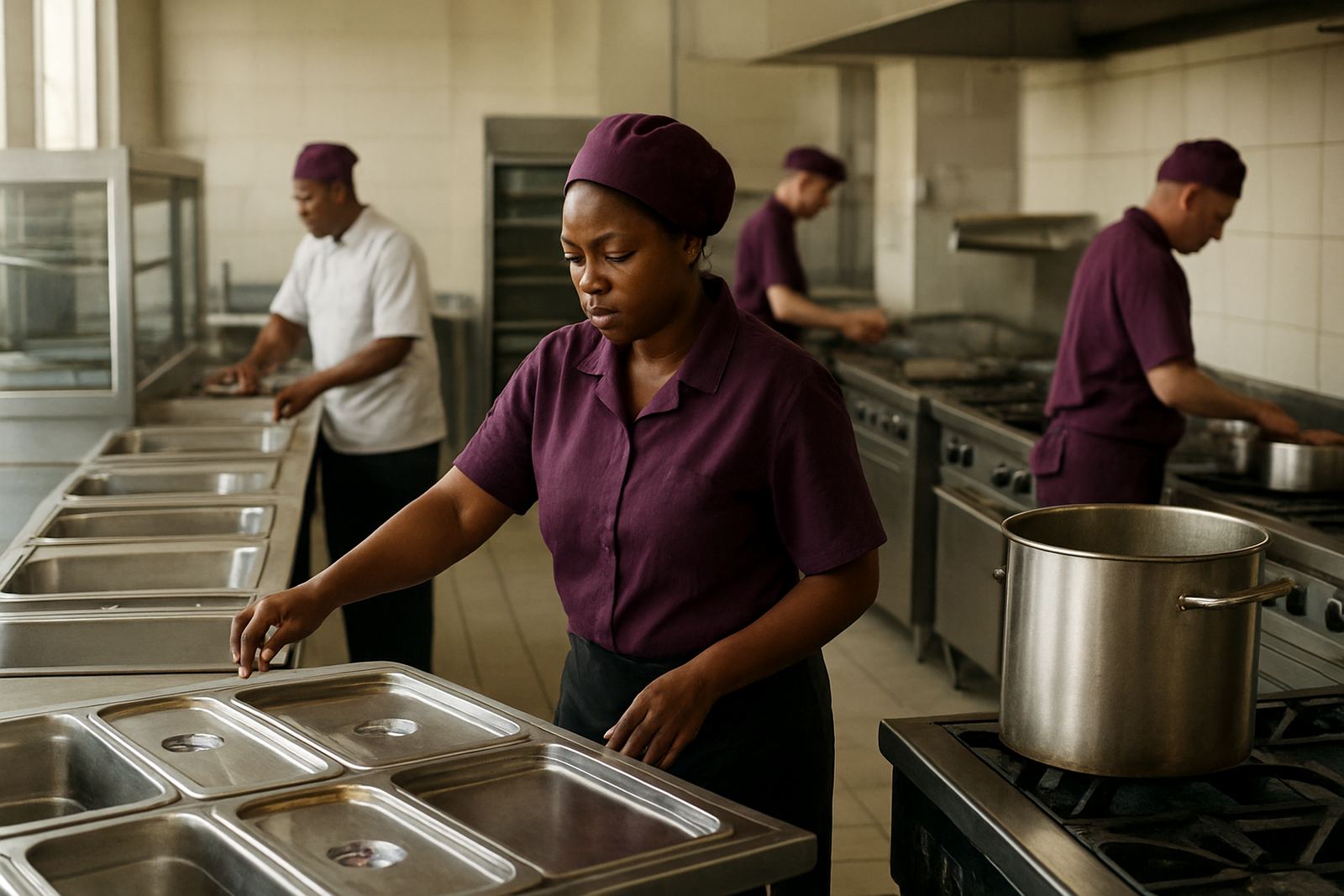
- Bain-marie for pap, curry, stew, sausages or cooked sides
- Under-counter storage or a small shelving run for dry stock
- Handwash or wash-up sink with splash control where possible
- Mobile trolley for gas bottles, crates or plated orders
- Display unit base for sandwiches, drinks or snack items at the front counter
If the business serves hot food from morning to evening, a second prep surface is often more useful than another large appliance. It gives staff room to portion, season and box meals without crowding the cooking line.
How to plan the layout so staff do not waste steps
In a spaza kitchen, layout planning matters as much as the equipment itself. The ideal flow is one way: receiving, dry storage, wash, prep, cook, hold and serve. If the sink is too far from the prep table or the gas range blocks the serving hatch, the team will end up turning around all day and the room will feel smaller than it is.
We normally suggest site measuring before fabrication so the tables, canopies and counters fit around pillars, drains, door swings and uneven walls. Leave enough clearance for gas lines, cleaning and safe movement behind the line. If the floor drains poorly, raise equipment legs and avoid placing low shelving where water can sit after mopping. In many small kitchens a 600 mm deep table works better than a deep unit because it keeps the passage open.
For takeaway counters in Benoni, Boksburg or Germiston, it helps to keep the hot hold area close to the payment point. That shortens service time and reduces the chance of food going cold while staff look for packaging or change.
Common mistakes that cost small food businesses money
The most common mistake is buying equipment for a bigger kitchen than the one you actually have. A large range or oversized display can look useful on paper, but in a narrow room it becomes a blockage. Another problem is mixing weak materials with heavy use. Painted mild steel, chipboard shelves and thin-top tables tend to fail early when they are used for wet prep and daily cleaning.
- Leaving no space for gas bottles, crates or cleaning buckets
- Skipping extractor planning and ending up with smoke and grease build-up
- Putting the bain-marie too far from the serving counter
- Choosing fixed shelving where a mobile trolley would work better
- Buying second-hand units that need repairs before day one
- Ignoring municipal requirements for fire safety, ventilation and waste handling
Another costly error is not thinking about power cuts. If the menu depends entirely on electricity, service stops when the area goes dark. Many small kitchens run better when the core cooking line uses gas and the display or holding section is designed around that reality.
Budget ranges for a starter spaza kitchen
Budget depends on size, finish level and whether you need standard units or custom fabrication. For a basic starter setup in Rand, a compact prep table, a small gas range, a sink and a simple shelving run can start in the lower tens of thousands. A more complete setup with a bain-marie, display base, extractor canopy and counter changes will sit higher, often into the middle tens of thousands.
If the space needs custom stainless recladding, special widths, site measuring and a made-to-fit servery counter, the total moves up again. That is normal. It is usually better to spend once on the right fit than to keep adjusting cheap units later. For operators in Benoni and surrounding East Rand areas, we often plan the purchase in stages so the business can open first and add more pieces once sales settle.
As a rough working guide, expect small starter budgets from about R18,000 to R35,000, mid-range layouts from about R35,000 to R75,000, and more fitted-out spaza kitchens above that depending on the room and menu.
Local supply, installation and support for East Rand operators
CaterKraft is based in Benoni and works with spaza kitchens, takeaways and small food businesses across the East Rand and nationally. We handle custom prep tables, sinks, servery counters, extractor canopies, shelving and racking, counter modifications, stainless recladding, mobile trolleys, display unit bases and site measuring. That matters when the room is awkward, because a small error in size can slow the whole operation down.
Our team includes Lerato Khumalo, Ayesha Naidoo, Pieter van der Merwe, Sibusiso Dlamini and Megan Jacobs, so there is support from first enquiry through to fabrication and after-sales help. If you are opening in Brakpan, Springs, Kempton Park or Germiston, we can discuss the workflow, the cooking method and the available floor space before you commit to equipment. A spaza kitchen does not need fancy extras. It needs the right sizes, proper materials and a layout that keeps the service moving, even on a busy Friday evening.