Common prep table sizes used in kitchens
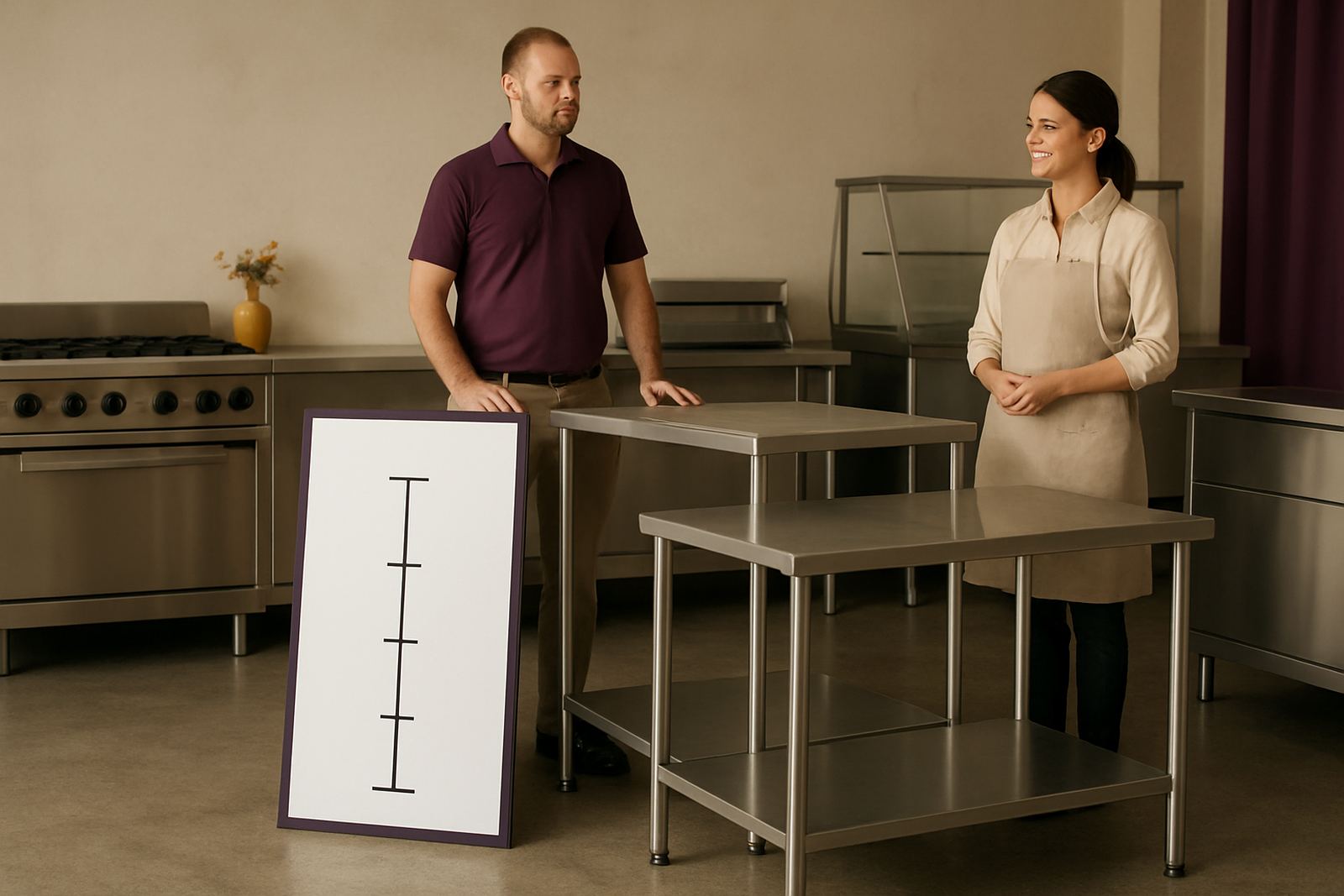
For most food prep areas, stainless tables are built in widths that fit standard room layouts and fit through doorways without trouble. The common lengths are 900 mm, 1200 mm, 1500 mm and 1800 mm. Depth is usually 600 mm or 750 mm, while 900 mm depth is better where staff need more working room or where small appliances sit on the surface.
Height is usually around 850 mm to 900 mm to suit standing work. In practice, the right height depends on the team using it and whether the table is going next to a sink, fridge or hot line. For tight Benoni and Boksburg takeaway kitchens, a 1200 mm by 600 mm table is often the easiest starting point. For larger prep rooms in Germiston or Kempton Park, 1800 mm by 750 mm gives more workable space and less crowding.
- 900 mm wide tables suit pack stations and garnish work.
- 1200 mm and 1500 mm sizes suit general prep, slicing and portioning.
- 1800 mm tables work well for batch prep and tray movement.
- Depth should match the aisle space left for staff movement and cleaning.
How to choose the right stainless steel grade
Material choice matters because prep tables take constant washing, knife contact and heavy pots. Most food tables are made from stainless steel with a brushed finish, usually with a top surface that resists staining and cleans quickly. In coastal or high-humidity areas, the finish and weld quality matter just as much as the sheet thickness because poor joins can start to mark early.
A good table should have neat folds, smooth welded corners and no sharp edges on the underside. If the unit is going into a takeaway with regular spillages, ask for an easier-clean top with closed edges where possible. If you use salt, acids or wet ingredients often, check that the table base and shelf parts are also stainless and not mixed with mild steel pieces that can rust. That mistake is common, and it costs more later.
- Brushed stainless shows fewer marks than a polished finish.
- Thicker tops feel steadier when kneading, chopping or weighing ingredients.
- Fully welded corners are easier to keep clean than open seams.
- Ask what parts are stainless and what parts, if any are powder coated or galvanised.
Shelf layouts and under-shelf options
Under-shelves help keep trays, containers and ingredient crates off the floor. The simplest option is a single lower shelf fitted about 150 mm to 250 mm from the floor. That leaves space for cleaning and helps with compliance in food areas. A second shelf can be added on larger tables where storage is tight, but staff still need clear access for mop work and movement.
Some kitchens prefer a solid lower shelf for boxes and dry stock, while others choose a slatted shelf so crumbs and moisture do not collect. For mobile work, a shelf also adds stiffness to the frame and reduces wobble. If the table is going into a servery or front counter area, consider whether the shelf will be visible to customers and how it affects the look of the unit.
- Single shelf: best for general storage and easier floor cleaning.
- Double shelf: useful where space is limited and stock must stay close.
- Slatted shelf: good for drainage and quick drying.
- Solid shelf: better for small tubs, cartons and sealed containers.
Legs, feet and mobility for real site conditions
The table base should suit the floor and the amount of movement in the kitchen. Adjustable feet are useful on older tiled floors in Benoni or Brakpan where the floor may not be level. If the table is being moved around for functions, prep resets or cleaning, lockable castors can save time. Just make sure the wheels are suited to food areas and can handle the weight once the table is loaded.
For permanent installation, level feet are usually better because they stop movement during chopping and mixing. In a takeaway that runs through load-shedding, many owners place prep tables near backup power points and battery lights, so the unit should not rock when people work one handed. A steady base matters more than people think.
- Adjustable feet help with uneven floors and drainage falls.
- Lockable castors suit mobile kitchens and event work.
- Choose a frame that does not twist when one corner is loaded.
- Check clearance for skirting, drains and cleaning hoses before ordering.
What to check before you order a prep table
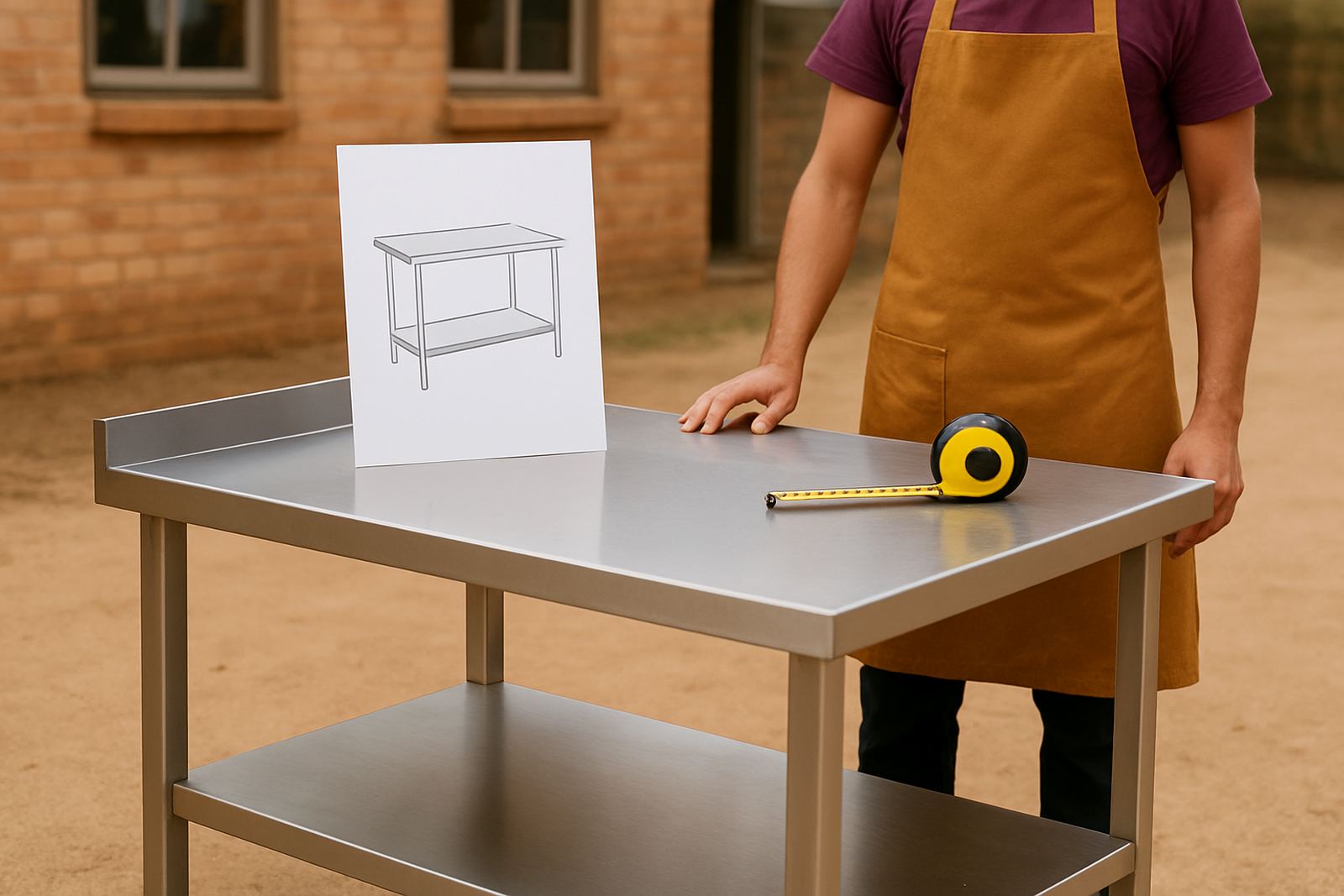
Before placing an order, measure the site properly and confirm how the table will be used. A prep table for dough work is not the same as a table for plating or packing. If staff will use slicers, scales or warm containers on the surface, the top must cope with the weight and the heat. If there is a wall behind the table, allow enough gap for cleaning and for plugs, splashbacks or services.
It also helps to think about delivery access. A table that fits the room may still be difficult to move through a narrow passage, stairwell or roller shutter. At CaterKraft we advise clients from Benoni, Boksburg, Springs, Kempton Park and Germiston to send photos and site measurements first, then we confirm practical sizing before fabrication starts.
- Measure wall length, doorway width and passage turns.
- Check the working height against nearby counters and sinks.
- Confirm whether the table will hold equipment or only food prep.
- Ask about drainage, splash zones and cleaning access around the unit.
Simple maintenance checks for longer service life
Stainless tables are easy to keep in good order if staff clean them properly and do not leave salty or acidic residue sitting on the surface. Wipe down after each shift with a suitable food-safe cleaner, then dry the top. Standing water can leave marks over time. If a table gets dented or the feet loosen, sort it early before the frame starts pulling out of line.
A weekly check should include the shelf fixings, leg stability and any weld points that take heavier load. If the table lives near a fryer or bain-marie, wipe off grease sooner rather than later because build-up can be hard to remove once it bakes on. A well-made prep table should give years of service, but only if the basics are followed.
- Clean, rinse and dry every day.
- Do not use harsh scouring pads on brushed stainless.
- Check feet and shelf brackets once a week.
- Keep knives, hot pans and chemicals from being dropped or stored carelessly on the top.