1. Start With Tank Capacity And Real Batch Size
Tank capacity tells you how much oil the unit holds, usually shown in litres. Bigger is not always better. A 15 litre tank may suit a small takeaway, while a double tank unit gives you more flexibility when one product needs its own oil and another needs a cleaner finish.
Do not judge capacity by litres alone. Ask how much food can go in per batch without dropping the oil temperature too fast. In a busy Benoni or Boksburg kitchen that matters more than the number on paper, because slow recovery means soggy chips and longer queue times.
- Check litres per tank, not only total machine size.
- Confirm the batch weight it can handle at one time.
- Ask how quickly the oil comes back to temperature after loading.
- Match the size to your peak trading hour, not quiet periods.
2. Basket Setup Affects Output And Speed
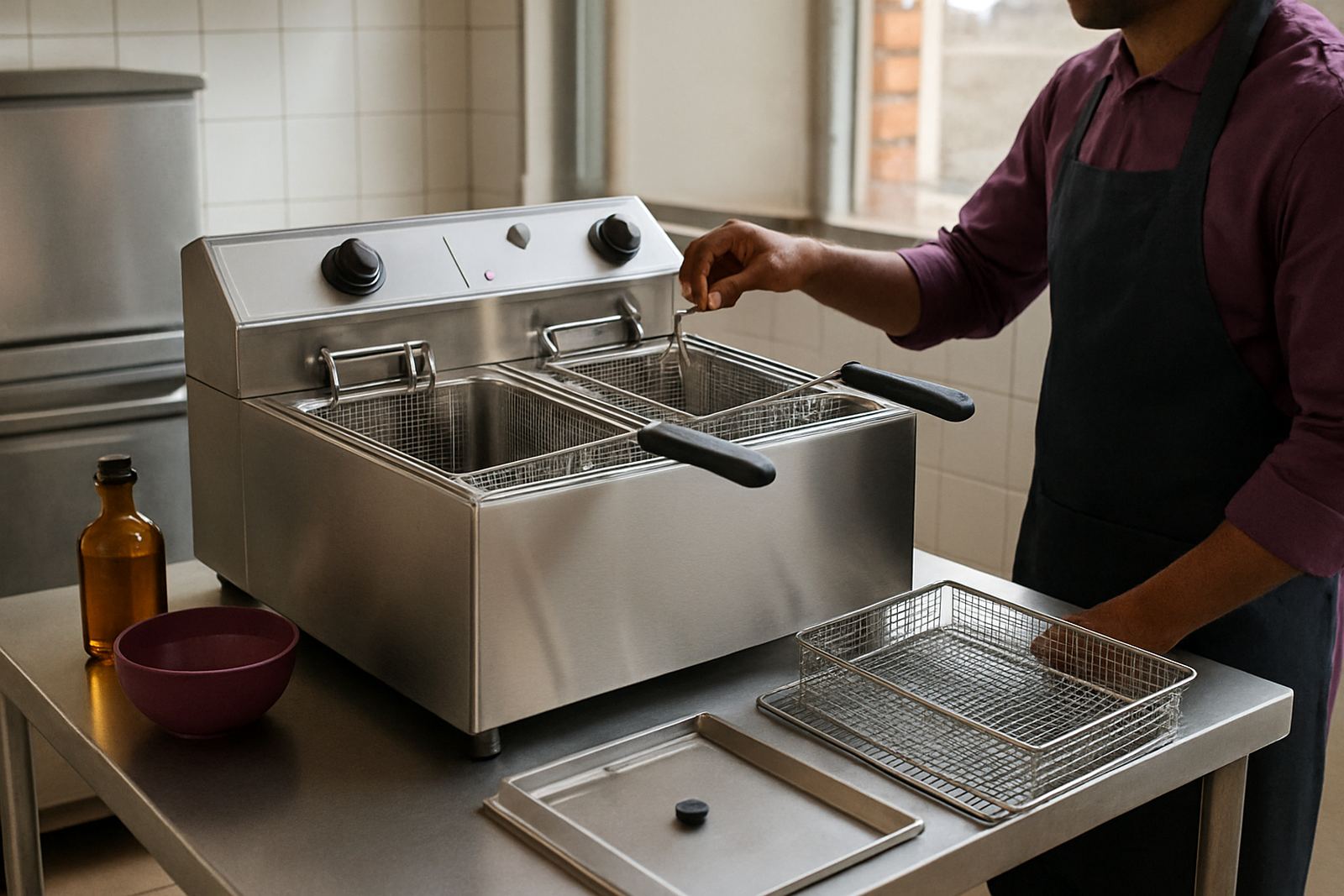
The basket setup tells you how many portions you can fry at once and how easy it is to lift, drain and reload. A single basket unit is simple and space saving, while twin baskets help you run two products or two batches with less waiting. For takeaways serving chips and snacks together, that extra separation can keep flavours cleaner.
Look at basket handle length, basket depth and whether the baskets sit neatly above the tank for draining. If the handle is too short, staff end up leaning too close to heat and oil. If the basket is too small, they will overfill it and the fryer will never work at its best.
- Confirm single or twin basket layout.
- Check basket depth against the portions you serve.
- Ask whether baskets can drain securely above the tank.
- Make sure the handles are comfortable for repeated use.
3. Line Spacing Helps With Safer, Cleaner Operation
Line spacing is the gap between basket positions, tank edges and any side panels around the fryer. Good spacing makes it easier to work fast without knocking handles, splashing oil or crowding the cooking area. It also helps during cleaning, since tight gaps trap crumbs and oil more easily.
When you plan a fryer line, leave room for pans, trays and the person working the station. In smaller kitchens, 100 mm to 150 mm of extra working gap can make the difference between a cramped setup and one that stays practical through a full lunch rush. That little bit of space saves a lot of hassle.
- Measure the full working area, not just the fryer footprint.
- Leave clearance for basket movement and draining.
- Allow space for nearby prep, plating and pickup points.
- Keep enough gap for safe cleaning and servicing.
4. Gas Or Electric: What The Site Can Support
Fryer specs should always match the power supply on site. Gas units are useful where load-shedding is a problem, and they suit kitchens that already run other gas equipment. Electric units can be easier for compact sites with stable supply, but they need proper cabling, correct breaker sizing and ventilation.
If you are fitting out a takeaway in Germiston or a new prep line in Springs, check what the site can actually support before you choose. Gas pressure, shut-off points, extraction and municipal safety requirements all need to line up. A good fryer is only good when the installation is right.
- Confirm gas pressure or electrical supply before ordering.
- Check if extraction and heat control are already in place.
- Ask where the isolation point will sit for maintenance.
- Make sure the site can handle peak trading loads.
5. Cleaning And Oil Management Should Be Part Of The Spec
A fryer that is hard to clean will slow the whole kitchen down. Look for smooth stainless surfaces, accessible corners and a drain point that allows safe oil removal. If the tank has awkward seams or poor access, cleaning takes longer and hygiene slips fast.
Oil management matters too. You need a routine for filtering, topping up and replacing oil before flavour gets dull. Coastal humidity and dusty air in some service areas can make grime build up quicker than expected, so the easier the cleaning steps are, the better the unit will hold up over time.
- Check if the tank drains safely and fully.
- Ask how the unit is cleaned at the end of a shift.
- Confirm that surfaces are smooth and easy to wipe down.
- Plan oil filtering and replacement into daily use.
6. Simple Buying Checklist Before You Place The Order
Before you buy, measure the space, write down your menu and compare the fryer spec to your busiest hour. A small fryer may save space, but if it cannot keep up with your output you will lose time every day. A larger unit may cost more upfront but it can be the better call for a busy kitchen.
Use this final check list with your supplier so nothing gets missed. It helps whether you are fitting out a new site in Kempton Park or adding extra cooking capacity to a growing operation in Brakpan.
- Tank capacity fits your batch size.
- Basket setup matches your menu.
- Line spacing works with the rest of the kitchen.
- Power or gas supply is confirmed.
- Cleaning and oil handling are practical for daily use.
- Installation space, ventilation and access are already measured.
Once those points are clear, the fryer spec becomes easier to judge and you avoid buying a unit that looks right but struggles under pressure.