Chest Vs Upright Freezers For Busy Kitchens
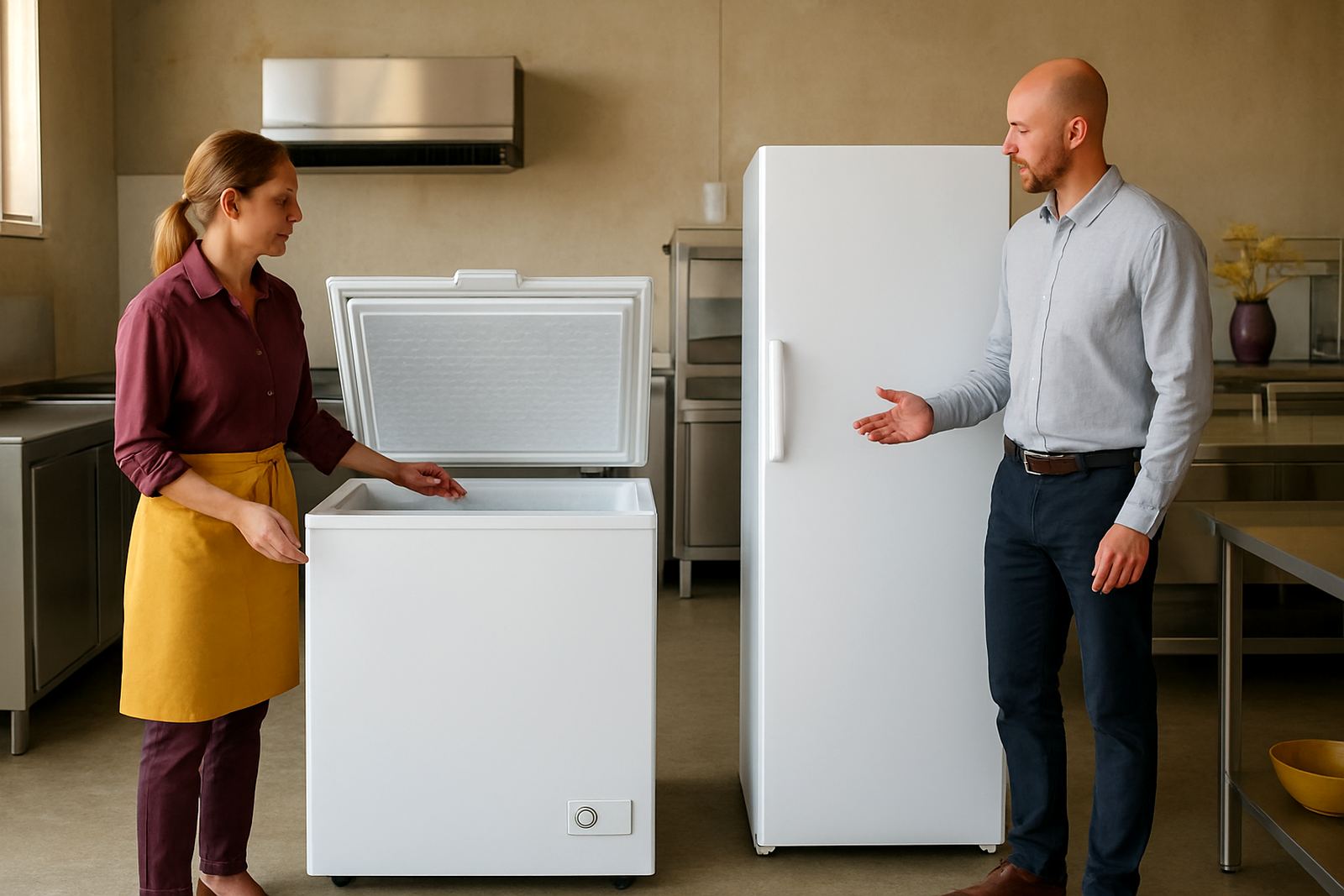
Chest freezers suit bulk storage. They hold frozen meat, pastry, chips and backup stock well because cold air stays inside when the lid opens. Upright freezers work better where staff need quick access and a clear view of items. In kitchens where power trips or doors open often chest and upright models behave differently, so the right choice depends on how the unit will be used day after day.
For takeaways in Benoni, Boksburg or Germiston, an upright unit can save floor space and speed up service. For prep rooms, butcher rooms and bulk holding, a chest unit is often the safer choice because it is less affected by repeated opening. Ask first how many trays, crates or cartons must fit inside, then match the freezer to the stock pattern.
Measure The Space Before You Buy
Freezers need more than the footprint shown on the spec sheet. Leave room for the door to open fully, for cleaning behind the unit and for air to move around the compressor. In hot rooms or kitchens with poor ventilation, a freezer works harder and can draw more power than expected.
- Measure the floor space in millimetres, then check the height under shelves or canopies.
- Leave at least 100 mm at the back and sides where possible for ventilation.
- Check the doorway, passage and ramp so the unit can be moved in without damage.
- Confirm the floor can take the loaded weight, especially on upper levels or tiled service areas.
If the unit sits near ovens, fryers or dishwash areas, the temperature around it will climb. That can shorten compressor life and cause ice build up. A cooler position with better air flow will usually save power over time.
Power Use, Load-Shedding And Daily Running
Most catering sites in South Africa plan around load-shedding, so freezer choice must work with backup power and operating habits. Upright freezers can lose cold faster when the door is opened often. Chest freezers hold temperature longer during outages, which makes them useful for stored stock that should stay frozen for hours.
Check the rated power draw and the start-up surge before you connect the unit to a generator or inverter. A freezer that runs well on municipal supply may still trip a small backup system if the compressor kicks in at the wrong time. Ask for the running load, the start-up load and the recommended circuit size so your electrician can plan properly.
- Keep the door seal clean and replace it if it no longer grips evenly.
- Defrost when ice build-up starts reducing internal space.
- Do not pack warm products straight into the freezer.
- Keep a written log for outages, cleaning and temperature checks.
Materials, Hygiene And Coastal Conditions
In food businesses the cabinet finish matters as much as the motor. Smooth surfaces are easier to wipe down and less likely to trap fat or dust. If the freezer sits in a kitchen near the coast, salt in the air can affect exposed metal parts and hinges over time. Durban and other humid areas need more attention to corrosion, condensation and seal condition.
Look for strong door hinges, easy-to-clean shelves or baskets and a base that can handle daily scrubbing. Stainless external trims can help where the unit is cleaned often, but the main point is that the finish must suit the working area. A freezer in a bakery back room does not face the same wear as one on a busy servery line.
Size, Capacity And Stock Rotation
Capacity is often shown in litres, but usable space depends on the layout inside. Shelves, baskets, evaporator covers and door mouldings all affect how much stock fits. A 400 litre upright may feel smaller than expected if you store cartons rather than loose packs.
Use a simple stock plan before ordering:
- List the main frozen items and their pack sizes.
- Count how many days of stock must be held.
- Separate fast-moving items from backup stock.
- Keep raw and ready-to-serve items in different sections where possible.
If the freezer is for a takeaway, try to match the layout to the menu. If it is for a kitchen or canteen, plan for batch cooking and supplier deliveries. That way the unit supports the workflow instead of slowing it down.
Final Buying Checklist For Catering Freezers
Before you place an order, walk through the site and make sure the freezer matches the room, the power supply and the daily stock pattern. A good spec sheet should answer the basic questions clearly, and if it does not ask for more detail before paying a deposit.
- Chest or upright, based on how often staff need access.
- Internal capacity, shelf layout and usable storage space.
- Power draw, start-up load and backup compatibility.
- Ventilation space, doorway access and floor strength.
- Cleaning needs, seal quality and resistance to humidity.
For businesses in Benoni and across the East Rand, the right freezer is the one that suits your stock, your staff and your power reality. It should fit the room properly, keep food safe and keep working through busy shifts and load-shedding alike.