1. Start With the Cooking Line, Not the Wall
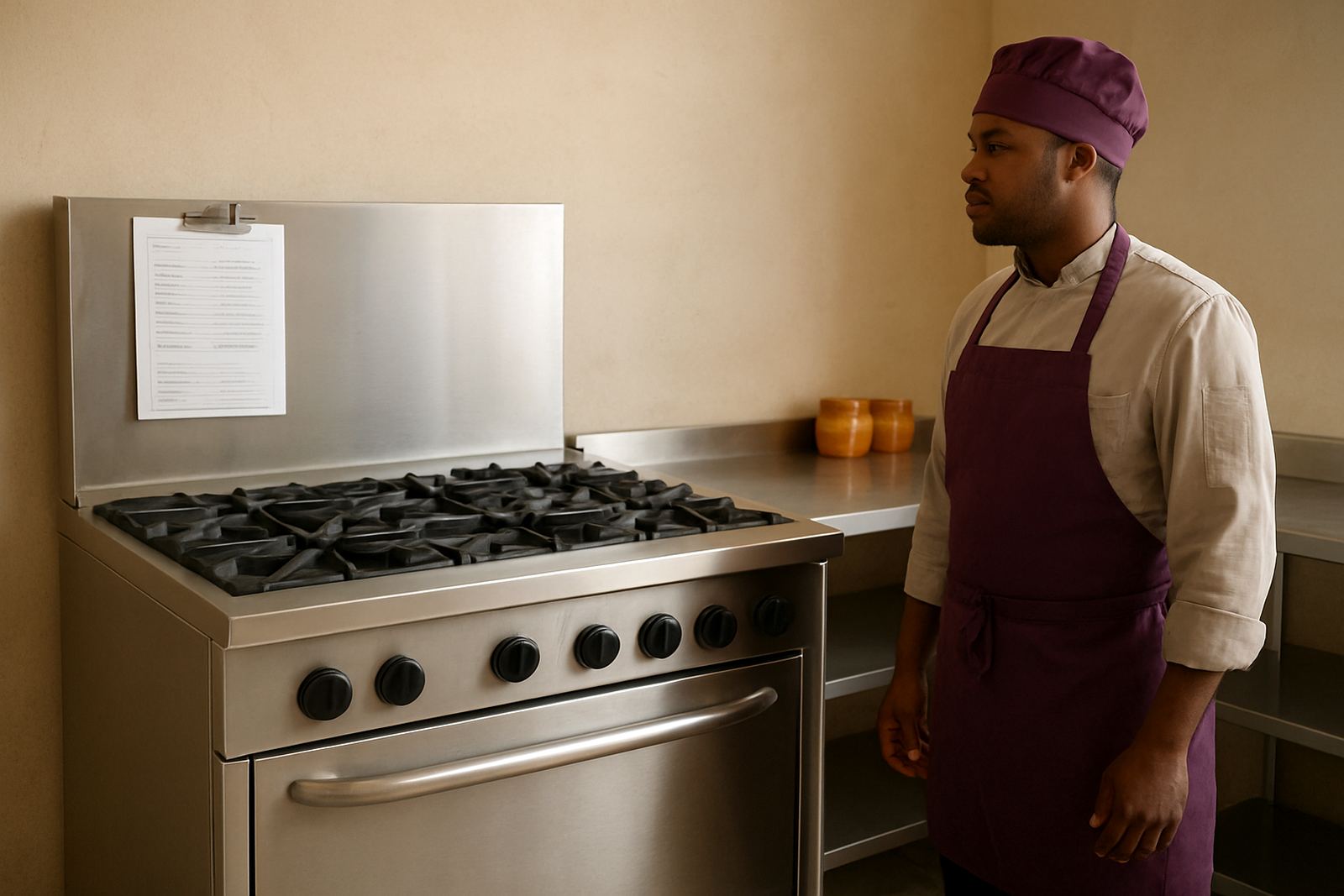
Measure the equipment first, then set the canopy around it. Gas ranges, fryers, chargrills, boerewors grills, griddles and bain-maries all give off different amounts of heat, steam and grease. The canopy should cover the full hot line with some allowance on both sides so fumes do not escape at the ends.
As a rule of thumb, allow the canopy to extend beyond the cooking line by at least 150 mm on each side. If the line sits against a corner, or the cook stands slightly off-centre, we often allow a bit more. In busy takeaway kitchens around Benoni and Boksburg, that extra margin helps during rush periods when pots and pans move around alot.
- Measure the full width of each appliance on the hot line
- Add the gap between units, if there is one
- Allow extra width at both ends of the canopy
- Check where gas hoses, power points and water lines sit
2. Confirm the Mounting Height and Head Clearance
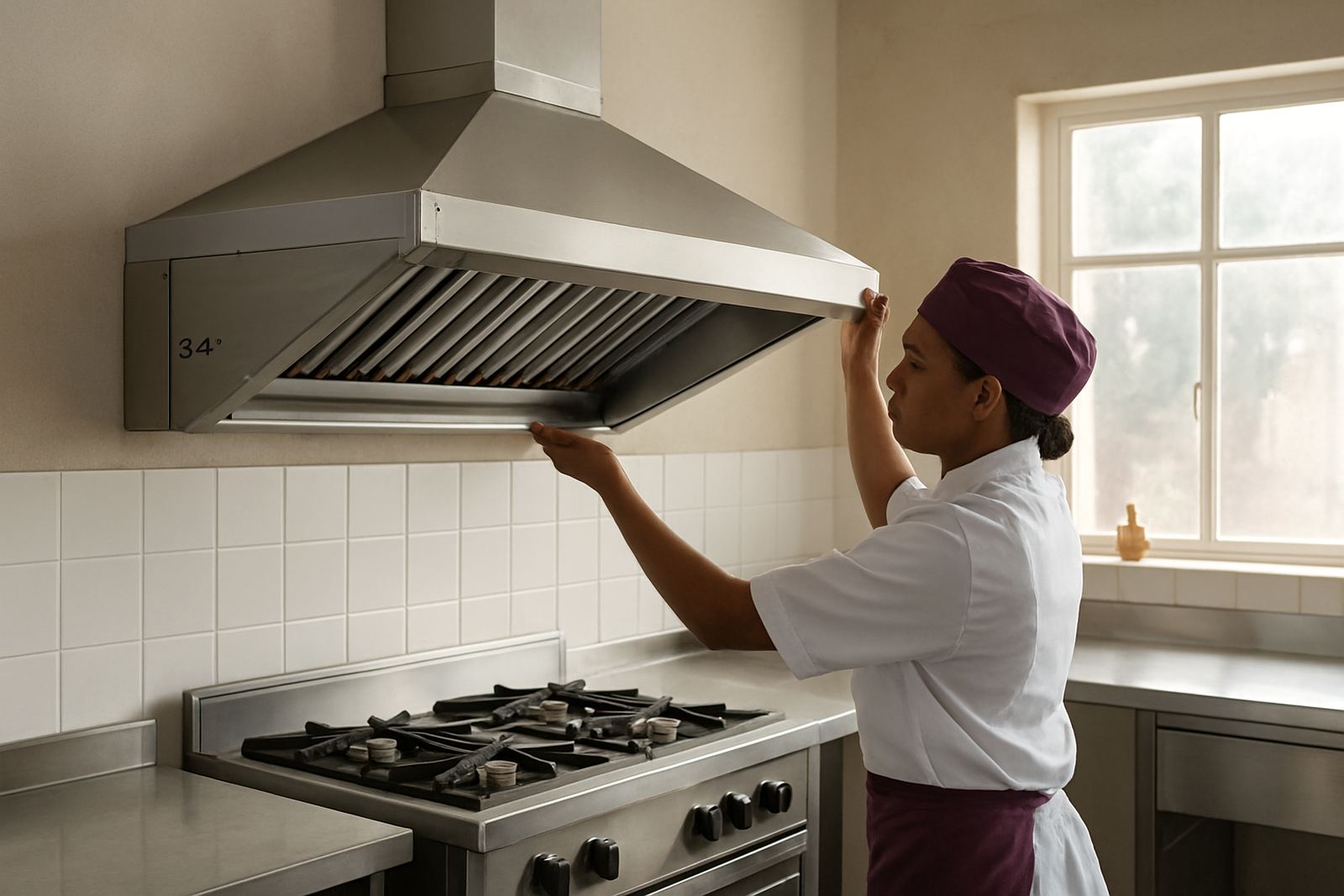
The mounting height affects both extraction and working comfort. Too low and the canopy gets in the way of pots, tall pans and staff movement. Too high and it loses capture at the front edge. In most commercial kitchens we work from the height of the tallest pot or pan on the line, then confirm safe clearance above the cooking surface.
Always check the ceiling height and any bulkheads, beams, lights or fire suppression pipes before finalising the size. In older buildings and township takeaway units, the ceiling can be uneven, so we measure at more than one point. If the roof dips or the slab changes level, the canopy may need a stepped suspension or a matching plenum to keep it level.
- Measure floor to ceiling at the front and back of the line
- Check clearance above the highest cooking vessel
- Note any beams, conduits, lights or sprinkler heads
- Confirm the mounting points can carry the weight
3. Allow for Capture Depth Over the Front Edge
Good canopy depth matters as much as width. The front edge should sit far enough over the hot line to catch vapour, smoke and grease before it rolls out into the room. On deep equipment like chargrills and solid top ranges, we normally plan a deeper projection than on a simple bain-marie line.
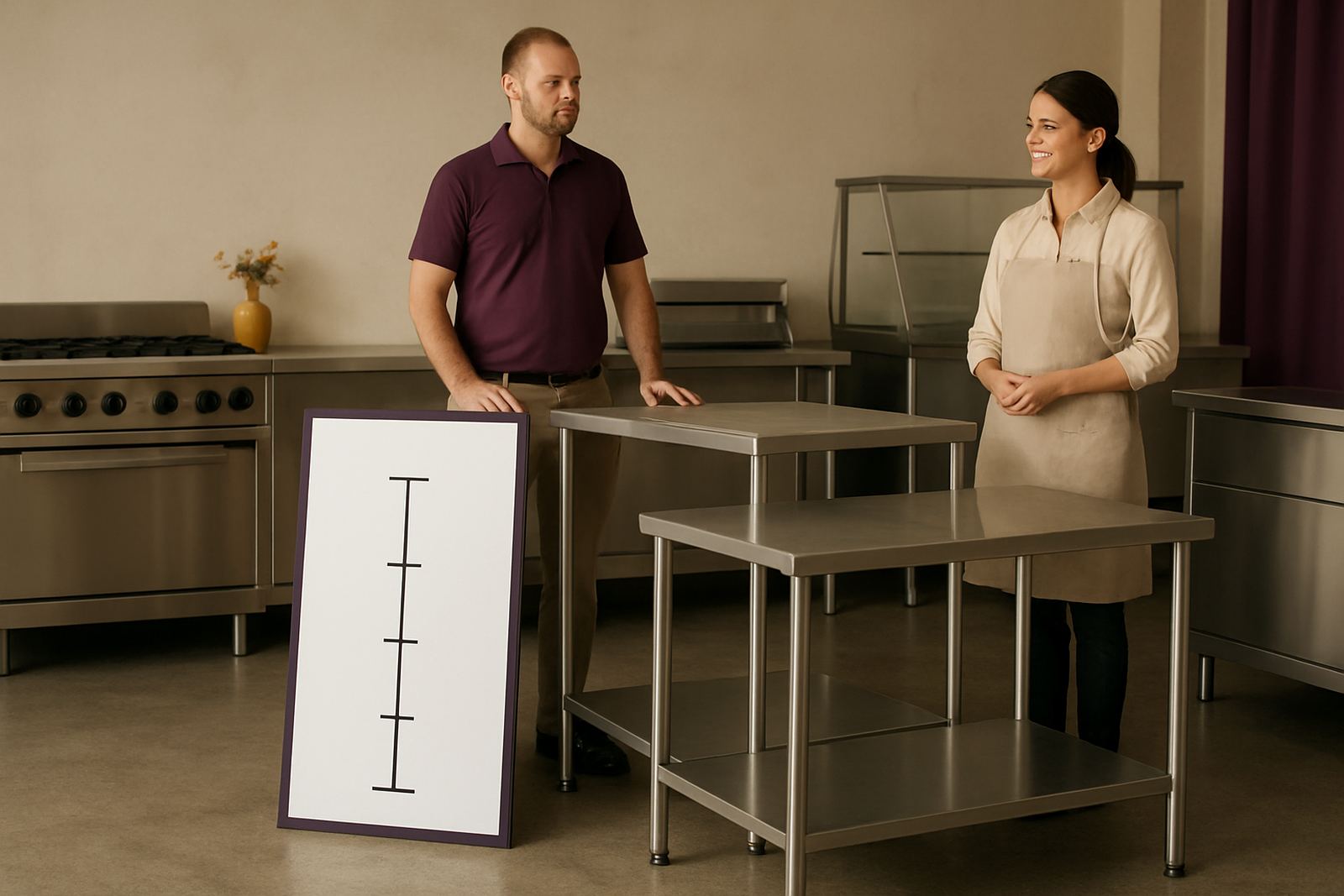
When measuring depth, include the depth of the equipment plus the overhang needed at the front and back. Where staff lean over the line to plate food, it helps to keep the canopy edge high enough not to interfere with movement, but low enough to catch the plume. The right balance depends on the cook line, the room size and the extractor fan layout.
- Measure the front-to-back depth of each appliance
- Mark the front working line where staff stand
- Confirm how far vapour travels before rising
- Check if the canopy needs side panels for open ends
4. Match the Canopy to the Exhaust and Make-Up Air Plan
A canopy only works properly when the exhaust and fresh air are planned together. If too much air is pulled out without enough replacement air, doors slam, smoke drifts and the kitchen becomes uncomfortable. This is common in small premises with limited wall openings or where load-shedding backup equipment changes the room pressure.
Before fabrication, note the exhaust duct route, fan position and where replacement air will come in. Keep the route as straight as possible, with enough access for cleaning grease build-up. If the kitchen uses gas appliances, make sure the ventilation plan suits the appliance output and the local safety requirements. A neat drawing helps here, even a rough one, as long as the sizes are accurate.
- Record the exhaust outlet position
- Measure available duct run and ceiling space
- Confirm fresh air entry points
- Note fire suppression or compliance requirements
5. Check Splash Zones, Filters and Grease Control
Hot line canopies must cope with grease, steam and cleaning water. The canopy face, baffle filter zone and drip edges need to be sized so maintenance is practical. If the unit sits over a heavy frying area or near a pass where food is plated, the front edge can collect grime fast. That is why we pay close attention to the opening size and the internal access points.
Ask where the filters will be removed from, and whether staff can reach them without climbing on a crate or moving equipment. Also consider stainless finish, welded joints and corners that are easy to wipe down. In coastal humidity or in kitchens that run all day, poor detailing starts showing rust marks sooner than expected.
- Plan filter access for daily cleaning
- Allow drip management at the front and sides
- Check for easy wipe-down surfaces
- Confirm whether the canopy needs extra grease control for fryers or grills
6. Final Measurement Checklist Before Fabrication
Before any canopy is made, we recommend a final site check. This avoids errors from wall irregularities, uneven floors and surprise obstructions behind tiles or cladding. It also confirms whether the canopy will suit a new kitchen fit-out, a counter modification, or a replacement above existing equipment.
Use the list below and send the details with photos if possible. It saves time on the first visit and helps us prepare the right canopy sizes for Benoni, Germiston, Springs and further afield. For busy operators, that means less downtime and fewer follow-up changes.
- Overall hot line width and depth
- Ceiling height and mounting points
- Distance from canopy to cooking surface
- Location of ducts, fans and electrical points
- Type of appliances under the canopy
- Any wall obstructions, tiles, beams or windows
If you are unsure about one measurement, measure it twice and take a photo. A small miss on site can change the final fit, so it is worth slowing down for the check.