Start With How Your Staff Actually Work
A freezer is not just a box for cold storage, it is part of the daily workflow. In a busy takeaway on the East Rand, staff need to grab chips, sauces, chicken portions or dough with one hand while keeping the other hand free for service, so access matters more than the spec sheet. If the freezer sits behind a prep line, the opening style can either speed things up or create a small bottleneck every lunch rush.
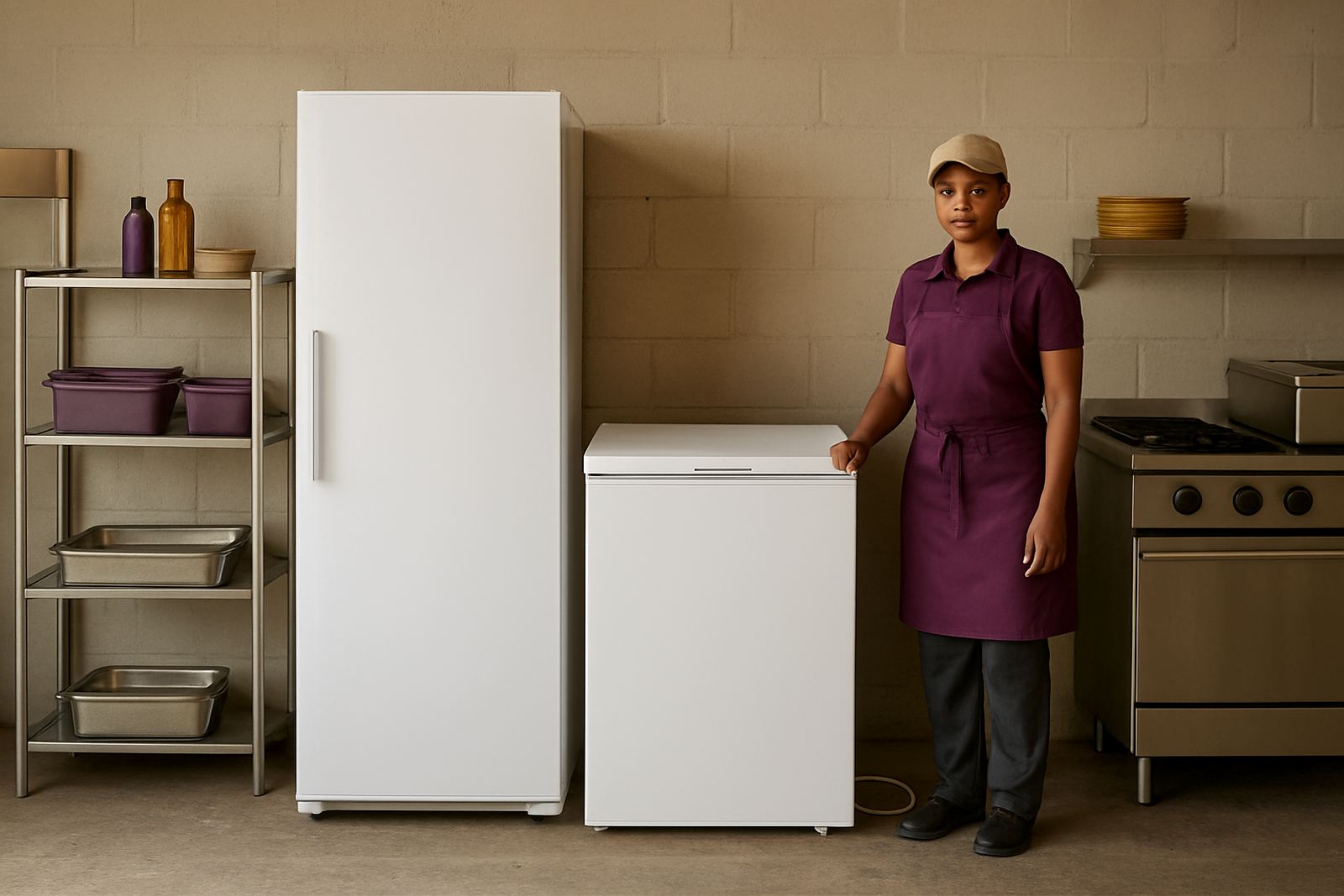
Upright freezers suit a setup where stock is organised by shelf and item type. Chest freezers suit bulk storage, slower turnover and items that do not need constant sorting. In a kitchen with mixed stock, the best answer is sometimes one of each, not a fight between the two.
Upright Freezers When You Need Fast Stock Checks
An upright freezer takes up less floor space in a narrow room and keeps stock at eye level. That helps when a team must check what is left without lifting baskets or digging through layers of product. In Benoni and Boksburg, where many food businesses run from compact prep spaces, that kind of access can make daily ordering easier.
- Better for labelled packs, portioned stock and regular rotation
- Easier to clean around the unit because the footprint is smaller
- Useful where frozen goods are part of a prep system, not bulk reserve storage
- Quicker to audit after load-shedding or a delivery
There is a trade-off, of course. Uprights usually lose some cold air every time the door opens, so they work best when the team opens them often but briefly. If the door stays open while staff search for stock, the unit has to work harder, and that shows up on the electricity bill. A well planned shelving layout avoids that problem.
Chest Freezers For Bulk Storage And Lower Heat Loss
A chest freezer is better when the business buys in volume. It holds larger packs, backup stock and items that do not need constant access. Because cold air stays lower in a chest unit when the lid opens, it generally handles frequent power interruptions a bit better than an upright, especially if the lid is opened only once or twice during a cut. That is handy in parts of Germiston or Springs where load-shedding can disrupt service at awkward times.
Chest units do need discipline. Without proper baskets and labels, stock gets buried, older packs stay at the bottom and wastage creeps in. The best operators use simple date labels and keep fast-moving items in top baskets. For a butcher, bakery or takeaway that holds reserve meat, pastry, or frozen vegetables, the chest format can be the safer storage option.
- Best for bulk packs and reserve stock
- Good cold retention when the lid is not opened repeatedly
- Needs organisation to avoid forgotten stock at the bottom
- Takes up more horizontal floor area, so measure carefully
Footprint, Door Swing And The Real Space You Have
People often compare freezer capacity before they compare the room itself. That is where mistakes start. An upright freezer needs clearance for the door swing, and if it sits too close to a prep table or a wall, staff end up side-stepping every time they open it. A chest freezer needs floor space and lid clearance, which can be awkward under low ceilings, shelving, or a service counter.
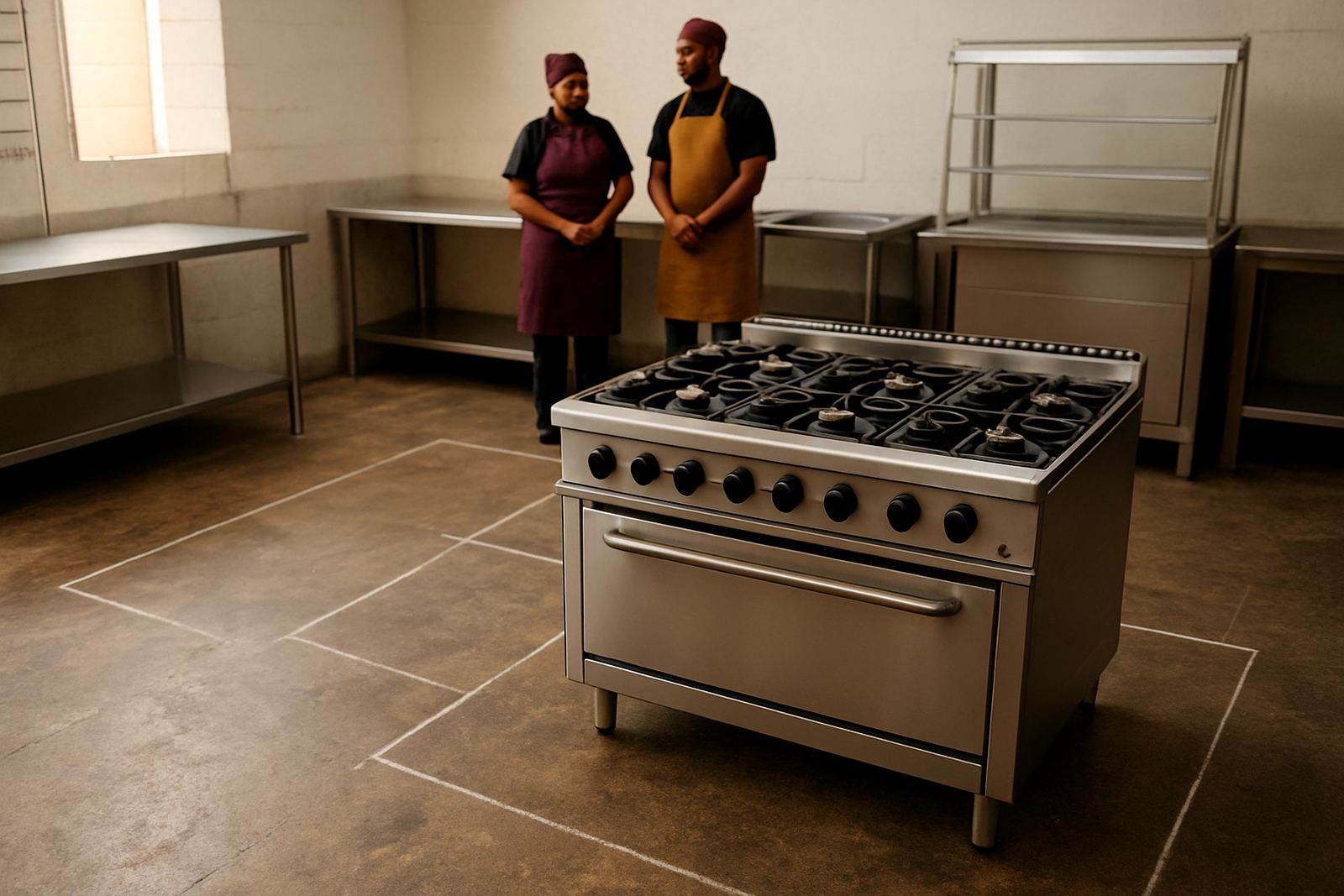
In a Benoni kitchen, site measuring helps avoid a unit arriving and then blocking a walkway or emergency exit. Municipal rules and basic food safety both expect clear movement around work areas, especially where staff are carrying hot trays or wet containers. If the freezer has to fit between a sink run and a prep line, the measurements should be taken with the door fully open, not just the cabinet width.
Also think about ventilation. Any freezer needs enough breathing room around the compressor area. Push it tight against a wall and it will work harder, run hotter at the back, and wear faster. That matters in summer when the kitchen already deals with heat from gas equipment and display units.
Stock Visibility And Rotation In A Busy Trade Kitchen
Visibility is where upright units usually win. If stock is arranged by shelf, the team can see what is there at a glance. That helps with first in, first out rotation and cuts down on accidental double orders. For bakeries, cafés and takeaways with changing menu items, that visibility can save money because staff are less likely to miss slow-moving stock tucked behind newer packs.
Chest freezers can still work well if the business uses baskets, dividers and a strict labelling routine. The real issue is not the format alone but whether the team has a system. Without one, frozen stock becomes a hidden pile, and the business pays for it later in waste. If you have been through a few power cuts already, you will know how easy it is for people to rush, shut the lid and forget what went where.
When To Choose One Format Or Both
There is no single answer for every kitchen. A takeaway in Kempton Park may use an upright freezer for daily prep ingredients and a chest freezer for reserve meat or chips. A small café in Brakpan might only have room for one unit, so the choice depends on whether the biggest need is fast access or bulk storage. If the menu is narrow and stock turnover is predictable, the chest freezer often makes sense. If the menu is broad and staff need quick checks, the upright usually fits better.
Before buying, look at the full set-up, not only the freezer. Prep tables, sinks, servery counters and extractor canopies all affect how people move in the room. A freezer that suits the floor plan today should still work after the next menu change or equipment upgrade. That is why proper measuring and a practical layout save time later. It is less about the box and more about how the whole kitchen works.
- Choose upright for frequent access and clear stock visibility
- Choose chest for bulk storage and better cold retention
- Use both if the kitchen has separate daily and reserve stock
- Measure doorways, aisle widths and lid or door clearance before ordering