Set the fryer away from the rush lane
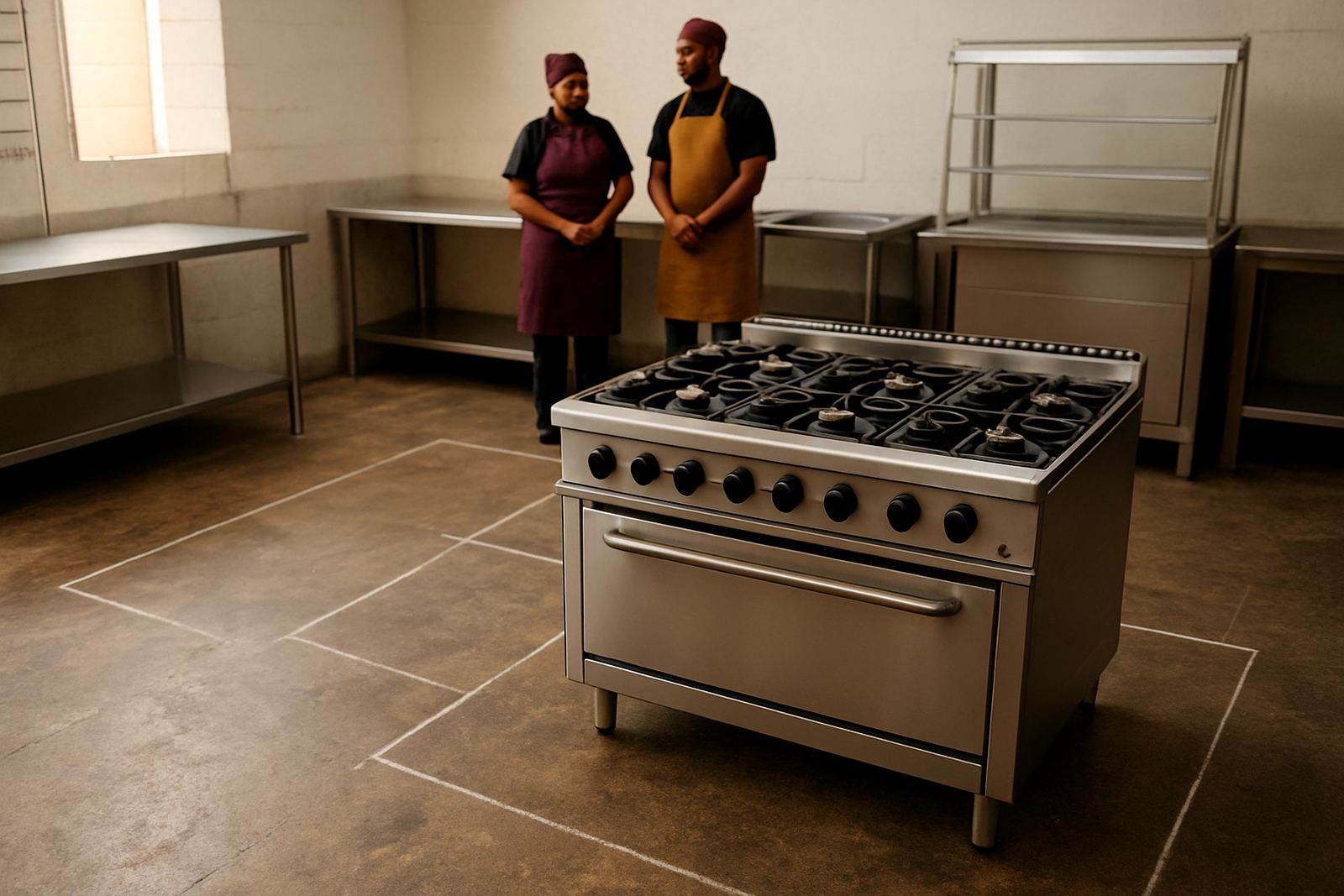
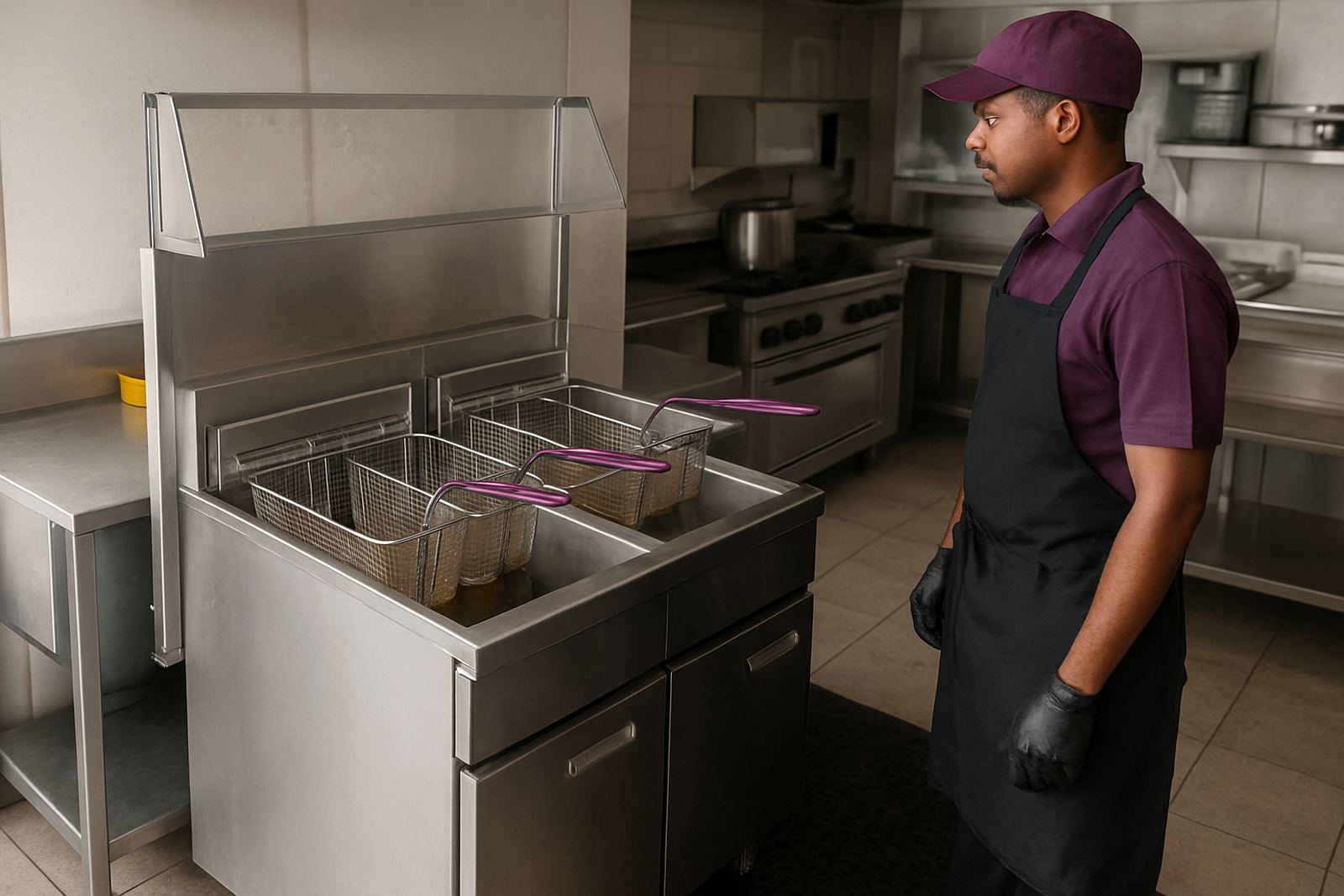
The first safety rule is simple: a fryer should not sit where staff keep brushing past with trays, stock pots or boxes. In takeaway kitchens on the East Rand, the fry station often ends up close to the pass and the point where orders are plated, but there still needs to be clear space for the operator to turn, drain and lift baskets without being bumped. If the fryer is pinned against a wall or squeezed between a prep table and a fridge, spills and burns become much more likely.
Give the fryer line a clear working zone and keep traffic moving one way where possible. That matters when the kitchen is busy during lunch, and it matters even more when load-shedding hits and everyone is trying to finish orders quickly. A tight layout can tempt staff to carry hot oil too far, which is where accidents start.
- Leave enough room for basket lifts and safe draining
- Keep walkways clear of water, packing crates and loose mats
- Do not place the fryer under shelves carrying paper goods or plastic containers
- Plan a direct path to the hand wash point and the fire blanket
Match the stand and counter to the heat load
Fryers need a base that can take heat, weight and cleaning with no wobble. Stainless prep tables, reinforced counter sections and properly fixed display bases help keep the line stable. If the fryer sits on a weak surface it can shift when baskets are dropped in or pulled out, and that movement is enough to splash oil onto hands or the floor.
For a small Benoni takeaway running a single twin-tank fryer, a level stainless counter with a heat-safe gap around the unit is usually enough. Bigger operations in Boksburg or Germiston that run multiple fryers side by side need a stronger layout with space for oil decanting, baskets and holding trays. The stand should also allow cleaning underneath, because grease build-up under equipment is a fire and pest issue, and it is hard to deal with later.
- Use stainless surfaces that can handle frequent wipe-downs
- Keep the fryer level so oil sits correctly in the vat
- Allow access for service and cleaning from the front and sides
- Fit the counter height to reduce lifting strain during long shifts
Control splatter before it reaches staff hands
Most fryer injuries are not dramatic events. They are small splashes that land on fingers, forearms or shoes and then get ignored until the end of the shift. Proper handling starts with dry food, dry baskets and careful loading. Wet batter, frozen chips with heavy ice, and overfilled baskets all increase splatter. Staff should lower product slowly and never stand with their face directly over the vat.
It also helps to keep the area around the fryer clean and dry. Oil on tiles becomes a slip hazard fast, especially in colder mornings in Springs or on humid coastal deliveries where moisture hangs around packaging. A mat can help if it is the right type, but it must be cleaned often because a greasy mat becomes worse than the floor it was meant to protect.
- Shake off excess ice before frying frozen products
- Lower baskets gently instead of dropping them in
- Keep towels, paper and cardboard away from the hot zone
- Wipe spills immediately with a method the whole team understands
Build cleaning into the close-down routine
A safe fryer line is a clean fryer line. Oil residue on the outside of the machine, the floor and nearby counters can catch dust and turn sticky fast. At close-down, staff should check the front lip, basket handles, drain area and the floor around the unit. If your extractor canopy is above the line, the underside and filters need regular attention too because grease travels further than most owners expect.
In many local kitchens the evening crew is tired and trying to finish before the taxi or after the last collection run. That is exactly when shortcuts happen. A written clean-down routine helps keep things consistent so no one forgets the drain tray or the spot behind the fryer where oil mist collects. Over time, that one area can become difficult to clean and may attract complaints during health inspections.
- Switch off and isolate the fryer before cleaning the outside
- Use a set routine for oil draining, filtering and disposal
- Clean the floor edge behind and beside the fryer, not only the visible front
- Check that waste oil containers are sealed and stored correctly
Keep fire response simple and visible
Every fryer station should be set up with fire response in mind, not as an afterthought. Staff should know where the blanket is, which extinguisher type is kept in the kitchen and who takes control if oil flashes up. If the equipment is tucked into a corner with no clear exit route, the first seconds of a fire become harder to manage. That is where layout matters as much as the equipment itself.
For kitchens in shopping strips, roadside takeaways and light industrial areas around the East Rand, local rules and landlord requirements can differ. Some sites ask for fixed canopies, some need grease management, and some want signed service records for gas and extraction systems. It is worth checking those details before the fry line is installed, because moving equipment later can cost more and interrupt trading.
- Keep the extinguisher and fire blanket within easy reach
- Do not store oil, paper or gas cylinders directly beside the fryer
- Make sure staff can move away from the station quickly
- Record service dates for gas and extraction equipment
A practical Benoni setup for daily use
A compact takeaway in Benoni serving chips, chicken and snacks does not need a complicated fryer line, but it does need the right order of equipment. A level stainless counter, a fryer with enough working space, a nearby prep area for batter or packing, and a drain point for cleaning all reduce confusion during a busy shift. Lerato Khumalo and the CaterKraft team often see problems start when a fryer is added to an existing counter with no thought for spacing or movement.
In a typical East Rand setup, the operator should be able to load product, watch the cook time, drain the basket and plate the order without crossing behind another worker. If the fryer line is built around that flow, there is less bumping, fewer spills and faster service. It also makes life easier when the power goes off and the team must work around the interruption without losing control of the hot oil area.
Safety around frying is mostly about practical habits and a sensible layout. Keep the heat zone clear, make cleaning part of the daily rhythm and use equipment that can handle the pace of a real kitchen. That approach saves time, reduces risk and helps the fryer line stay in shape for the long run.