Where a splashback earns its keep
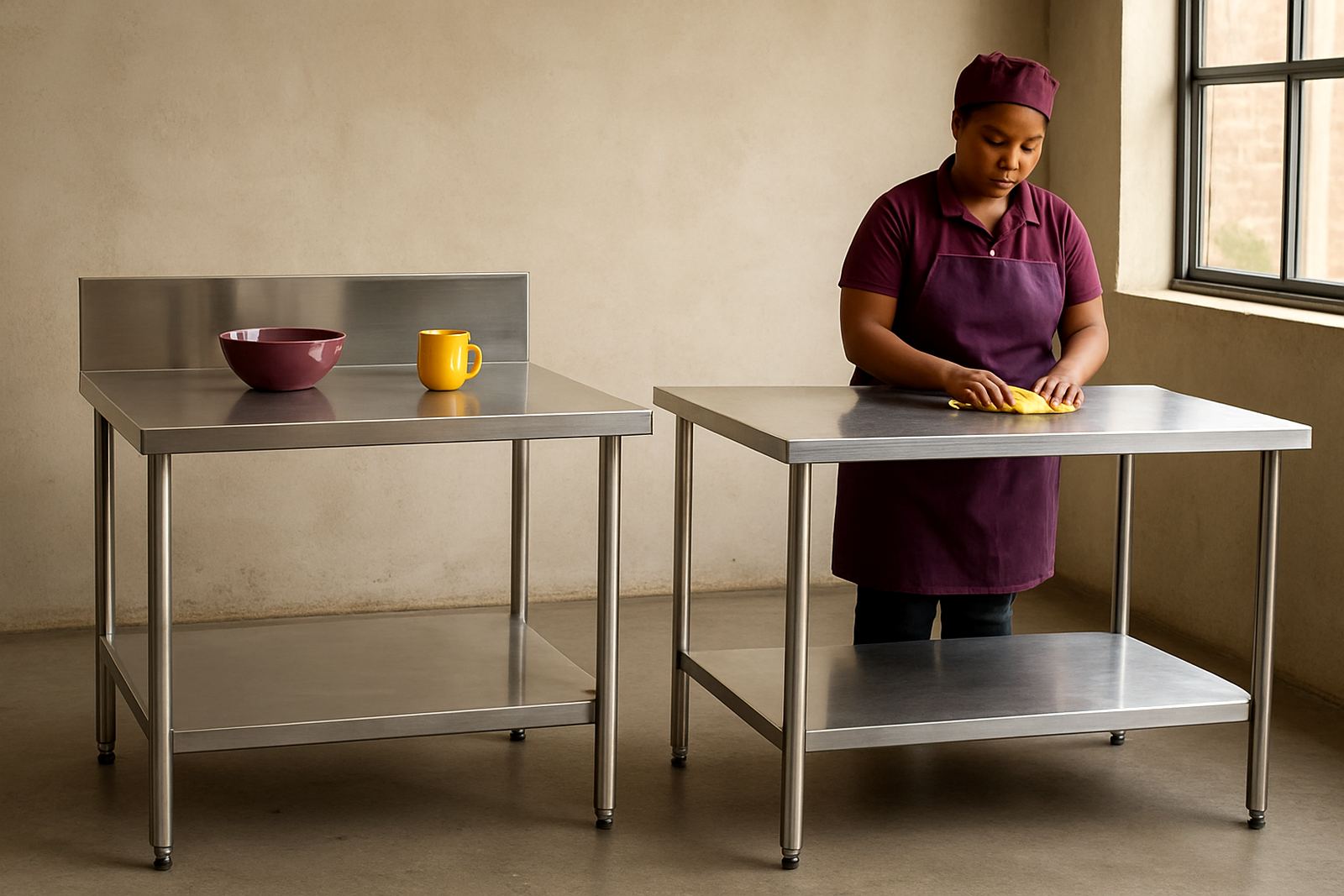
A splashback is the better choice when the table sits against a wall and the work is messy. Think pastry benches near mixers, veg prep beside sinks, or a hot line where oils and sauces get flicked about. In those spots, a raised back stops water and food from landing directly on painted plaster or tiled walls, which means less scrubbing after service and fewer long term stains.
In Benoni, where many takeaway kitchens work with tight prep zones and limited staff, that extra barrier can make a real difference. It helps during load shedding too, because teams often work faster when the area is set up to reduce cleaning later. If a wall is already uneven or the paint is peeling, a splashback also gives a neater finish than trying to keep wiping around damaged surfaces.
- Best for wall mounted prep points
- Useful near sinks, sinks and wash areas
- Helps protect plaster, tiles and painted surfaces
- Good where hygiene inspections are strict
When an open table gives you better movement
An open table is the simpler option when you need access from more than one side. It works well in kitchens where staff must move around quickly, pass trays across, or wheel trolleys in and out without bumping a rear lip. For packing stations, bottling areas, and temporary prep points, an open table gives more options and can be placed in the centre of the room.
This is often the better answer for caterers in Germiston or Boksburg who do site work and need the same table for prep in the morning and service later in the day. Without a splashback, you can push the table closer to a different wall or re-purpose it for display, decanting or plating. That flexibility matters when the menu changes often or the team is small.
- Better for island positions
- Allows access from all sides
- Easier to move, re-use or re-position
- Handy for mobile catering and event work
What hygiene rules actually push you toward a splashback
Most municipal inspections are less about fancy finishes and more about whether surfaces can be cleaned properly. A splashback helps where there is frequent contact with food, water, steam or grease because it reduces the area that can be splashed during normal use. In a compact takeaway kitchen, that can matter as much as the table itself.
If your wall surface is porous, damaged, or hard to wipe down, a splashback is usually the practical move. It is also worth considering where bins, sinks and rinse stations sit. A table with a rear upstand can make the cleaning routine quicker and more consistent, which is useful when staff turn over shifts and not everyone cleans the same way. That is one of those small things that often gets missed until a health inspection comes round.
For kitchens near the coast or in damp buildings, stainless around the work zone is often easier to maintain than painted timber or laminated board. Humidity can creep into softer materials and once they start lifting, cleaning gets harder and the area looks untidy fast.
The real trade off: cleaning time versus layout freedom
The question is not only splashback or open table, it is how much time your team loses every shift. A splashback reduces wipe down effort where the wall is exposed to splatter. An open table saves space and lets you work from more angles. If your prep line is fixed, the splashback usually wins. If the table must shift between tasks, the open table is normally the better fit.
Before ordering, stand in the room and ask three simple questions:
- Will this table sit against a wall for most of the day?
- Does the area need to be cleaned quickly between services?
- Will staff need to work from the rear or both sides?
If the answer to all three is yes then a splashback on that table makes sense. If two or more answers are no, you may be better keeping the unit open and putting the money into stronger legs, a better shelf layout, or castors for movement.
Benoni takeaway example: one kitchen, two different jobs
A small takeaway in Benoni recently needed two stainless tables. One sat beside the sink and veg wash area, where staff were rinsing, chopping and sorting deliveries. That table needed a splashback because water and scraps were hitting the wall every day. The second table was used for packing orders and placing hot bags before collection, so an open table was better there. Staff needed to reach it from both sides during peak lunch trade.
That split setup worked because each station had a clear job. The splashback table kept the wall cleaner and reduced maintenance. The open table gave more movement where the team had to move quickly. It is a simple example, but it shows why one kitchen often needs both options rather than choosing one style for every station.
When the layout is measured properly, the difference is noticeable by the end of the first week. Less bumping, less wiping, and fewer awkward corners slowing the team down.
How CaterKraft helps you choose the right build
At CaterKraft, the right answer starts with site measuring and a proper look at how the kitchen works. A table can be built as a plain open unit, with a splashback, or with changes that suit the room such as undershelves, sink cut-outs, or counter modifications. For some jobs, the wall condition and cleaning routine point clearly toward a splashback. For others, especially where the layout changes often, open tables are simply more useful.
We work from Benoni and support clients across the East Rand and nationally, including Boksburg, Brakpan, Springs, Kempton Park and Germiston. Whether you are fitting out a new takeaway, replacing worn prep gear, or planning a servery area, it helps to match the table to the way your team actually works not just the space on paper.
- Custom prep tables for fixed or mobile use
- Stainless sink units and servery counters
- Extractor canopies and shelving for fuller kitchen layouts
- Counter changes and stainless recladding where an upgrade is enough
For advice on a splashback or an open table, start with the room, the cleaning routine and the amount of movement your staff need. The right choice is usually the one that saves time every single day.