What a bain-marie is actually doing in service
A bain-marie is there to hold food at serving temperature without cooking it further. In a takeaway, canteen or small restaurant, that matters because sauces split, proteins dry out and vegetables lose colour fast once they sit too hot for too long. The right unit keeps the food safe, but also keeps it sellable.
Most operators in the East Rand use bain-maries for gravies, stews, curries, samp and beans, breakfast items and prepped sauces. The real question is not just size or finish, but whether you need wet heat or dry heat for your daily menu and your power setup.
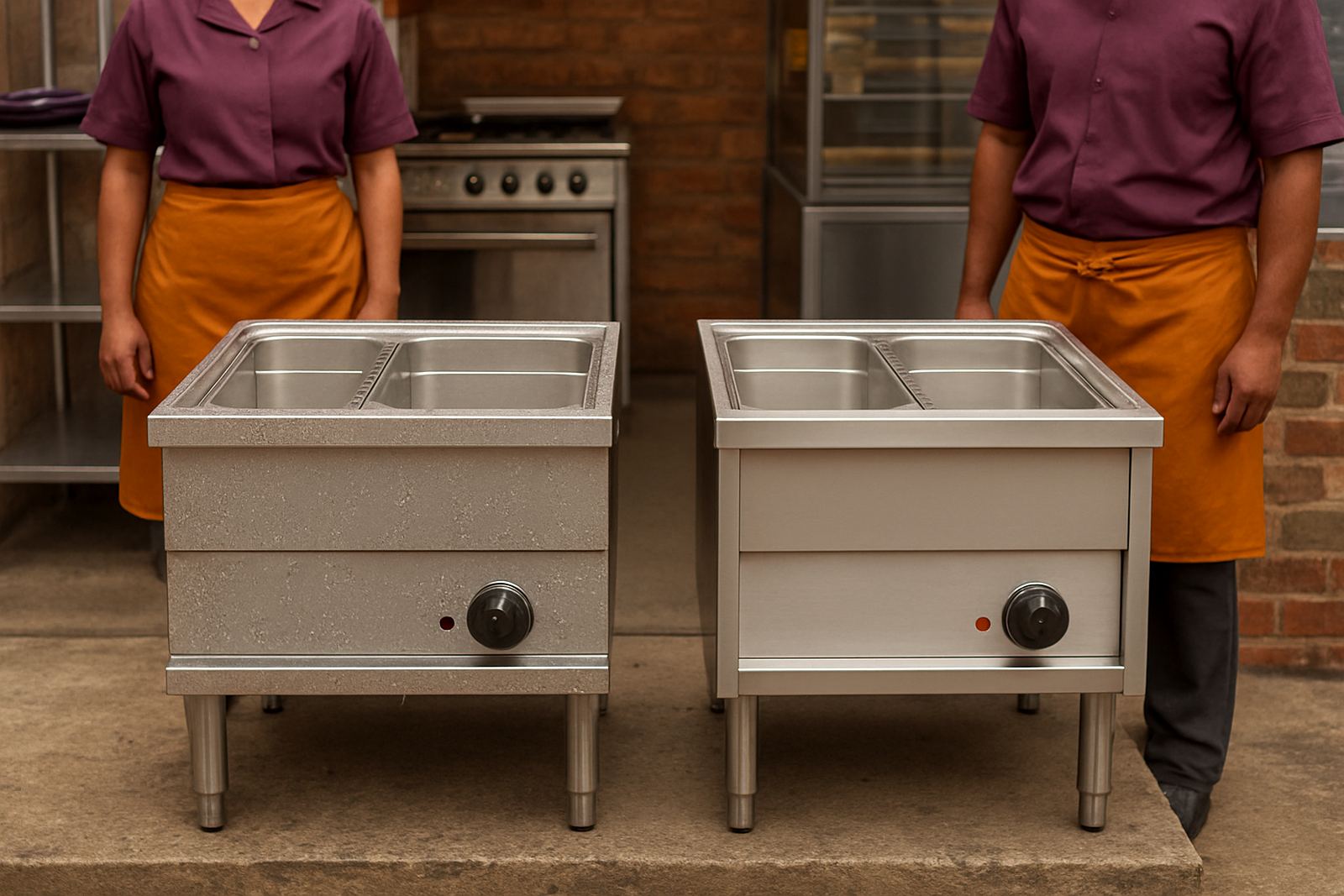
Wet-heat bain-maries: better for moisture and longer holding
Wet-heat models use water around the pans to spread heat gently. That gives more even warmth and helps prevent scorching on the bottom of sauces, soups and soft foods. If you are holding curry for lunch trade or gravy during a busy weekend, wet heat usually keeps the texture kinder for longer.
- Best for sauces, soups, stews and dishes that dry out quickly
- Good temperature spread across multiple pans
- Less risk of burning on the base when service is busy
- Needs topping up with water and regular checking
The trade-off is upkeep. Someone has to keep an eye on the water level, and if the unit is left low it can run unevenly. In a rushed kitchen that extra step matters, especially when staff are covering more than one station.
Dry-heat bain-maries: quicker start-up, simpler handling
Dry-heat units warm the pans directly, without a water bath. They are popular where the food turnover is fast and the menu is fairly firm, like boerewors rolls, pre-cooked meats, or tray-based service where pans are changed often. They heat up quicker and are simpler to clean after service.
For a small takeaway in Boksburg or a canteen near a workshop, that can be a practical choice. If load-shedding is part of the day, less water and less waiting can be useful. But dry heat can be harder on delicate food, and if the thermostat or operator is off by a bit, the edges can dry out quickly.
- Quicker to warm up before opening
- Less water management during service
- Simple cleaning at close-up
- Can dry food faster if pans sit too long
How menu type should guide the decision
The safest way to choose is to match the unit to the food, not the other way around. A wet-heat bain-marie suits food that needs moisture protection, while a dry-heat model suits faster turnover and firmer items. If your menu changes through the day, you may even need both in different parts of the counter.
Here is a plain way to decide:
- If your food is sauce-heavy, choose wet heat
- If your holding time is short, dry heat may be enough
- If staff rotate often, choose the option that is easier to manage
- If the same pan sits from 10 am to 3 pm, moisture control matters more
For example, a Benoni family takeaway that serves curries and stews at lunch, then chips and grilled items later, will usually get more from a wet-heat section for the curries and a separate hot holding area for the rest. That split setup often works better than forcing one unit to do everything.
Power cuts, gas use and what happens during a long trading day
In South African kitchens, the bain-marie has to cope with more than cooking. Load-shedding, voltage swings and long trading hours all affect how well a unit performs. A model that is fine for a quiet café can struggle in a busy takeaway where food is being ladled all morning and the lid is opened every few minutes.
Gas-heated holding and electric units each have their place, but the important thing is consistency. If you are in Germiston or Springs and service runs hard over lunch, you want a unit that recovers heat without making the base too hot. Stainless construction also helps where kitchens sit near coastal humidity or get washed down daily, because cheaper finishes stain and pit sooner.
A proper lid, correct pan depth and good counter fit all matter. A poorly matched unit wastes heat and food, and that cost shows up before month end.
Sizing, counter fit and the small details that save food
Many operators focus on pan count only, but fitting and access matter just as much. If the unit is too high for staff, they start working awkwardly. If the pans are too shallow, food cools too fast. If the counter opening is wrong, heat escapes around the edges and the holding temperature becomes uneven.
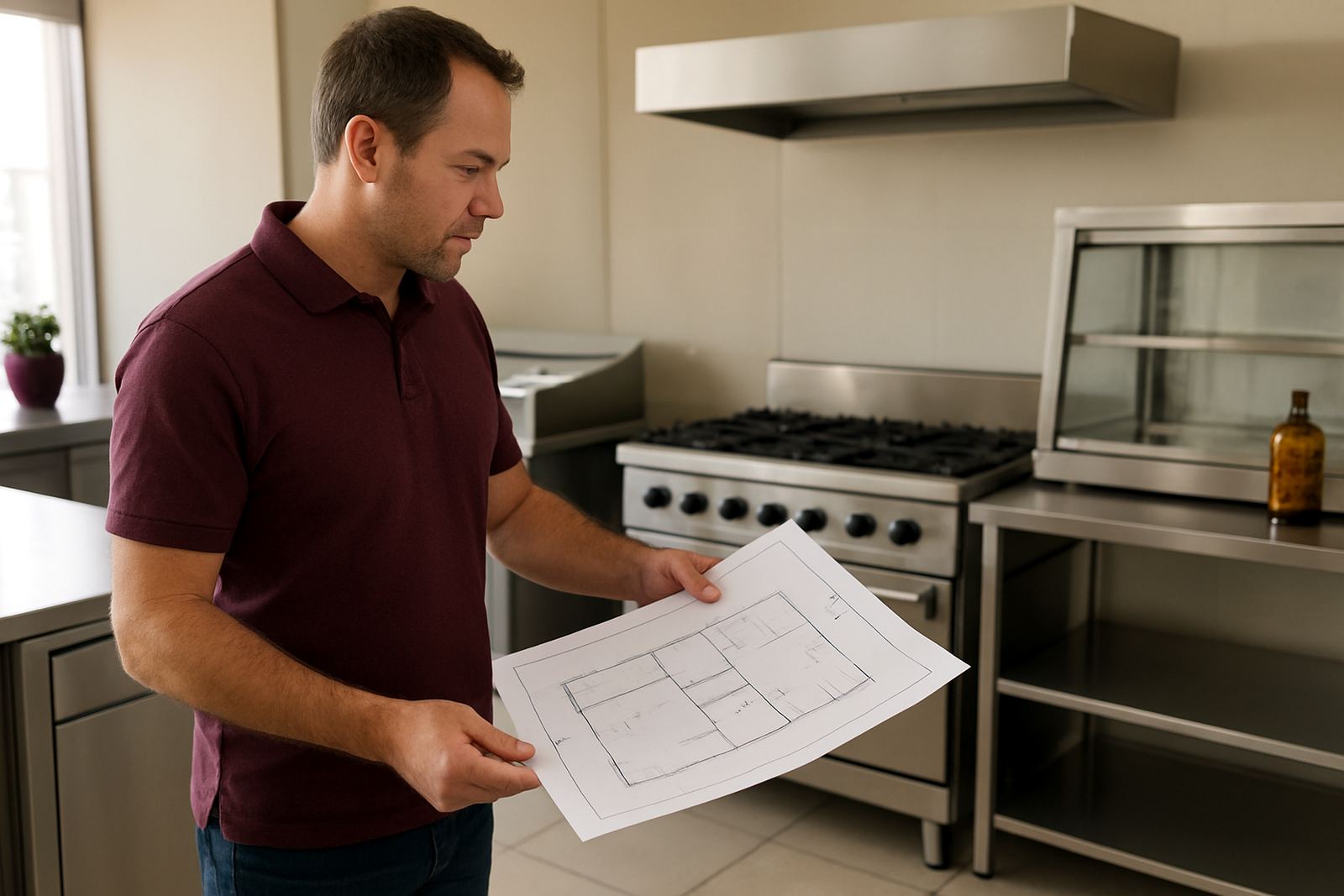
CaterKraft often measures on site in Benoni and across the East Rand so the unit fits the counter, service flow and available space. That is useful when you are adding a bain-marie to an older servery or modifying a takeaway counter that was built years ago.
- Check pan size against portion volume
- Keep the serving edge at a comfortable working height
- Allow space for lids and ladling movement
- Make sure the counter opening matches the unit body
A practical rule for everyday service in Benoni and beyond
If the food must stay moist, hold its shape and look good after an hour or more, wet heat is usually the safer choice. If the food turns over quickly and you need fast start-up with simpler handling, dry heat can do the job. The best unit is the one that matches your menu, your staff and the way your kitchen actually runs day to day.
For a new takeaway in Brakpan or a busy prep kitchen in Kempton Park, that choice can affect waste, speed and customer complaints. Pick the unit that makes service easier, not the one that only looks neat on paper. In this trade, the right holding temperature is not a small detail, it is what keeps lunch moving and food saleable until the last tray is empty.
When to ask for a custom build instead of an off-the-shelf unit
If your counter is awkward, your pans need a mixed layout, or the bain-marie has to sit beside prep tables, sinks or a servery line, a custom build can save time later. Custom stainless work also helps when you need to add splashbacks, shelf space, or a display base that lines up with existing equipment.
That is often the case in older shopfronts around Boksburg or Germiston where the service area was never designed for today’s volume. A proper measured unit gives you better access, cleaner finishes and less fiddling during a busy shift.