Start With The Lunch Queue, Not The Furniture
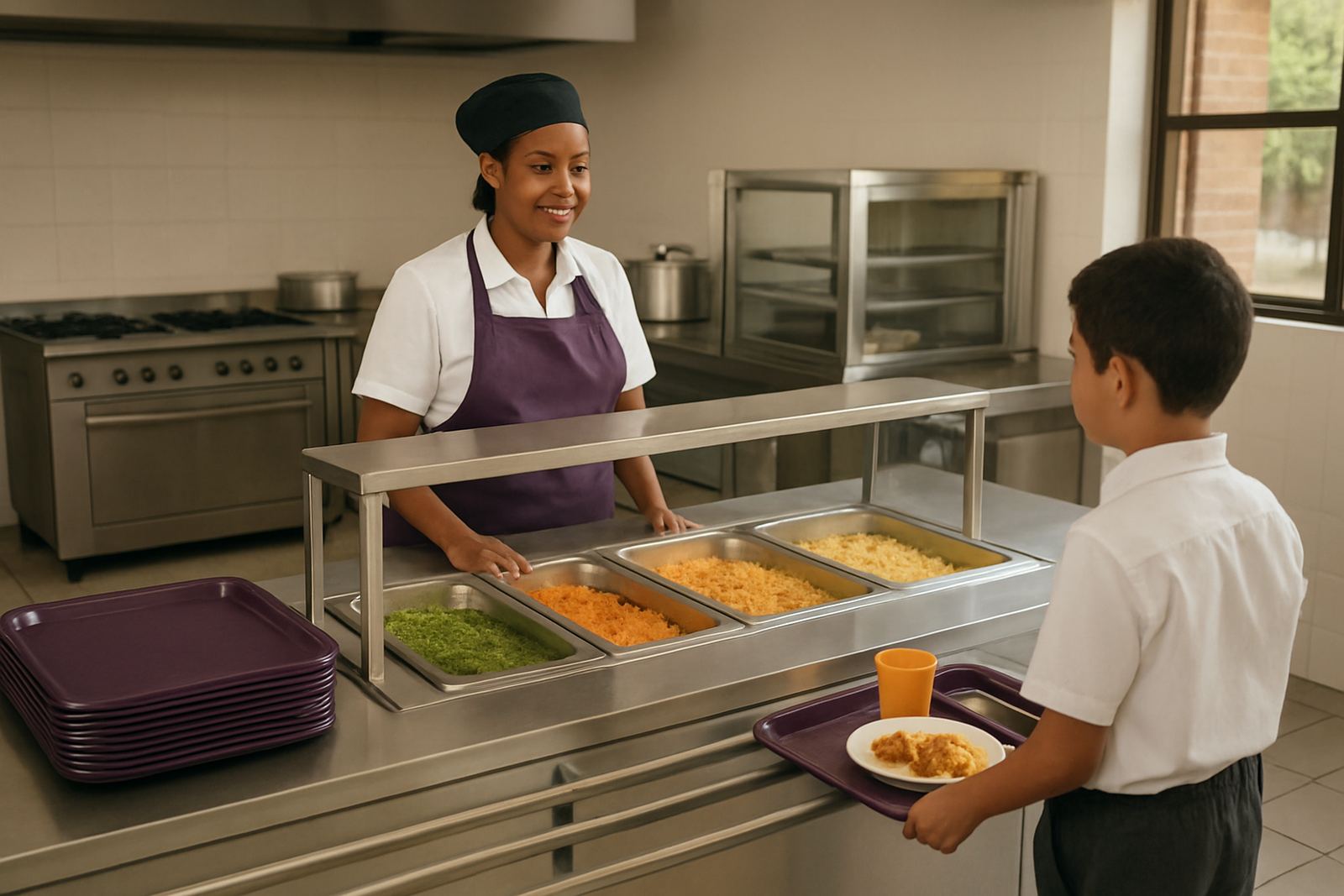
A good servery begins with the flow of learners, not with a catalogue list. If a school has two short breaks and one bigger lunch period, the serving line must let staff plate meals quickly, pass food down the line without crossing paths, and keep payment or ticket checks out of the way.
In practice, that usually means a straight run for smaller canteens, or an L-shaped layout where the hot section, cold section and collection point are clearly separated. The aim is simple: fewer bottle-necks, less spillage, and less shouting across the counter.
- Measure the full serving run before ordering anything.
- Leave space for two staff members to work side by side where possible.
- Keep the queue entry and exit obvious for younger learners.
- Allow room for trays, school lunch tubs, or wrapped items.
Choose Surfaces That Can Handle Daily Cleaning
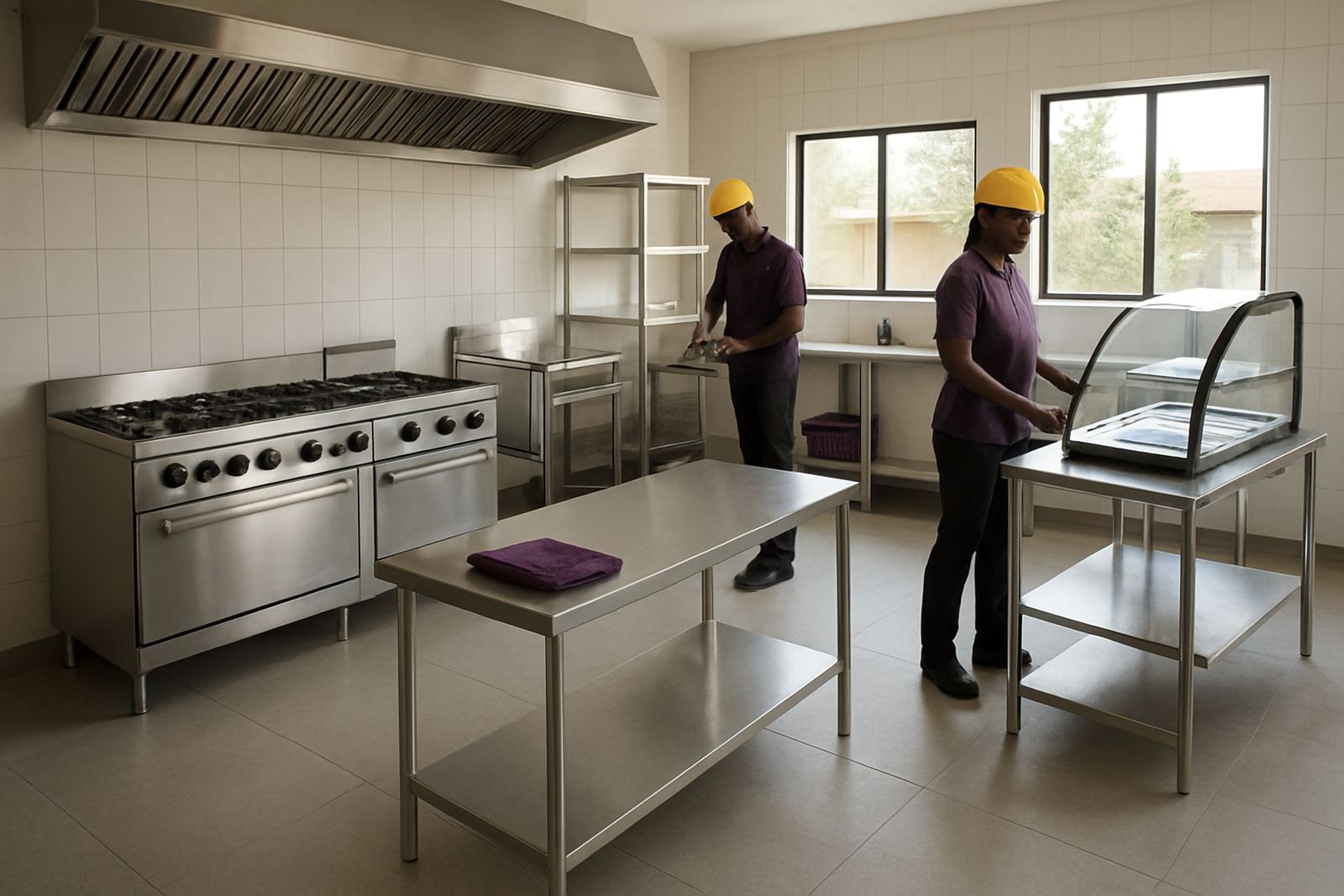
Schools need surfaces that cope with repeated wiping, sanitising and the odd knock from a steel tray. Stainless steel is the standard choice for prep tables, counter tops and service zones because it resists moisture and cleans quickly after a rush. In coastal or humid areas it also helps to choose proper finishes and keep joints neat, because trapped moisture is where trouble starts.
For canteens serving oily food, sauces or hot drinks, smooth edges and sealed joins matter just as much as the main material. A flimsy top might look fine on day one but after a few terms it starts lifting, staining or wobbling. That creates more maintenance and more downtime.
- Use welded or well-braced frames for steady daily use.
- Choose rounded corners where learners pass close by.
- Specify easy-clean kick plates and splash backs.
- Keep the counter height suitable for staff and serving containers.
Hot Holding Must Stay Steady During Breaks
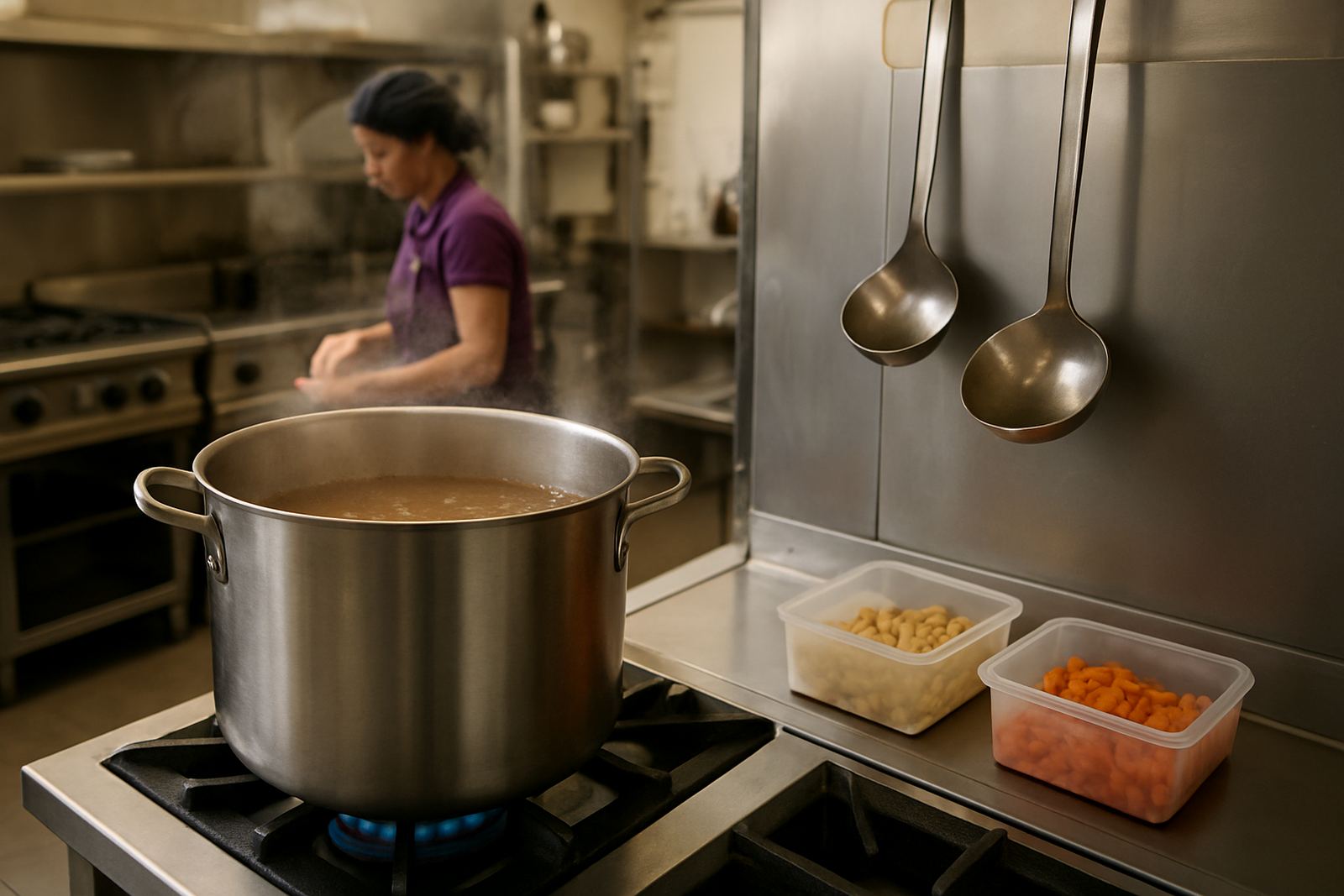
For hot meals, the serving line needs equipment that keeps food presentable and safe between rushes. Bain-maries are useful where soup, stew, pap, curry or vegetables are served in batches. They help maintain temperature while staff portion food at speed. If the school runs through load-shedding, ask how the unit performs with backup power or gas support, because a lunch line can become difficult fast when heat drops.
Display units and covered holding spaces are also useful for pastries, sandwiches, fruit cups and pre-packed items. The point is not to show off stock, it is to keep it protected, visible and organised so staff are not opening containers every few seconds.
- Check how many pans or trays the unit must hold at peak time.
- Match the holding method to the menu, not the other way round.
- Keep the hot section close to the pass so staff movement stays short.
- Plan for power cuts with a backup arrangement where needed.
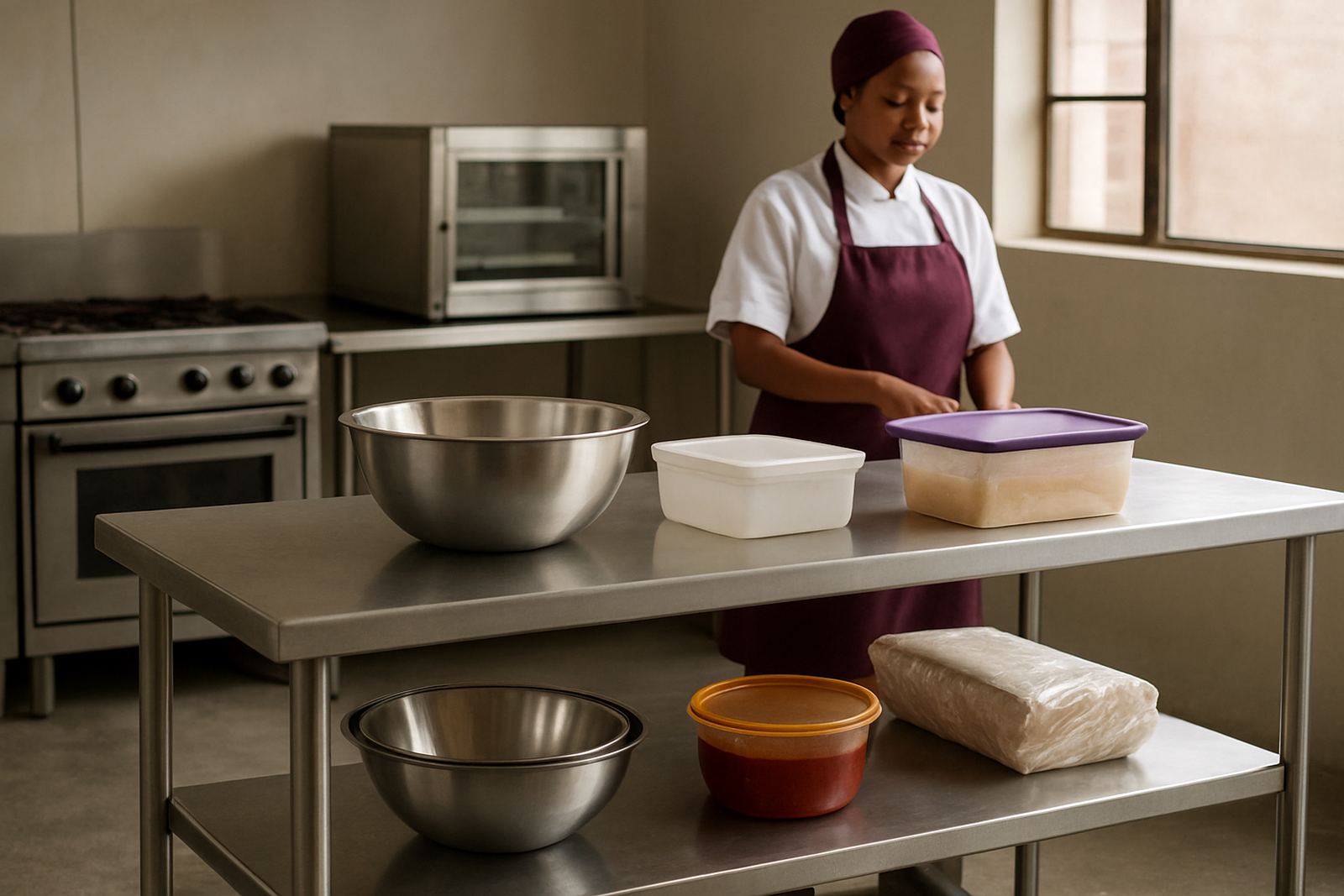
Prep Tables And Sinks Make The Line Work Behind The Scenes
What happens behind the counter matters as much as what learners see. Custom prep tables give staff a proper surface for portioning, boxing, slicing and restocking. Custom sinks are just as important, because schools need a cleaning routine that keeps pace with food prep, cups and utensils without clogging the main serving area.
A well planned back-of-house zone can save time every day. In a busy Benoni school, for example, a servery may be serving hundreds of learners in a narrow time slot. If prep, wash-up and refilling all happen in the same corner, the line slows down and staff keep stepping around each other. Separate those tasks and the whole operation settles.
- Place prep tables close to storage but out of the queue path.
- Set sinks where washing up does not interrupt serving.
- Include shelves or racking for packaging, utensils and cleaning stock.
- Make sure the floor route stays clear for deliveries and waste removal.
Keep The Counter Easy To Clean And Easy To Repair
School equipment gets bumped, scraped and leaned on. Counter modifications, stainless recladding and replacement sections are useful when a canteen already has a base structure that still works. Instead of ripping everything out, it can make sense to improve the parts that take the most wear. That is often the more practical option when budgets are tight and the school needs to keep serving during term time.
Repairability matters because schools cannot afford long interruptions. If a front panel is dented or a work top is damaged, a clean replacement section is often quicker than a full rebuild. The same applies to mobile trolleys and display unit bases, which can be adjusted for different events, sports days or year-end functions.
For schools with municipal rules on waste and drainage, it is worth checking how water and food waste leave the servery. A neat, well laid-out counter is only half the job if the clean-up side is awkward or slow.
What Schools In The East Rand Usually Ask For
Across Benoni, Boksburg, Brakpan, Springs, Kempton Park and Germiston, most schools want the same things: speed at break time, enough holding space, and equipment that does not need constant attention. The exact answer depends on learner numbers, menu style and available room, but the practical priorities stay the same.
Before ordering, ask three questions. How many learners must be served in a single break. What food needs hot holding or cold display. And how much room is available after fire access, cleaning access and staff movement are allowed for. Those answers lead to a servery that works in real terms, not just on paper.
- Keep the queue short and the serving line readable.
- Use durable stainless equipment where food contact is constant.
- Match the equipment to the daily menu and break schedule.
- Plan for cleaning, maintenance and power interruptions from the start.
When those basics are in place, the canteen stops feeling like a rush hour problem and starts working like a proper service point. That is what schools need during a 20 minute break, when every second counts and there is no time for faffing around.