Start With the Menu, Not the Catalogue
Before you buy a single item, write down the exact menu and trading hours. A hatch serving toasted sandwiches and chips needs a very different setup to a lunch counter pushing pies, soup and plated meals. Small menus fail when the equipment is oversized, or when one missing piece slows the whole counter down.
For a starter operation, focus on the few items that keep the food moving. In most compact spaces that means a prep surface, hot holding, a cooking point, a cold section and one proper wash-up area. If the menu is tight, the equipment list can be tight too and that usually helps cash flow in the first few months.
- Write the top 10 items you will sell most often.
- Note what must stay hot, what must stay cold and what must be cooked to order.
- Allow space for packaging, sauces and customer handover.
- Leave room for load-shedding backup if your site will need it.
The Core Pieces Every Small Menu Needs
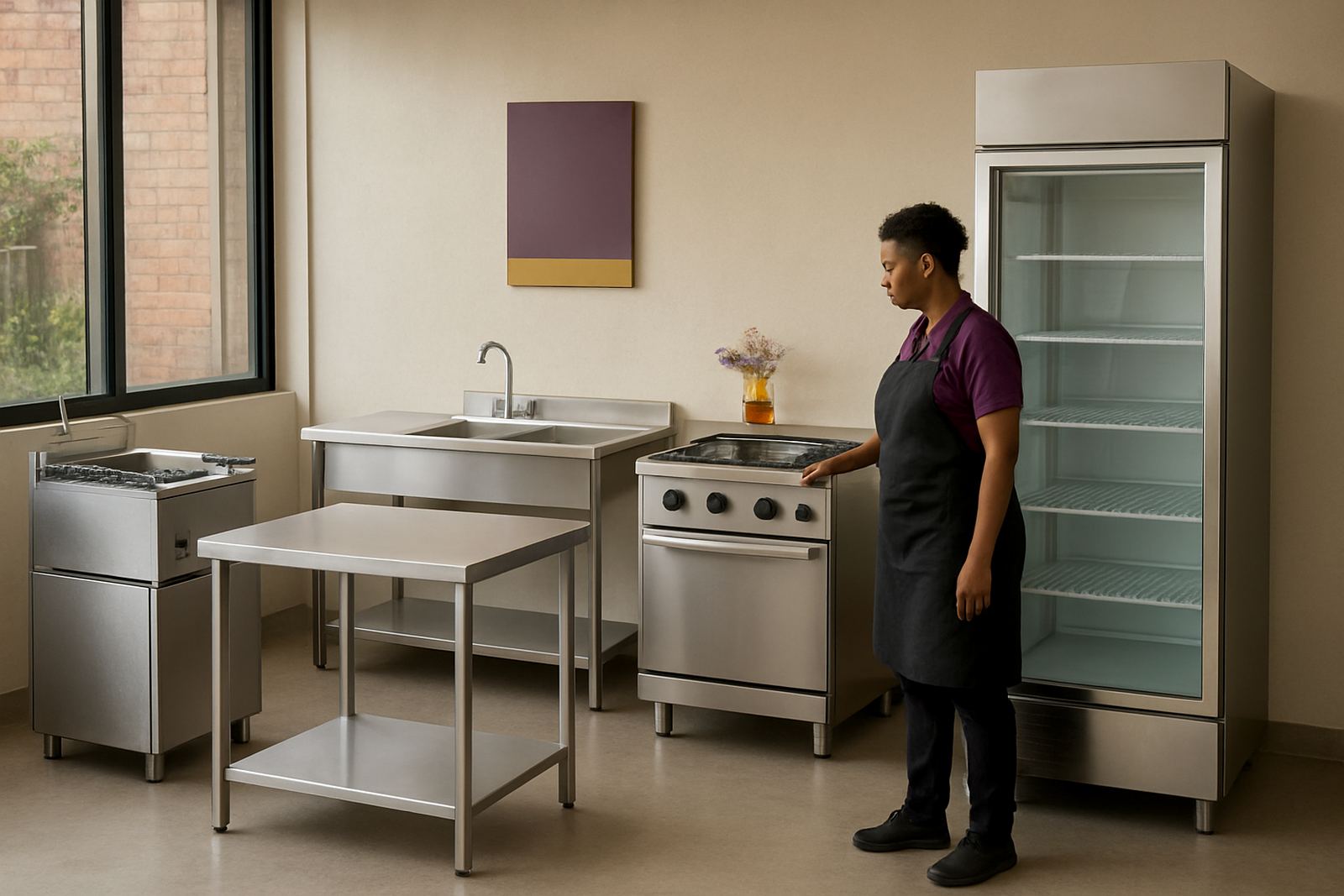
A compact food menu normally starts with stainless prep tables, a cooking unit, a hot holding unit and at least one display or service counter. Stainless is the practical choice in busy kitchens because it cleans up fast after sauces, oil and flour, and it handles coastal humidity better than painted alternatives. In places like Benoni, Boksburg and Kempton Park, that matters when the kitchen is busy from breakfast through to supper.
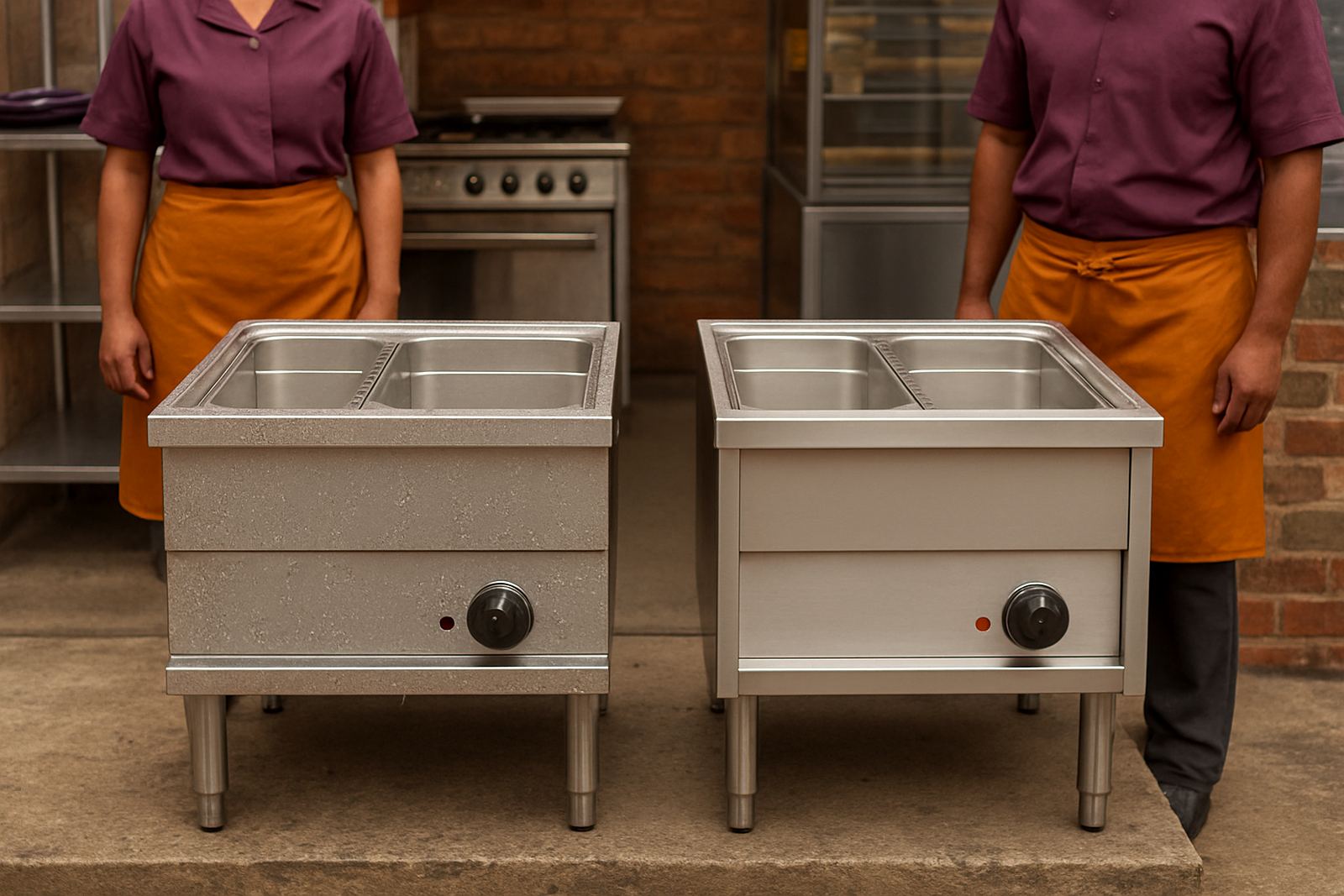
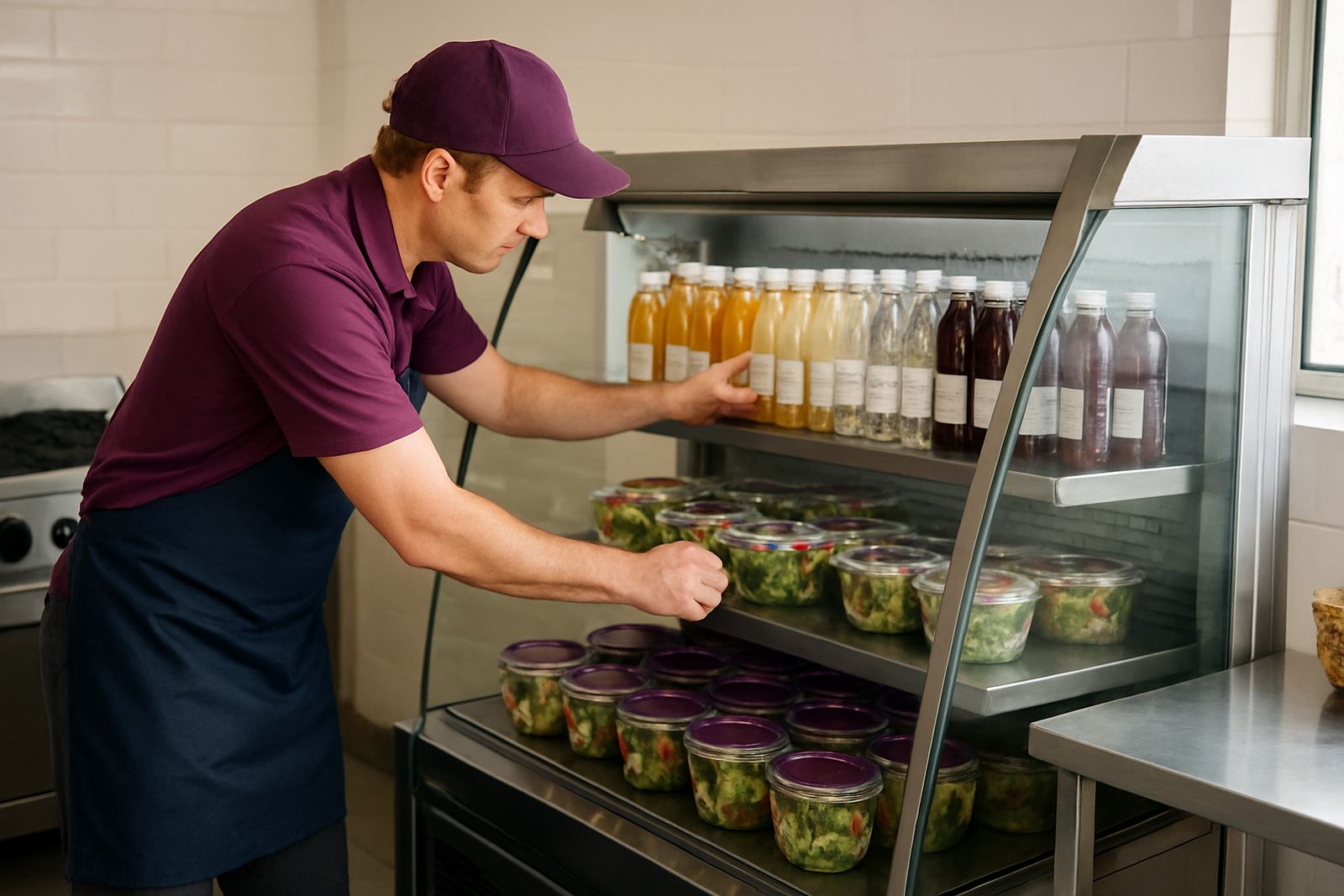
A gas range is often the first purchase for operators who cannot afford downtime during power cuts. Pair it with a bain-marie for gravies, curry, stews or side dishes that must stay service-ready. If the menu includes pies, sausage rolls or takeaway meals, a display unit helps you keep the counter neat and show the product properly.
- Stainless prep table sized to your room, commonly 1200 mm, 1500 mm or 1800 mm long.
- Gas range or hotplate matched to the daily order volume.
- Bain-marie for hot holding and quick service.
- Display unit or warm case for visible front-of-house stock.
- Undercounter storage or shelving for trays, packaging and ingredients.
Keep in mind that a menu with only six or seven items still needs a clean workflow. If staff must walk around a fridge door, squeeze past a basin and reach over a hot plate, service will slow right down. Plan for movement, not just equipment count.
Prep Tables and Sinks That Keep Service Moving
Prep is where a small menu wins or loses time. A proper stainless prep table gives staff a clear surface for slicing, assembling and packing, and it should be deep enough to work on without clutter. For a takeaway shop in Springs or Brakpan, a narrow room may still need a 600 mm deep table if the passage is tight, while a bigger kitchen can take more depth and still leave safe movement space.
Hand-wash and food prep sinks are not optional once trading starts in a formal setup. Municipal inspectors look for clean water, drainage and sensible placement. If you are serving ready-to-eat food, the hand wash point should be easy to reach and not blocked by crates, bins or gas cylinders. That small detail saves time and helps keep the site tidy during busy lunch runs.
- One main prep table for assembly and plating.
- One sink for hand wash, and where needed a separate wash-up basin.
- Storage shelf under or above the table for dry goods and trays.
- Backsplash or wall protection behind wet and greasy areas.
At this stage, custom sizing is often worth more than buying standard items that almost fit. A table shortened by 200 mm or a sink repositioned by one wall can make the whole room easier to use. It sounds small, but on a hot Friday lunch rush it makes a big difference.
Holding Food Hot Without Losing Quality
Many small menus are built around one thing: speed. That means the holding equipment must keep food ready without drying it out or making it look tired. A bain-marie is the usual answer for sauces, curries, mince, rice dishes and hot sides. For fried items, a warm display unit or heated holding cabinet can help if the trade is steady and the turnover is good.
Do not buy more hot holding than you can fill. A half-used bain-marie looks poor and wastes power or gas. It is better to run fewer pans with regular top-ups than to spread stock too thin. In a compact takeaway shop, customers notice freshness very quickly, especially where there are queues at school times, payday or Friday evenings.
- Keep sauces and wet dishes in covered pans where possible.
- Use separate pans for mixed items so flavours do not bleed.
- Rotate stock in smaller batches during quieter periods.
- Place the holding unit close to the service point to reduce walking.
If the site is in an area with frequent outages, ask what can still operate safely during load-shedding. Some items are easier to manage on gas while others need a stable electrical supply. It is worth planning that now rather than finding out when the queue is already at the door.
Storage, Trolleys and Counter Add-Ons That Save Space
Small menus often run out of room before they run out of food. That is why shelving and racking should be part of the first equipment list, not an afterthought. Dry ingredients, packaging, cleaning materials and spare utensils all need a place. If they live on the floor or on the prep table, the kitchen gets messy fast.
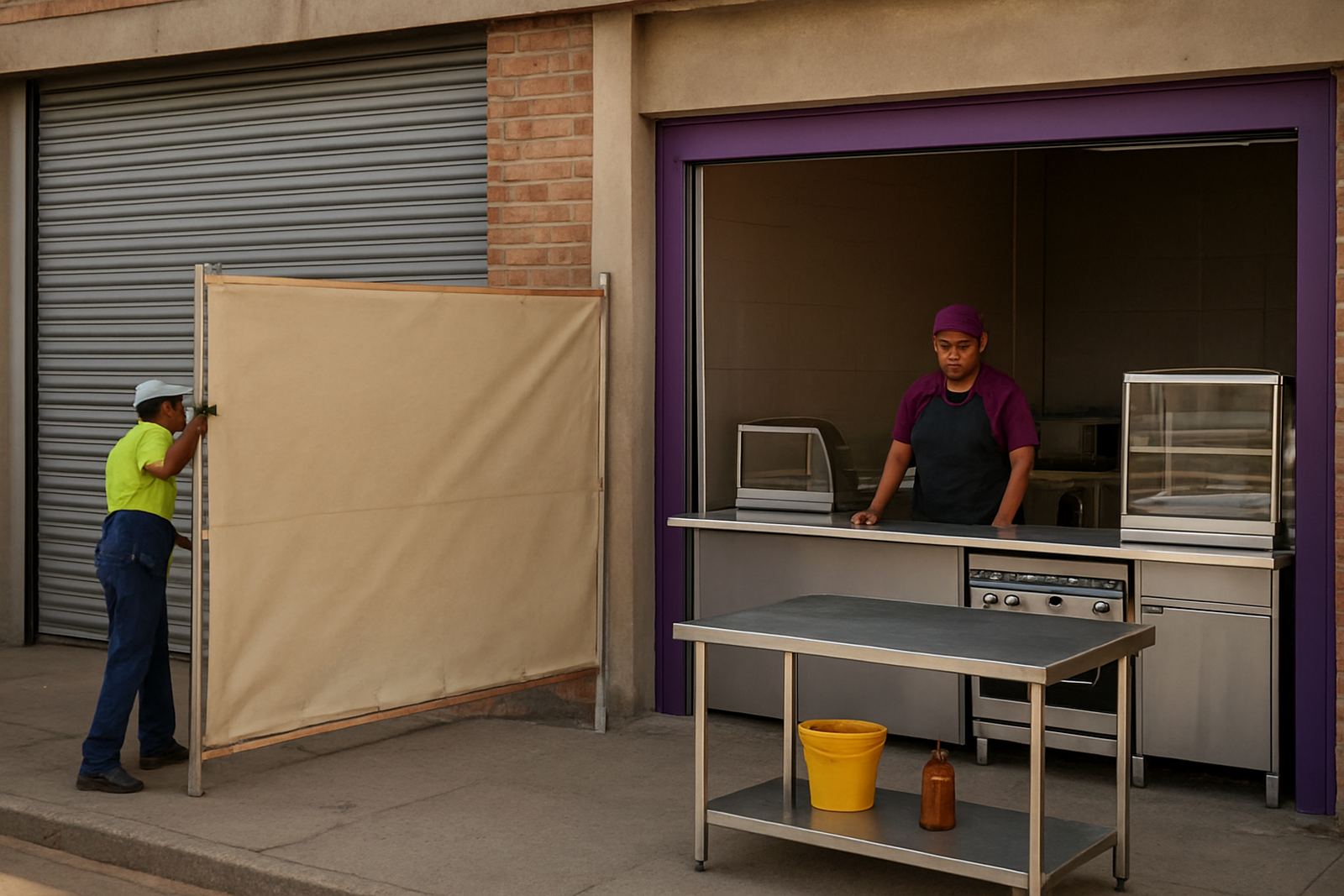
Mobile trolleys are useful where service changes through the day. One trolley can carry plated meals to the front in the morning and dirty trays back after lunch. Counter modifications can also make a real difference, especially where the front area needs a payment point, a pass-through or a tighter hot-hold section. A small menu works best when every square metre is doing something useful.
- Shelving for dry stock, cleaning gear and packaging.
- One or two mobile trolleys for service and clearing.
- Display unit base that keeps front counters level and easy to clean.
- Counter modification for a pass, till area or heat-retaining section.
On East Rand sites with limited back-of-house space, these extra pieces can stop the kitchen feeling crowded. They are not fancy add-ons. They are the bits that keep staff from stacking boxes near the fryer or leaving trays on the floor, which is never good practice.
A Benoni Starter Mix That Works in Real Trading Conditions
A simple local example makes the list easier to picture. A Benoni takeaway opening with toasted sandwiches, chips, mince rolls and soup could start with one main prep table, one hand-wash sink, one gas range, one bain-marie, one display unit and shelving for stock. That setup is enough to serve a small menu properly without overloading the rental space or the budget.
If the same operator later adds breakfast wraps or weekday lunch specials, the equipment can be expanded in steps. That might mean a second prep table, a larger counter, another hot holding pan or a mobile trolley for rush periods. The important part is to build in a clean layout from the beginning so the business can grow without ripping out everything later.
For operators working from Benoni, Boksburg, Brakpan, Springs, Kempton Park or Germiston, delivery and installation planning also matters. Measure the doorway, the passage and the final position of each item before ordering. Many headaches come from a table that fits the kitchen on paper but cannot turn the corner at the back entrance.
Small menu equipment should do three things: keep pace with orders, clean up easily and fit the room. If it does those three jobs well, the operation has a much better chance of running smoothly through peak trading and power interruptions.