Start With What Must Stay In Reach
When we fit shelving for a kitchen, takeaway or store room, the first question is simple: what must be reached many times a day? Plates, tubs, dry goods and cleaning items all need different shelf positions. If the most used items sit too high or too low, staff waste steps and start lifting awkwardly. That slows service and puts extra strain on backs and shoulders.
A practical reach zone for most adults is between waist and shoulder height, roughly 900 mm to 1700 mm from floor level. Items used every hour should sit in that band. Keep heavier stock lower down and lighter, slower moving items above it. In a Benoni takeaway where the pass gets busy at lunch time, that one change can cut a lot of extra movement.
- Fast moving items: 900 mm to 1500 mm
- Medium use items: 1500 mm to 1700 mm
- Light, spare or seasonal stock: above 1700 mm
Plate Storage That Works For Service
Plates need a stable home and the right height depends on how they are handled. For service lines, shelves that sit around 750 mm to 900 mm are easy for staff to load without bending too low. For stacks that are collected throughout the day, a mid shelf around 1000 mm to 1200 mm works well because it keeps the rim of the plate near hand height.
If the space is for clean plates only, leave enough clearance above the stack for fingers to grip the top plate properly. A shelf that is too tight leads to chipped edges, and in humid East Rand weather stainless items can still pick up marks if they are packed too close together. Keep enough room for air movement and drying after washing.
- Small plate stacks: 250 mm to 300 mm shelf gap
- Large dinner plates: 300 mm to 400 mm shelf gap
- Deep platters or trays: allow extra headroom for safe lifting
Dry Goods Need Height And Weight Control
Dry goods are where many kitchens get the shelving wrong. Flour, sugar, rice, boxes of napkins and packs of sauce can become very heavy very quickly. Put the heaviest items on the lowest shelves, ideally between 150 mm and 500 mm from the floor, then work upwards with lighter stock. This keeps the centre of gravity low and reduces the chance of tipping when somebody pulls a pack from the back.
For labelled stock, use clear shelf spacing so staff can see expiry dates and count what is there without shifting everything around. In a storeroom with limited floor space, a good rule is to keep about 450 mm to 600 mm between shelves for boxed dry goods and 300 mm to 450 mm for smaller containers. If you are holding stock for a busy week in Kempton Park or Germiston, the extra visibility helps with ordering and stock rotation.
- Heavy bags and bulk packs: lowest shelf only
- Medium boxes and cartons: middle shelves
- Light spare stock: upper shelves
Use The Wall Height From Floor To Ceiling Properly
Many people think the answer is to fill every wall space with shelves, but that usually creates a hard to use storage area. Before fitting shelves, measure the full wall height and note obstructions like windows, extractor ducting, electrical points and fire equipment. In many East Rand premises, the ceiling height ranges from about 2400 mm to 3000 mm, which means you have room for several levels if the spacing is planned properly.
A practical layout is lower storage, working shelves in the middle and top shelves for light reserve stock. Leave a clear gap where staff can stand and turn without knocking into corners. If the area is close to a gas range or a hot pass, avoid crowding the wall because heat and steam can shorten the life of stored packaging and labels. It's a small thing but it saves a lot of nuisance later.
- Keep a clear walkway of at least 900 mm where staff pass each other
- Do not block fire points or access panels
- Allow for cleaning under and behind open shelving
Match Shelf Height To The People Using It
There is no single shelf height that suits every team. A family takeaway in Brakpan may have one person packing, one frying and one taking orders, while a larger kitchen in Benoni may have different staff on prep and service. Taller staff may manage higher shelves better, but the layout should work for the shortest person who uses it daily. That is the safer choice.
A good test is to stand the main user in front of the shelf and ask them to reach the top row without lifting shoulders or stretching onto their toes. If they have to do that repeatedly, the shelf is too high for regular use. For cleaning teams too, lower open shelves can make wiping and mopping quicker. In a real kitchen, time spent bending, stretching and waiting for a gas line to relight after load shedding all adds up.
- Daily use shelves: shoulder height or below
- Occasional use shelves: above shoulder height
- Rare stock: top shelf only if safe access is possible
A Benoni Layout Example For Plates And Dry Stock
For a small Benoni takeaway with one prep wall, a practical layout might use a bottom shelf at 250 mm for bulk flour and cleaning crates, a working shelf at 900 mm for plates and containers, then a second working shelf at 1500 mm for dry goods and backup stock. Anything above 1800 mm should be very light, such as empty tubs or infrequently used paper stock.
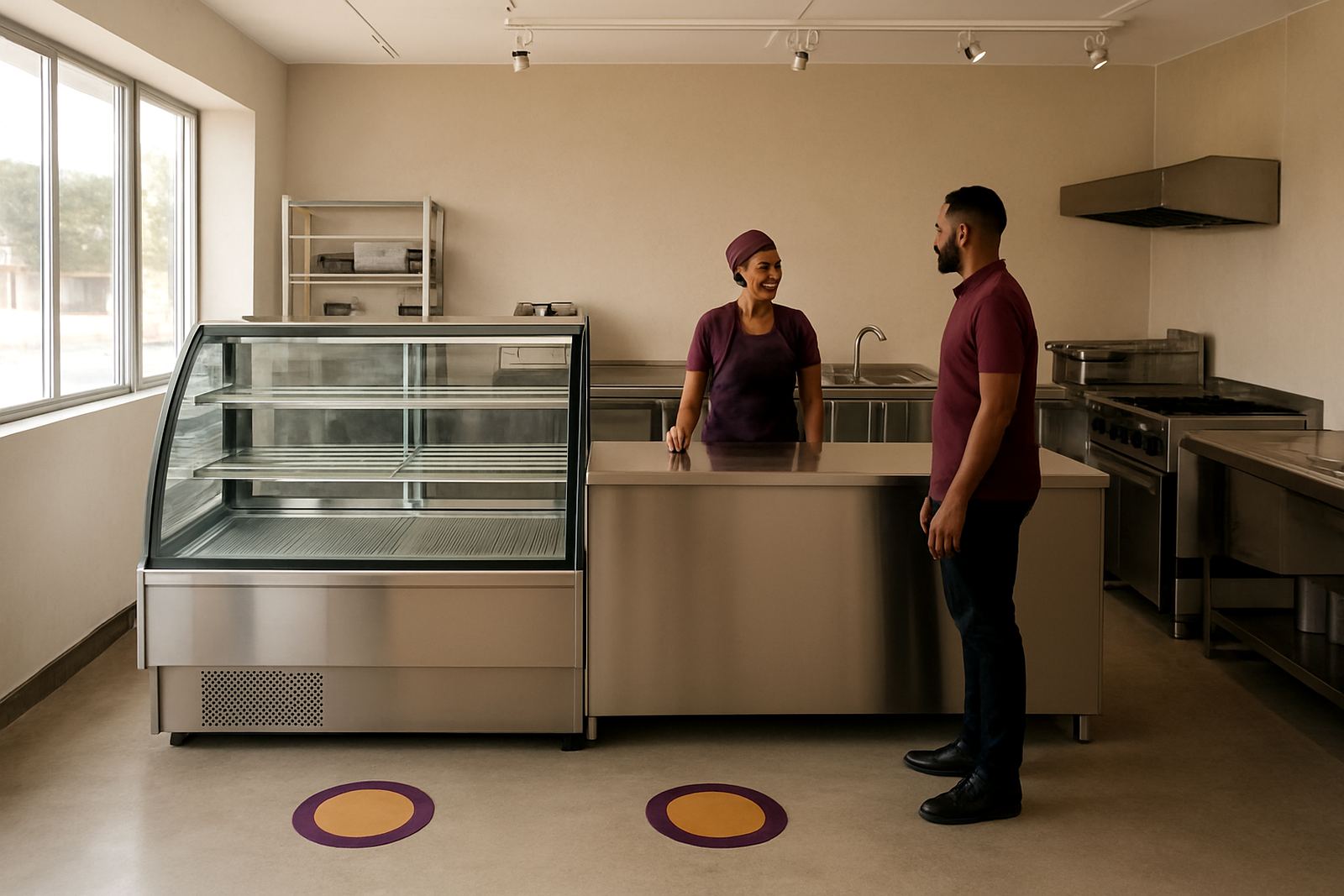
This sort of setup keeps the daily flow simple. Plates come out at hand height, dry stock is visible, and heavy packs stay low. If the room also has a counter modification, a small display base or a stainless sink line, the shelving should be measured against the full space so doors, drawers and staff movement still work together. Site measuring before fabrication avoids guesswork and cuts down on changes after install.
In a humid store room or near a wash area, stainless shelving is easier to keep clean and it stands up better to moisture than cheap painted options. That matters when stock must stay tidy through summer heat, power cuts and busy weekends.
What To Check Before You Order Shelving
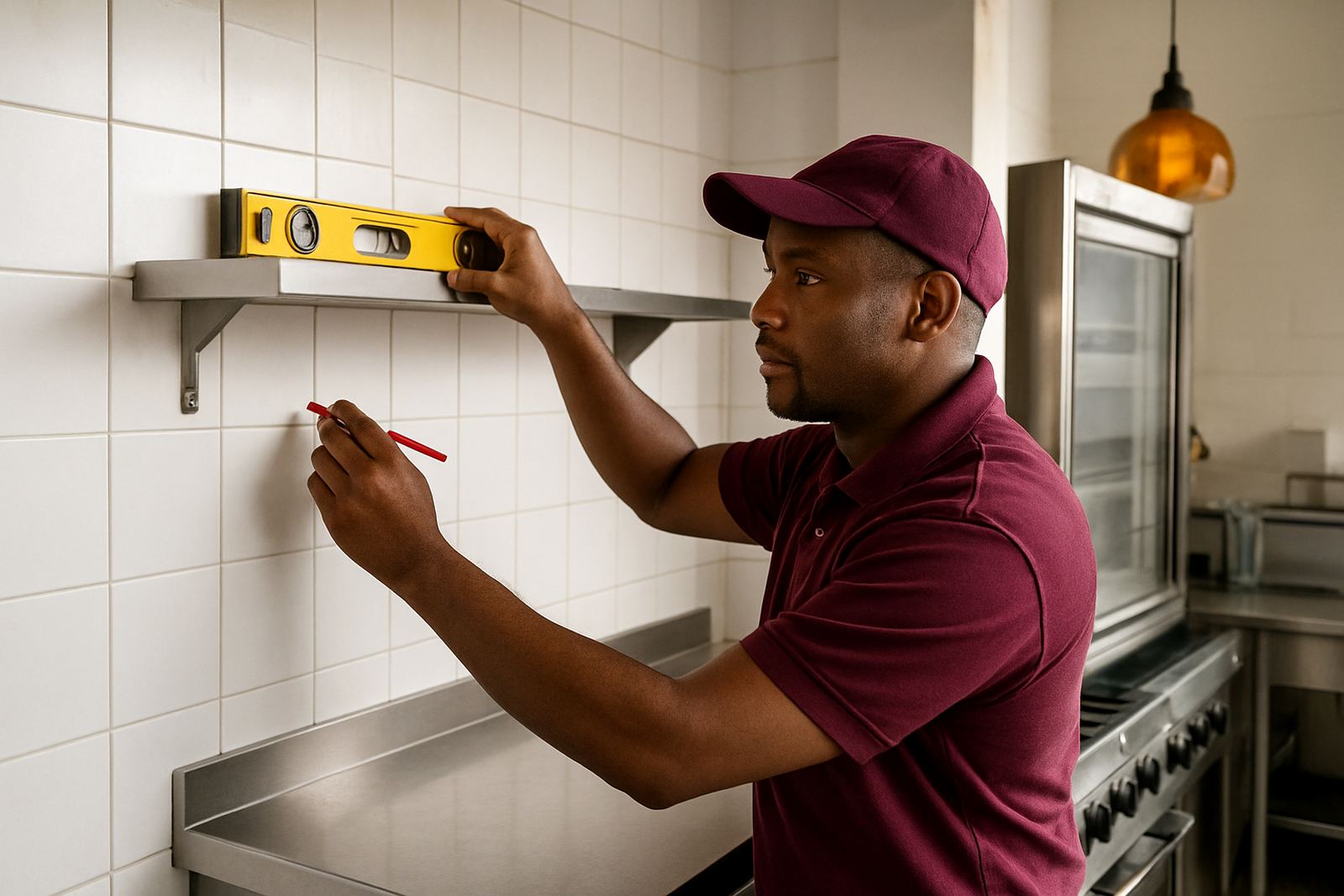
Before you order shelves, measure the room and note what is stored there now. Then list the items by weight and how often they are handled. That tells you more than guessing a height from a photo. It also helps when planning custom prep tables, racking or a servery counter because the whole kitchen can be set out as one working area instead of separate pieces.
If you are not sure, ask for a site measure and discuss who uses the shelves, where the wet areas are and how stock is delivered. For outlets in Boksburg, Springs or Germiston, that kind of planning helps avoid narrow walkways and awkward corners. Good shelving should save steps, keep things clean and make daily work less tiring.
- Measure the wall height and walkway width
- List heavy, medium and light stock separately
- Check for heat, steam and moisture near the shelf line
- Allow space for cleaning and safe reach