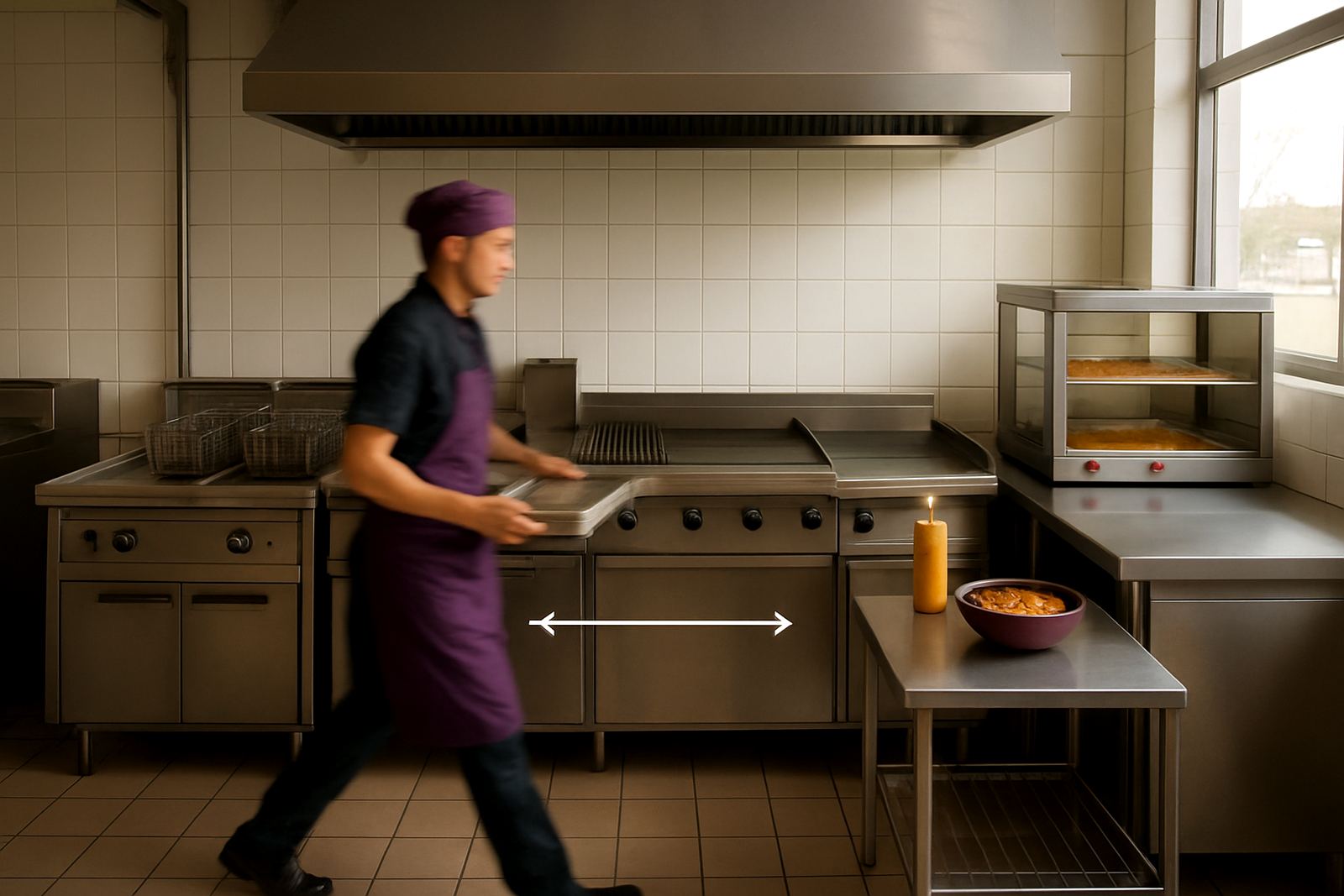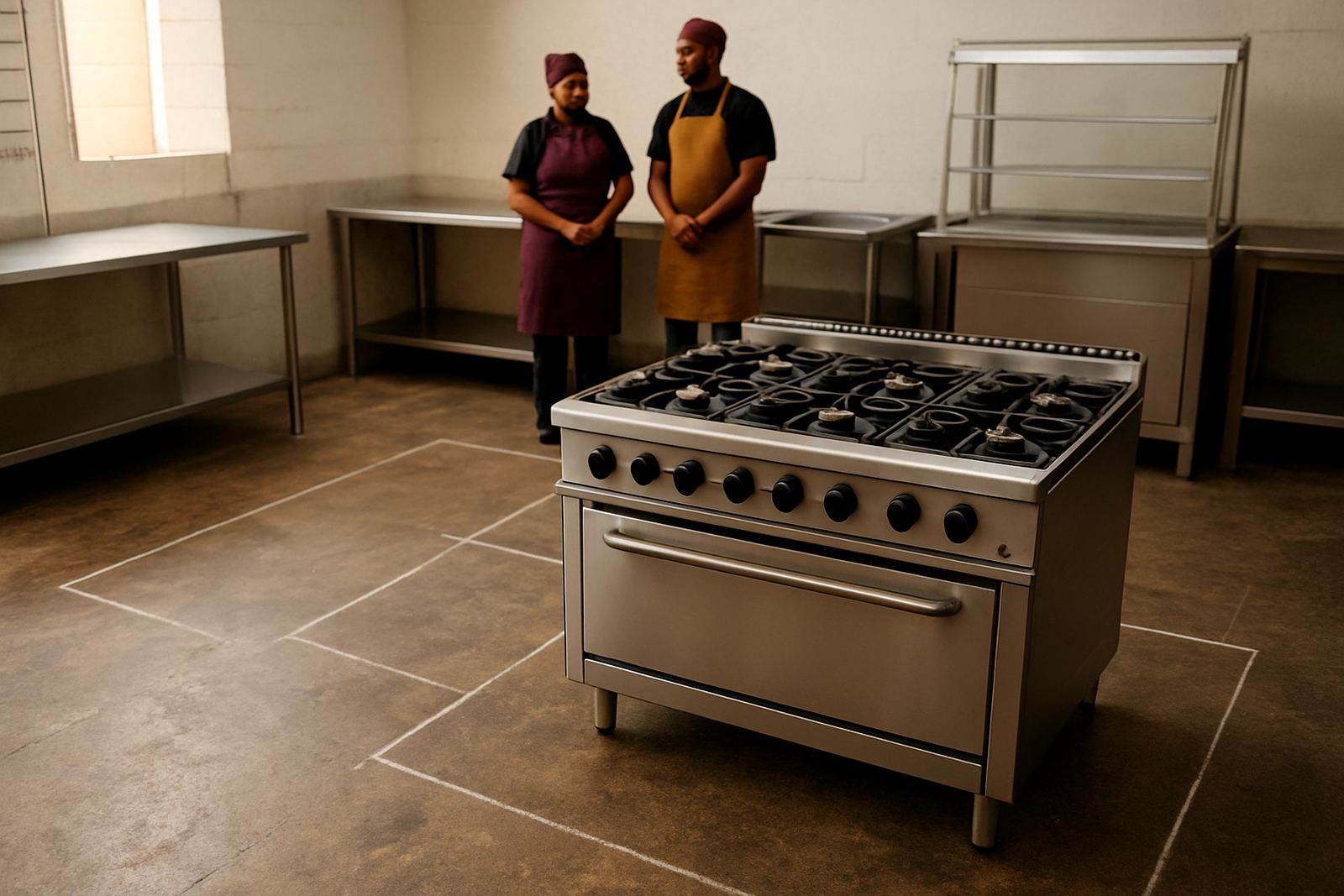
Start with the chargrill footprint, not the equipment alone
A chargrill line needs more than a flat spot and a gas point. You need to allow for safe clearances, staff movement, plate landing space and somewhere for hot trays, sauces and garnish to sit without crowding the cook. In a small takeaway, a 900 mm or 1200 mm grill can already change the whole front line layout. In a larger restaurant kitchen, a 1500 mm line may suit the output, but only if the surrounding counters are planned properly.
We often see operators in Germiston or Kempton Park buy the grill first, then try to squeeze in the rest later. That leads to clutter, awkward turns and staff reaching over heat. A better approach is to mark the cooking line, the pass line and the cleaning path on site. Measure the room, the doorway widths and the position of the gas bottles or incoming gas line before finalising the build.
- Allow a clear working lane behind the grill for turning and basting
- Keep plate landing space within easy reach of the pass
- Leave room for crumb trays, utensils and marinades
- Plan for cleaning access around the base and rear
Extraction must match the heat and smoke load
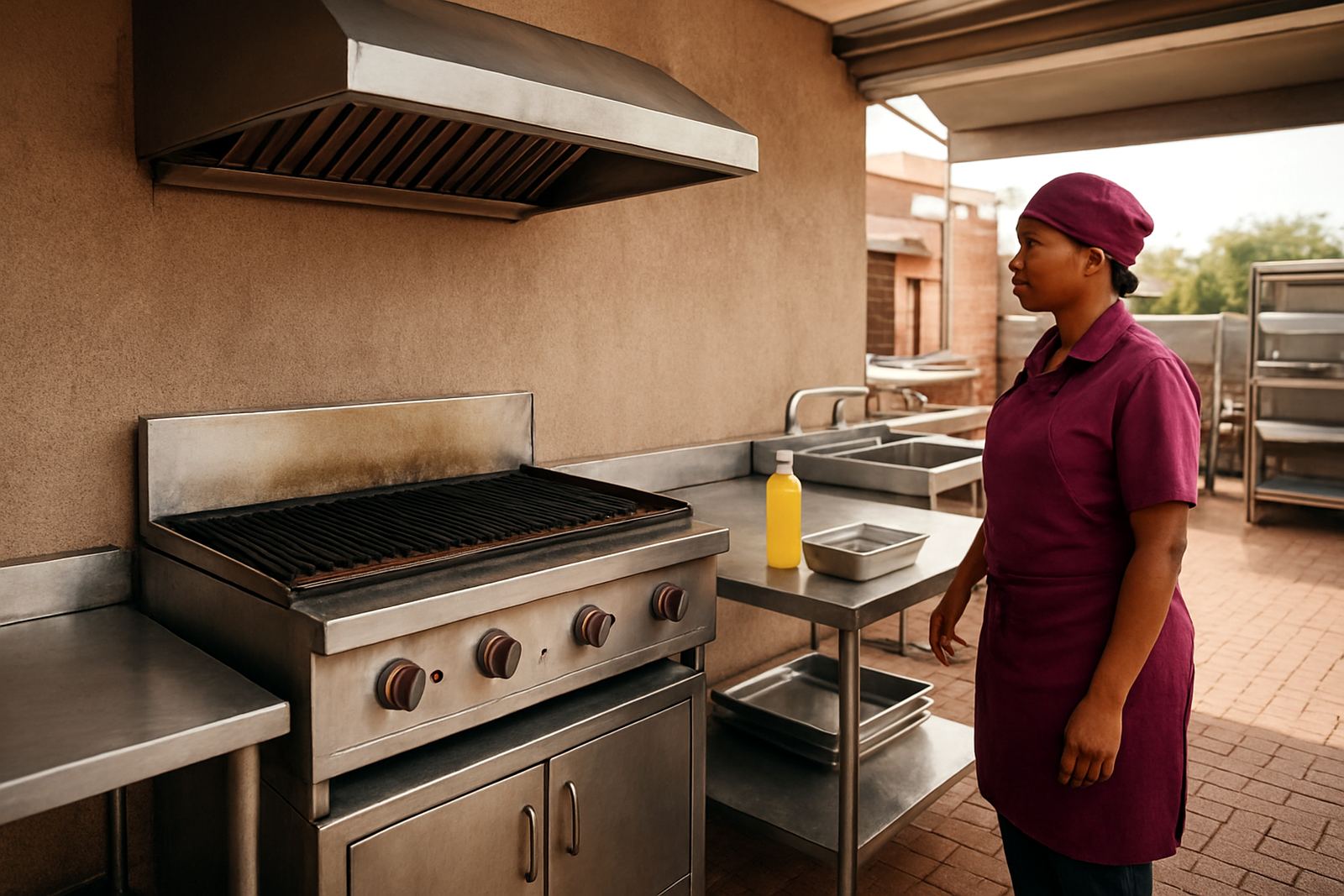
Chargrills throw off more heat and smoke than many owners expect. A small extractor canopy might cope with light prep, but once you are searing chicken, steaks or wors and running the unit through a lunch rush, the extraction has to pull properly. In coastal or humid weather, poor extraction also leaves greasy residue on walls and ceilings faster than many people budget for.
The canopy should cover the full cooking surface with enough overhang to catch rising vapour. Ducting runs must be kept practical, because every extra bend affects the draw. If the outlet point is too far from the cooking line, or the canopy is mounted too high, smoke rolls back into the room and the front counter starts smelling like the grill by noon.
For East Rand sites where power cuts still interrupt trade, it helps to plan what happens when fans stop. A generator or backup arrangement does not remove the need for ventilation, but it can keep the kitchen usable while the load shedding is on.
- Match canopy width to the full grill length, not just the hot plate
- Keep duct runs as straight as the building allows
- Use grease management that can be cleaned regularly
- Check local fire and ventilation requirements before final fit-off
Heat management around the pass keeps service moving
The pass is where chargrill output either becomes smooth service or a bottleneck. If the pass is too close to the cooking flame, plates arrive too hot to handle and garnish wilts before it reaches the customer. If it is too far away, food cools too fast and staff waste time walking back and forth. The right answer is usually a protected pass with enough space for holding, plating and handover.
In a takeaway, the pass often needs to do double duty as a collection point and a finishing station. That means the counter should be sturdy, easy to wipe down and built to handle constant contact with hot trays. Stainless surfaces are a good fit because they cope better with spills, heat and the daily scrub that comes with service. A servery counter can also be modified to include a shelf below for packets, wraps or takeaway boxes, which saves time during the rush.
If your team serves from both the kitchen and the front counter, keep the pass clear of loose equipment. One chopping board too many can slow the whole line and make the station feel cramped.
Support counters and prep storage should sit beside the grill
Chargrill planning works best when prep support is close enough to use, but not so close that it gets blasted by heat. A prep table for marinades, raw product and portioning should sit within one or two steps of the grill, with separate shelving for clean containers and dry stock. This keeps the line efficient and helps reduce unnecessary movement during peak trade.
In Benoni and Boksburg we often build custom prep tables with undershelves so trays, spare gas fittings and cleaning chemicals can be stored neatly away from food contact areas. If the kitchen is short on floor space, mobile trolleys can carry extra plates or prepped items into position only when needed. That matters in smaller takeaway sites where every square metre has to work hard.
- Use separate zones for raw meat, cooked food and plating
- Keep dry storage off the floor and away from splash zones
- Choose counters that can take heavy pans and repeated cleaning
- Plan for quick access to utensils, sauces and backup trays
Gas, service access and cleaning gaps need to be planned early
Too many chargrill installations fail because the surrounding services were never thought through. Gas regulators need safe placement, hoses must not run through traffic areas, and the back of the unit has to stay accessible for maintenance. A grill that is boxed in too tightly becomes a headache when the technician needs to inspect burners or clean the rear area.
Cleaning access is just as important. Grease build-up around the station slows staff down and can create avoidable risks. Allow enough gap for daily wipe-downs, drainage if the area is washed, and removal of crumb trays without having to move the whole line. If the kitchen is in a mall or commercial centre, check the site rules for grease disposal and ventilation maintenance before the first service day, it can save a lot of arguments later.
A local East Rand example shows why the layout matters
A small takeaway in Springs wanted to add a chargrill for burgers and chicken portions. The owner initially planned for the grill to sit at the front window with a narrow counter behind it. After site measuring, the line was adjusted so the extractor canopy covered the full cook zone, the pass sat just to the side, and a custom prep table was placed within easy reach but outside the direct heat path. The result was a cleaner handover area and less pressure on the staff during lunch rushes.
Because the site had limited back-of-house space, the storage was shifted into a low racking section and a mobile trolley was added for the busiest hours. That small change made the workflow easier, especially when the team was dealing with power interruptions and had to keep service moving without crowding the grill.
The lesson is simple: a chargrill station should be planned as a working system, not as one item. If the extraction, heat control and pass support are balanced, the line holds up better when trade gets busy.