Start With The Customer Path At The Counter
Good positioning begins with the way people move through the shop. In a takeaway or canteen, customers should be able to see the food range as soon as they enter or step up to the counter, but they must also have a clear place to queue and pay. If the display unit sits too far back, it gets missed. If it sits too far forward, it can block service and slow the person at the till.
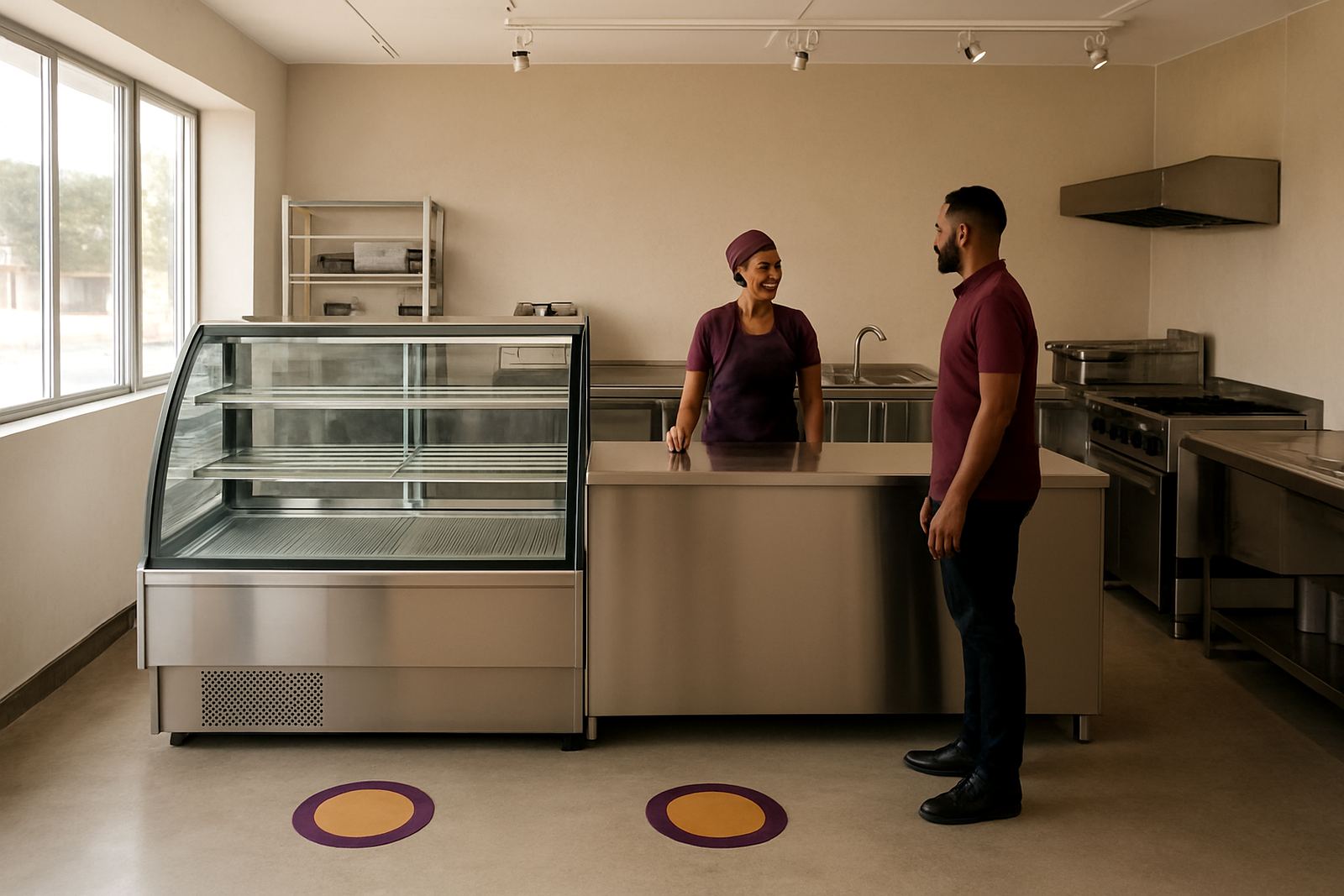
In Benoni and the East Rand, many front counters work best when the display unit is placed slightly to one side of the payment point. That leaves a straight path for collection and a separate line for ordering. It also helps staff keep eye contact with the next customer, which matters when the lunch rush starts and the queue builds fast.
Keep Sight Lines Open From The Entrance
A display unit should help customers see what is available without having to stop in the doorway. Tall menu boards, stacked boxes or deep counters can hide the food and make the front area feel cramped. If the unit is too high, staff also lose sight of what is happening at the entrance and may miss a customer waiting to be served.
- Keep the tallest part of the unit below the main eye line where possible.
- Leave enough open space above the unit so the front area feels light, not boxed in.
- Place hot items and high sellers where they are easy to spot first.
- Use lighting over the unit so the food is visible during early mornings and load-shedding conditions.
Clear sight lines also help in smaller shops where every square metre counts. A well placed unit can make a compact counter feel organised, not crowded.
Make Restocking Quick For Busy Service Hours
Restocking is where many counters lose time. If staff have to walk around customers, squeeze past a till point or lift trays over other equipment, service slows down. The unit should be placed so the back or service side is easy to reach from the kitchen, prep area or storage fridge. That reduces steps and keeps food moving before it runs out.
For takeaways serving breakfast and lunch, the best position is often close to the pass-through or prep counter. That way staff can refill trays, wipe surfaces and swap inserts without crossing the customer path. It also makes cleaning easier at close of business, which is important when municipal inspectors check hygiene and food handling space.
- Keep a clear service route from kitchen to display unit.
- Allow room for trays, pans and cleaning cloths near the unit.
- Avoid placing the unit where doors, fridge lids or drawer fronts will clash.
- Plan for quick topping up during peak times, not only for quiet periods.
Match The Unit Position To The Food You Sell
Not every product needs the same position. Hot meals and plated items should be front and centre where customers can see them immediately. Cold desserts, drinks and baked items may work better slightly to the side, especially if the shop has a separate till or pickup point. The aim is to guide the customer naturally from viewing to choosing to paying.
If you sell both takeaway meals and packaged goods, split the display into clear zones. That keeps the front counter from looking messy and makes the choice quicker for the customer. In busy areas like Boksburg or Germiston, where lunchtime traffic can be heavy, simple layout decisions can save several minutes over the course of the day.
For a food shop that changes menu items often, choose a position that allows the staff to switch trays without rearranging the whole counter. That is one of those small details that makes daily trading easier, especially when staff numbers change from morning to afternoon.
Allow Space For Power, Heat And Cleaning
Display units need more than a flat spot on the floor. They need room for power points, safe cable runs and enough clearance for regular cleaning behind and under the unit. If the position is too tight against a wall, grime collects quickly and maintenance becomes difficult. In coastal or humid areas, even inland shops can see moisture and condensation issues around equipment, so airflow matters too.
When planning the position, check where the sockets are, where the gas lines run if any heated equipment is nearby, and whether the floor can handle the weight. A unit that looks fine on paper can become awkward once it is full of food, utensils and stock. If the surface is not level, the unit may wobble or sit uneven, which is a problem for display and hygiene.
- Keep access to plugs and switches simple for staff.
- Leave enough gap for daily cleaning behind the unit.
- Check that the floor can carry the full loaded weight.
- Make sure doors and service hatches still open properly.
Use A Benoni Style Layout As A Practical Example
A typical Benoni takeaway often has a narrow front area, a service counter, a small kitchen behind it and customers coming in from the street or parking lot. In that setup, a display unit works best when it sits at an angle near the front counter rather than blocking the whole opening. The cashier can serve, the food remains visible and staff can restock from the back without crossing the queue.
We have found that this layout also works well for Springs and Brakpan clients who have older shop fronts with limited width. The unit can be sized to fit the available space, with a prep table or mobile trolley behind it for quick refills. When the position is planned properly, the customer flow feels orderly and the counter stays easier to manage through the day.
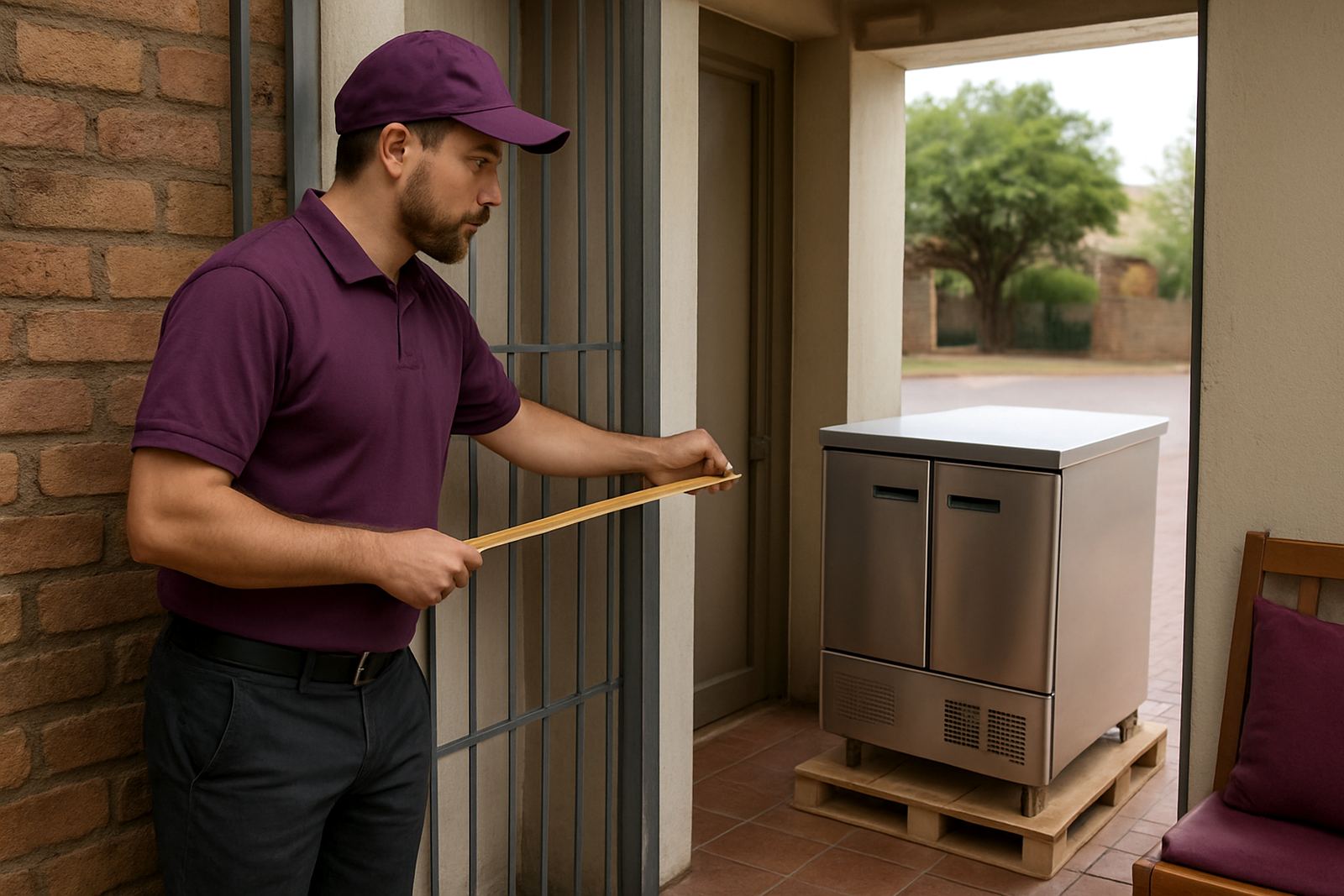
That is where site measuring helps. A few centimetres can change how a queue forms, where customers pause and how quickly stock is replaced. It is the kind of detail that saves staff time and keeps the front end tidy when the rush comes.
Position It For The Long Run, Not Just The Opening Day
Display unit positioning should support day to day trading, cleaning and future changes to the menu. A shop that starts with one layout may add more products later, and the counter should not need a full rebuild for that. If the unit is placed with enough thought now, it can be adjusted later with counter modifications, shelving changes or a new service flow.
For business owners in the East Rand, this is practical planning, not decoration. You want a front counter that helps customers make a choice quickly, gives staff room to work and stays manageable during power cuts, hot days and busy weekends. When the display unit is in the right spot, the whole front area works better and the service feels calmer.
That is the standard worth aiming for: visible food, clear movement and easy restocking, with no wasted steps.