Start With the First 3 Metres of the Line
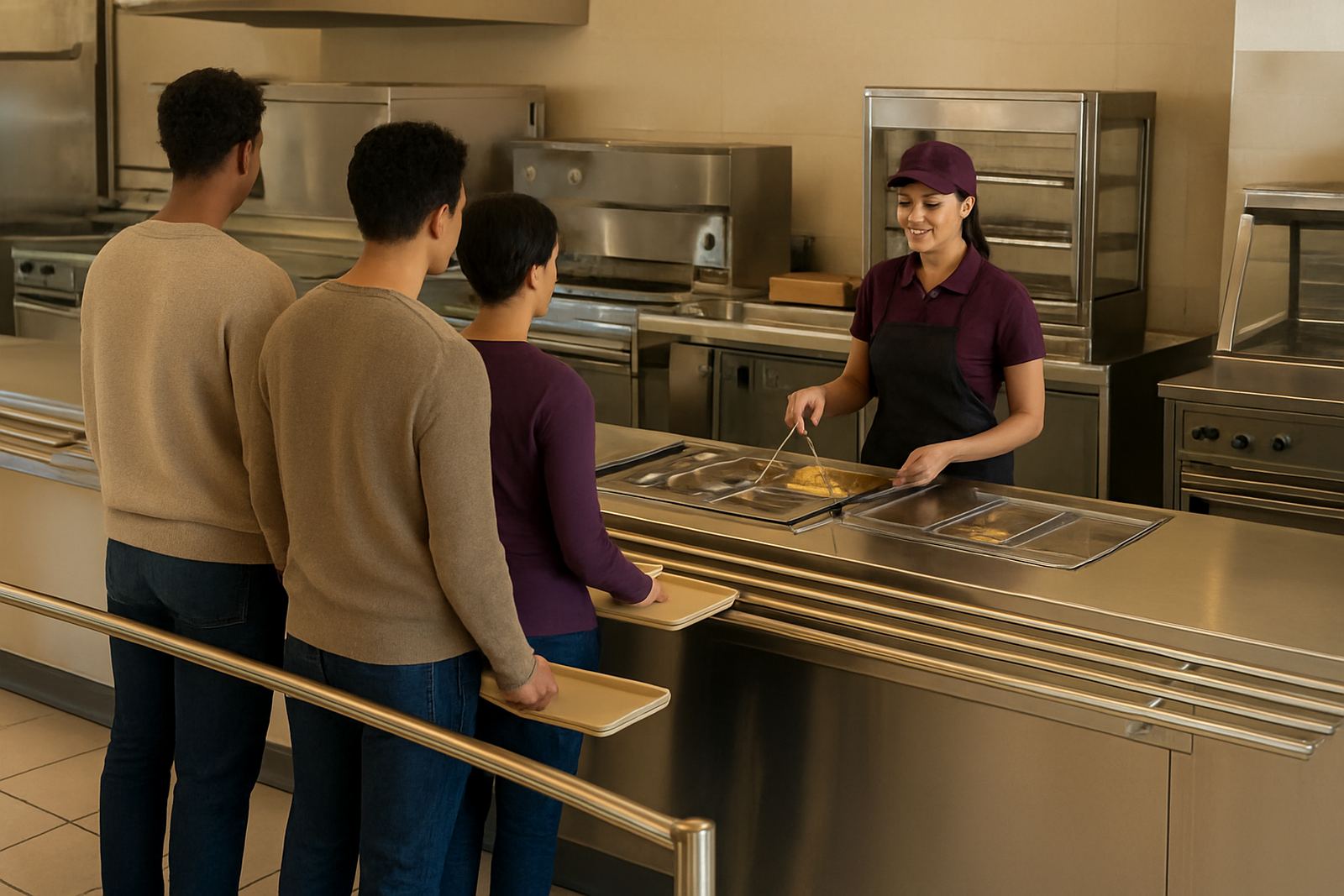
The first few metres set the pace for the whole service area. If customers arrive at a corner, a narrow doorway or a till that sits too close to the food point, the line slows before service has even begun. The best setup gives people a clear entry, a visible order point and enough space for one person to step forward while the next waits behind.
In Benoni and the East Rand, many takeaway shops work in compact front rooms where every square metre counts. That is where simple changes matter. Move the point of decision away from the door, keep the queue in a straight run if possible, and leave enough width for trays, bags and staff hands to pass without bumping. Even a small shift in layout can cut stop-start movement during lunch rushes.
- Keep the entry obvious with a direct path, not a zigzag through furniture.
- Place menus and price boards before the order point so customers decide early.
- Leave space for wheelchairs, strollers and customers carrying takeaway bags.
- Avoid placing rubbish bins or display stands where they force a turn in the queue.
Use Equipment to Guide, Not Block
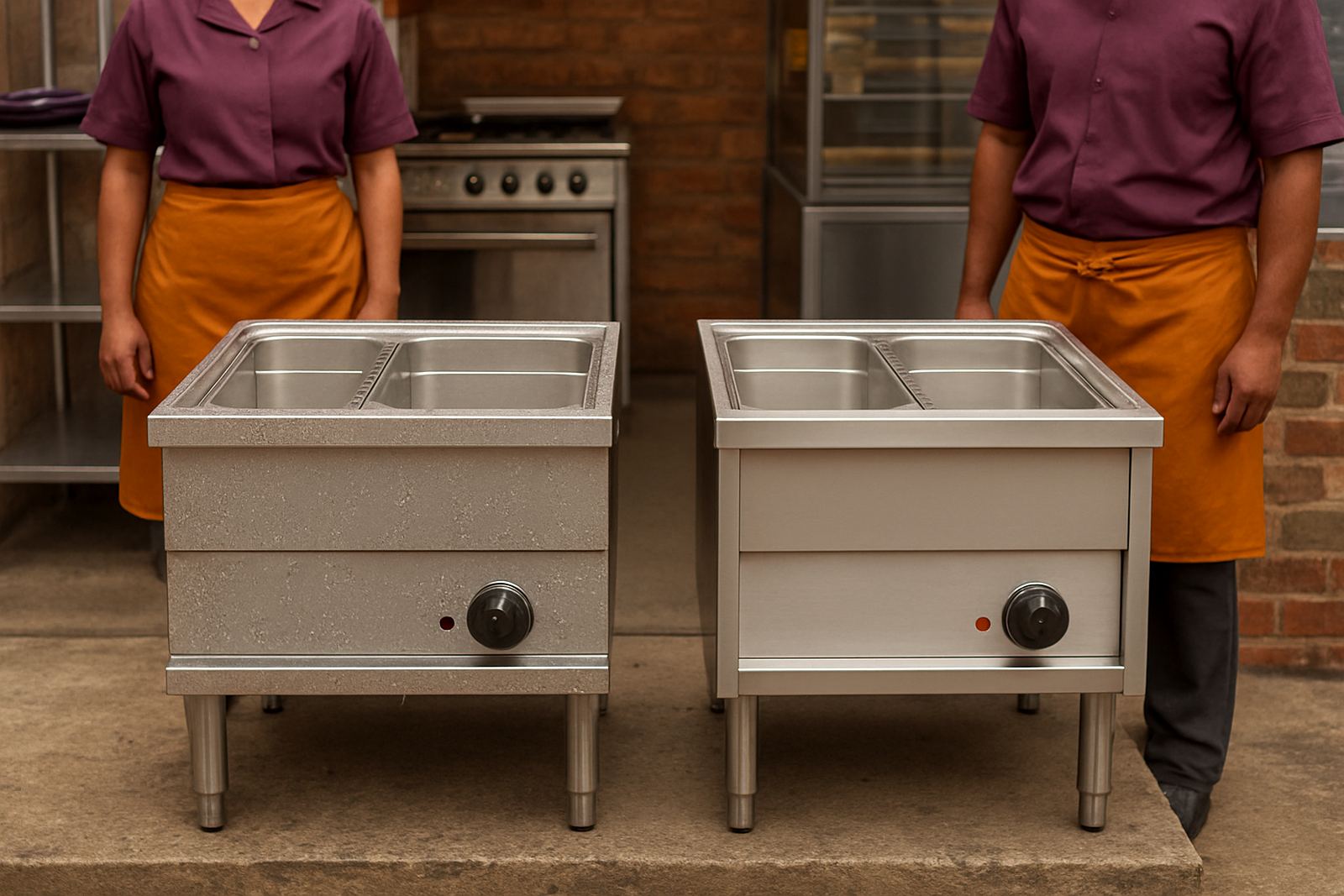
Queue flow improves when counters and units do double duty. A display unit can sell and separate. A prep table can support staff movement without becoming a barrier. A well placed bain-marie keeps hot food visible, but it should not sit so close to the payment point that customers bunch together while waiting for their order to be plated.
In practice, the easiest lines are the ones where each task has its own zone. One point for choosing, one for paying, one for collecting. If a customer must cross back past others to get napkins or condiments, the line gets messy very quickly. The serving line can get busy fast, especailly at schools, canteens and weekend trade spots, so the equipment should guide movement naturally. Stainless prep tables and counter modifications work well when they are fitted to the exact room size and the way your staff actually serve.
- Use a serving counter with a clear front edge so the next person knows where to stand.
- Fit display unit bases at the right height so products are visible without leaning across the line.
- Keep hot and cold items in separate sections where possible.
- Choose mobile trolleys only if they can lock in place during service.
Build for Staff Speed and Customer Comfort
Queue flow is not only about the customer. It also depends on how quickly staff can reach plates, pans, packaging and cleaning cloths without crossing the same path over and over. If a server has to leave the line to fetch sauce bottles or refill cutlery, the whole system slows down. A good layout keeps the most used items within one step or one turn.
For kitchens in busy areas like Boksburg, Brakpan and Germiston, the serving point often has to cope with strong midday trade and short labour windows. That means the line must be practical in load-shedding too. Gas ranges, gas warmers and simple gravity fed holding areas help keep service moving when the power cuts. It also helps to position handwash points and storage where staff can reach them without blocking customers, because a clean line is a calm line.
- Place napkins, cutlery and condiments at the collection end, not near the order point.
- Keep refill stock under the counter or on nearby shelving and racking.
- Design one clear path for staff movement behind the counter.
- Allow enough clearance for cleaning at the end of trade each day.
Match the Line to the Type of Food You Sell
A serving line for pastries does not need the same shape as a line for hot meals, and a takeaway counter has different needs again. If food is plated to order, you need more working surface near the pass. If customers choose from a set range of items, the line can be shorter and faster. The point is to match the line to the service style, not force every business into the same format.
For example, a lunch counter in Springs might need a heated display section followed by a quick payment point and a separate collection shelf. A café in Kempton Park could need more room for packaged items, while a school tuckshop may need strong flow for large numbers in a short break. When the layout matches the menu, staff spend less time explaining where to go and more time serving.
- Hot meals need clear reach and safe spacing around heat sources.
- Cold items work better when displays are visible from the queue start.
- Takeaway packaging should sit close to the final handover point.
- Menu boards should be readable from a standing position, not only up close.
Durable Surfaces Keep the Flow Clean and Predictable
Queue flow is harder to manage when equipment shifts, warps or becomes difficult to clean. Stainless work surfaces stay more predictable under daily use, heavy wiping and humid coastal deliveries, and they are easier to maintain in a fast kitchen. That matters because a sticky counter slows down service and makes customers hesitate where they stand.
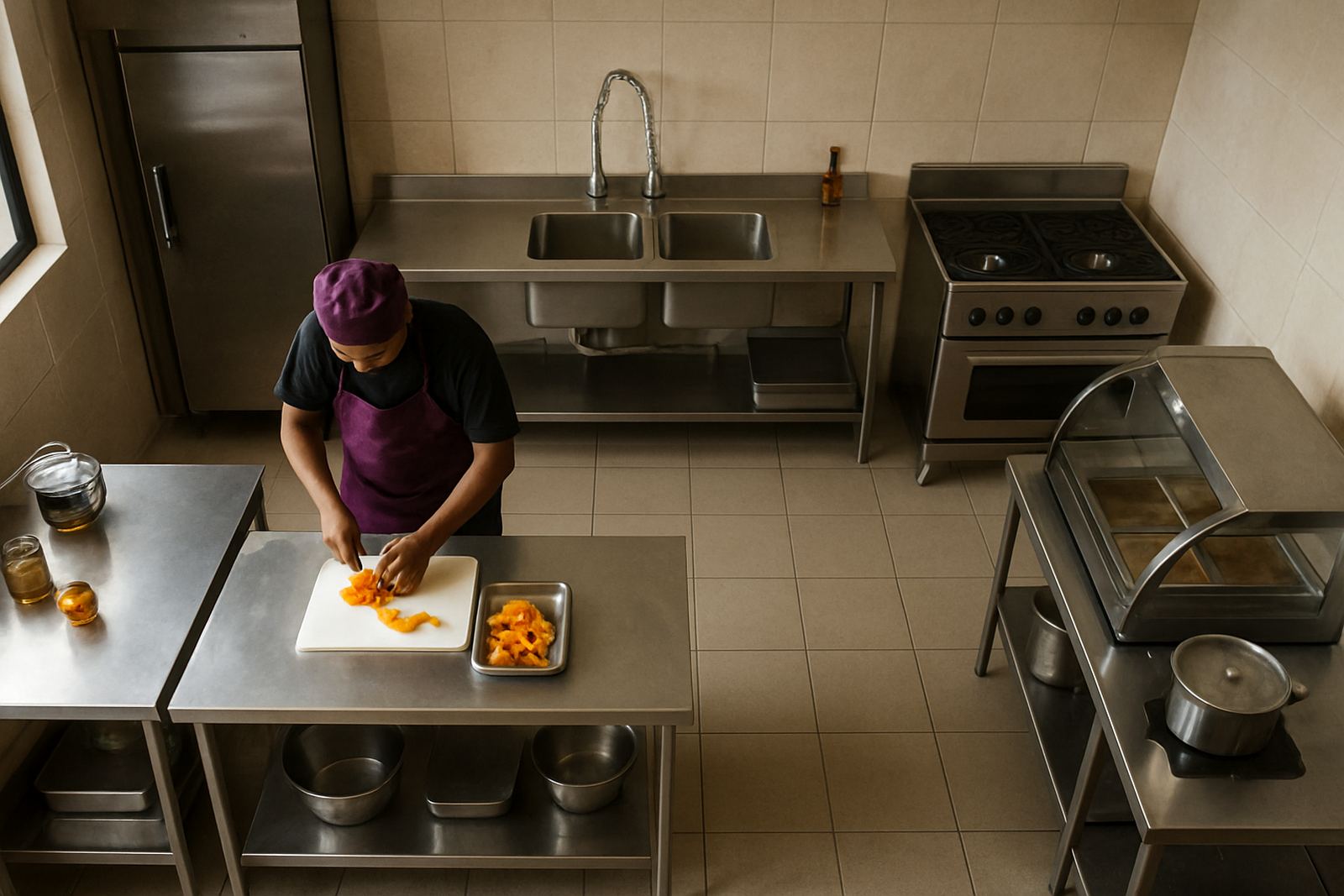
Custom prep tables, custom sinks, servery counters and extractor canopies all play a part in keeping the serving area functional. If a counter top is the wrong height or the sink is too far from the work zone, staff start carrying items across the queue path. That is where bottlenecks begin. A layout built for endurance keeps movement tight, safe and direct. It also helps to use counter modifications and stainless recladding on older setups, rather than trying to run busy service on tired fittings.
- Choose surfaces that can handle daily sanitising and repeated impact.
- Keep drainage and wash points close to food handling areas where allowed.
- Use extractor canopies where heat and steam build up near the line.
- Plan for easy replacement of worn parts instead of full shutdowns.
A Benoni Example That Saves Minutes Every Lunch
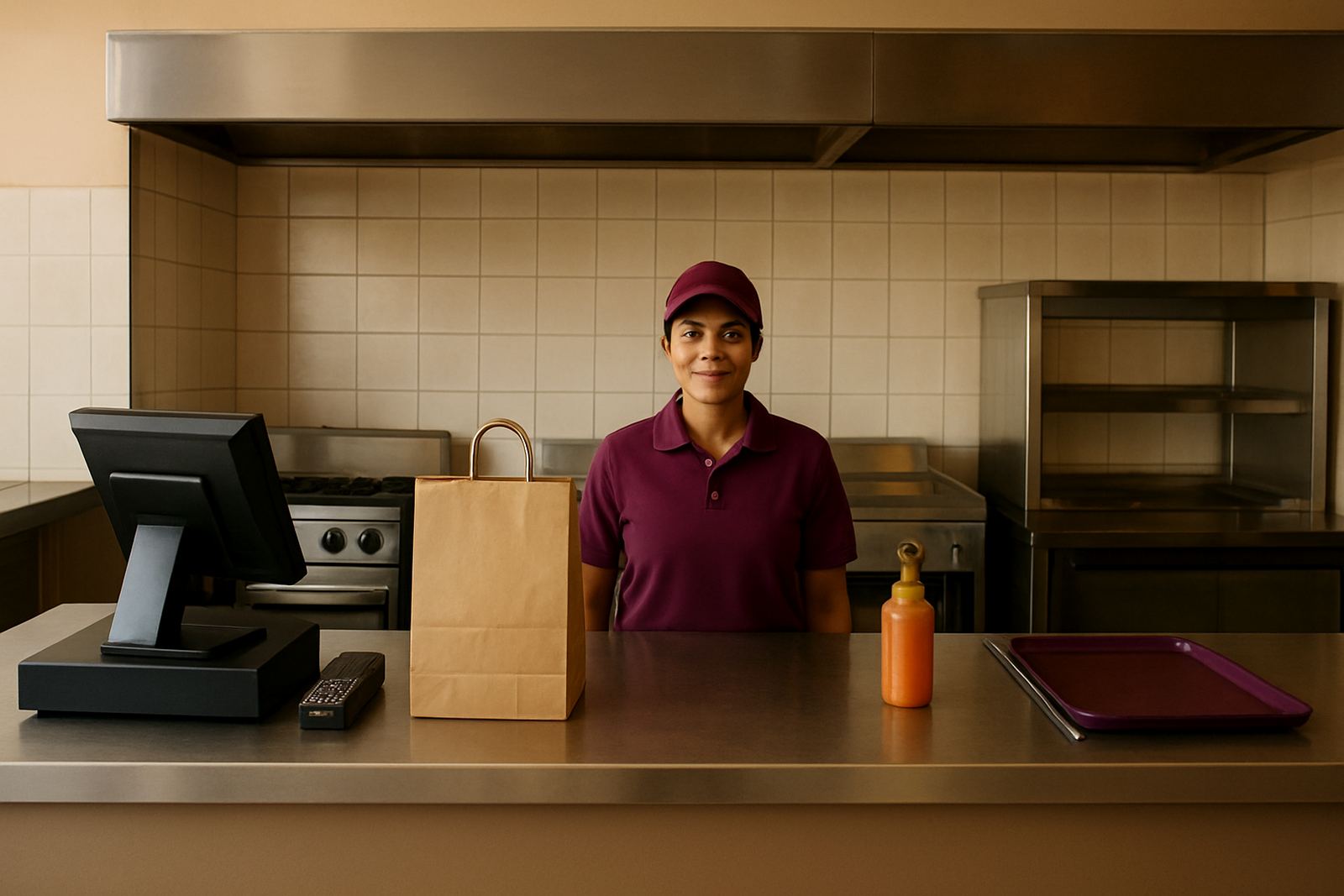
In a Benoni takeaway, a common problem is a front counter that forces everyone to gather at one point. Customers order, pay and wait in the same small space, then staff turn sideways to pass out bags. The fix is often simple: extend the counter run, separate the pay point from the collection point, and move the condiment shelf to the exit side. That small change gives each customer a clear next step.
We see the same pattern across the East Rand. A site measure first, then a practical redraw of the service flow, usually reveals more usable space than the owner expected. Mobile trolleys can support busy periods, display unit bases can lift products into view, and shelving and racking can move backup stock out of the way. The result is not a fancy fit-out, just a line that works better at 12:30 than it did at 8:00. And that is what matters when trade is strong.
- Measure the real walking path, not just the wall length.
- Mark where the queue starts and where it ends during peak trade.
- Test the layout with two staff members and three waiting customers before final fitting.
- Leave room for cleaning, stock refill and quick repairs.