Start with the room, not the equipment
Before any prep table or gas range is moved in, the room needs to be checked properly. On many Benoni and East Rand sites, the first delays come from small things like a door that swings the wrong way, a drain point that sits 80 mm too low, or a wall that is not square. If those details are not picked up early, the stainless has to be trimmed on site and the counter line starts fighting the actual building.
A good phasing plan begins with site measuring, then a simple sequence for the builder, electrician, plumber and stainless team. The aim is to make sure each trade finishes the space it owns before the next one arrives. That way, a servery counter does not get installed only to be removed again for a pipe chase, and a canopy does not get fitted before the duct route is confirmed.
- Measure finished floor levels, wall lengths and clearances first.
- Check door openings, service routes and delivery access.
- Confirm power, gas and drainage points before fabrication starts.
Sequence stainless work before the final cooking drop
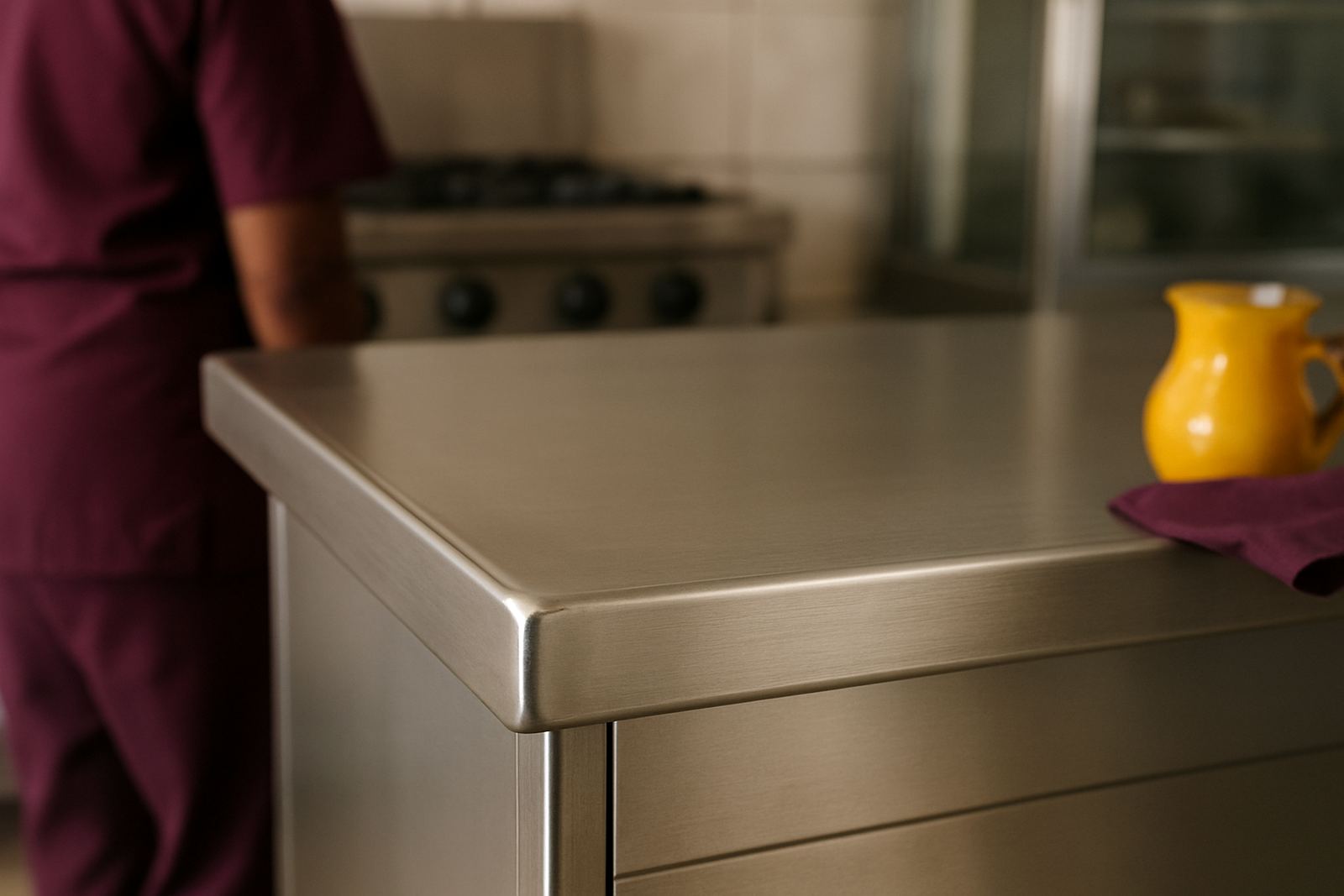
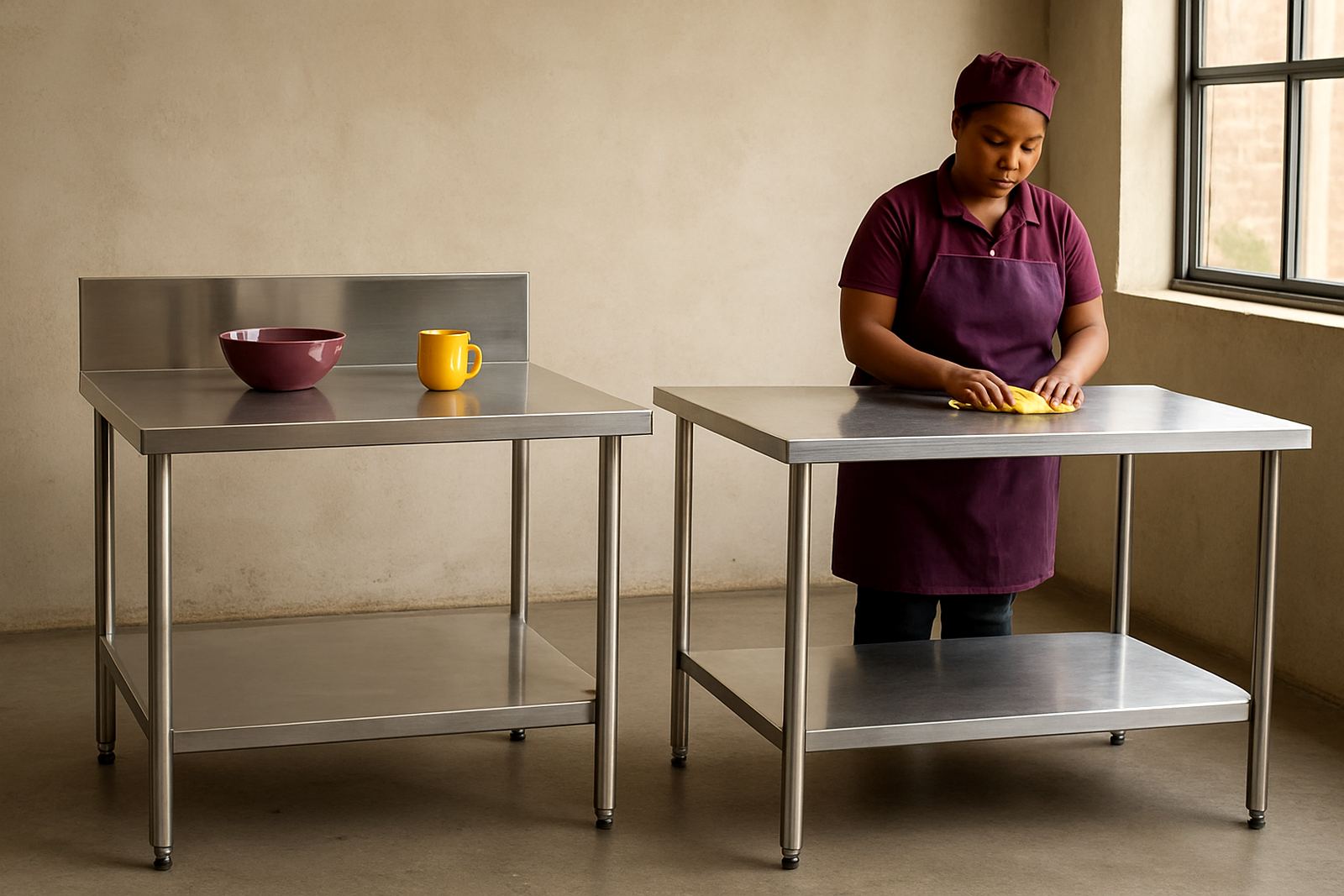
Stainless work carries the load of daily use, so it should be scheduled early enough to guide the rest of the fit-out. Custom prep tables, custom sinks and shelving and racking are not just add-ons. They set the working heights, traffic flow and storage layout for the whole kitchen. If these items are left too late, the cooking units may land in the wrong position and the staff end up working around the equipment instead of through it.
In practical terms, the stainless team should come in after the wet trades are finished and before the final fit of cooking units. Once the walls, floors and service points are confirmed, the fabrication can be set out accurately. That is especially important in takeaways where every square metre counts and the prep line needs to feed the cooking line without people crossing over each other.
It also helps with hygiene. When the counters, sinks and splashbacks are installed in the right order, the joints are tighter, the finishes line up and there are fewer gaps where dirt can collect. In kitchens near the coast or in humid storage areas, getting the sequence right also reduces the chance of premature corrosion at fixings and cut edges.
Plan the cooking line after services are locked in
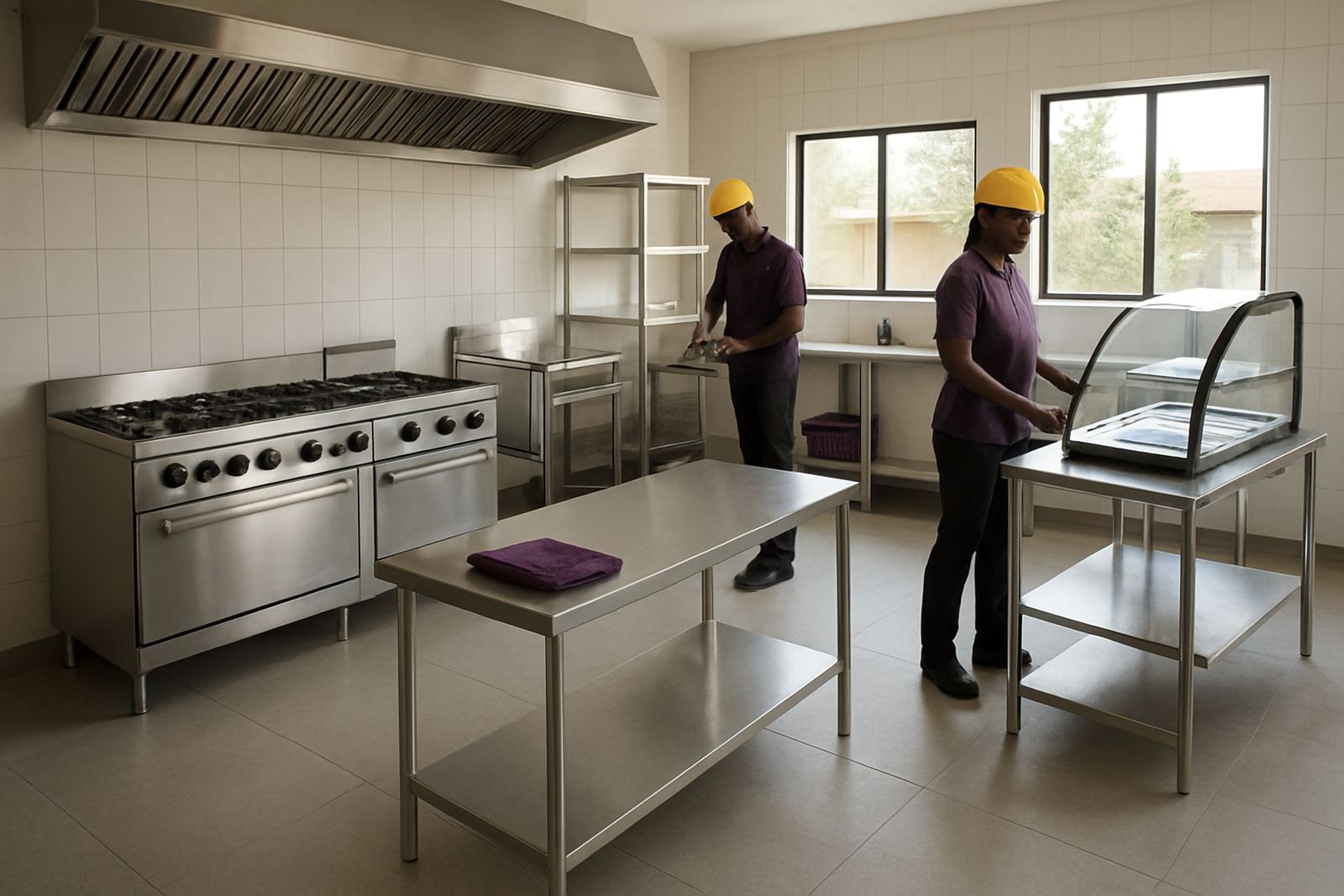
Gas ranges, bain-maries and display units should be set only after the services are final. That means the gas point, electrical supply, ventilation and any heat shielding are already in place. If not, the unit positions may have to change at the last minute, and that usually costs more in labour and causes avoidable downtime.
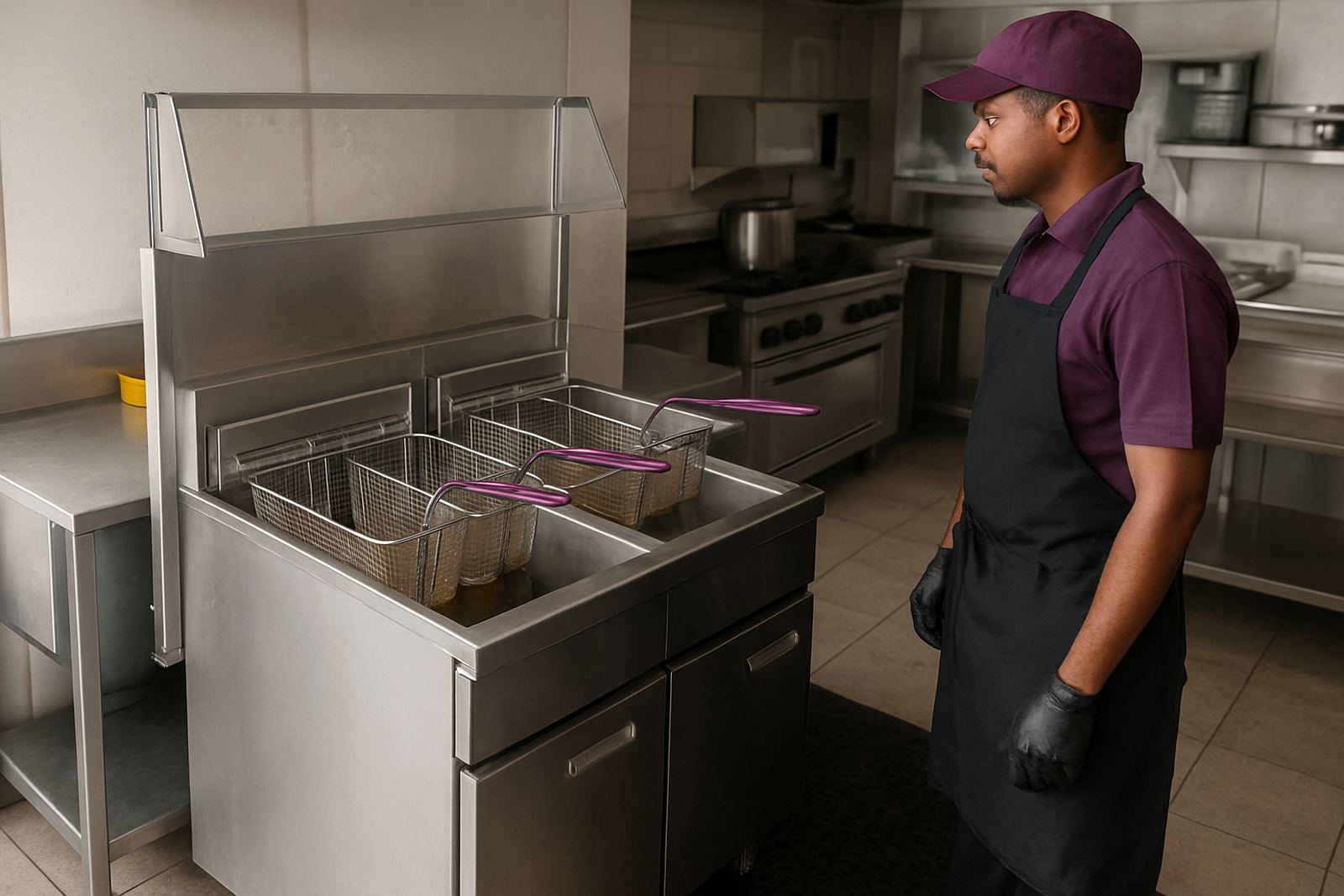
On a busy takeaways site, the cooking line should be mapped around the real service pattern. Where will the raw product enter, where does it get prepped, where is it cooked and where is it handed over. Once that is clear, the equipment can be placed in a straight flow. A bain-marie may need to sit closer to the pass, while a gas range might need a stronger clearance zone and access for cleaning behind it.
- Lock in gas, power and extraction before final placement.
- Leave access for cleaning, maintenance and future servicing.
- Allow enough working space so two staff can move safely without bumping each other.
It sounds basic, but many problems on site come from squeezing equipment in too early. If a range is set down before the canopy and duct route are confirmed, it can block the very work needed to get the kitchen signed off. In municipal inspections, that kind of mistake can hold the opening date back by days.
Use counters and servery pieces to control the handover point
Counters do more than finish a room. They define the customer side, the staff side and the handover point. Servery counters and display unit bases must be phased after the main service spine is settled, otherwise the front-of-house line may end up too deep or too shallow for the space. In a takeaway, even 150 mm can affect queue movement and payment flow.
Once the cooking line is fixed, the counter line can be set to suit the actual service. That means the staff can plate, pass and collect waste without taking extra steps. If a display unit is involved, its base must sit level and secure, especially where the floor has a slope for drainage or where tiles finish unevenly at the entrance. A sloppy base looks minor at first, but once the unit is loaded with product and heat, it becomes a daily irritation.
A phased counter install also helps with branding panels, till positions and menu board spacing, but the real value is operational. The customer side stays neat, the staff side stays open and the working line does not get boxed in by a last minute change.
Keep fabrication, delivery and install dates close together
One of the biggest risks in fit-out work is leaving too much time between measuring, fabrication and installation. Site conditions change fast. A wall gets skimmed thicker than expected, a tile batch arrives with a slightly different build-up, or a builder closes a doorway that was meant to stay open for delivery. If the fabrication date is too early, the final product may fit the drawing but not the site.
At the same time, the delivery and install team must work to a date that lines up with the trades before and after them. In Benoni, Boksburg, Brakpan, Springs, Kempton Park and Germiston, sites often run on tight handover windows because landlords want work finished before trading hours or before the next tenant move-in. That means a phased schedule should leave enough room for checks, but not so much room that things drift.
- Confirm final dimensions after wet trades and tiling.
- Book install only once ceilings, floors and service points are ready.
- Keep a short gap between fabrication and site delivery where possible.
Where a project is being done in stages, the site should still be treated as one sequence. First the structure, then the stainless, then the cooking equipment and last the finishing touches. That order keeps the site tidy and reduces double handling.
A Benoni takeaway example that shows the value of phasing
We recently looked at a takeaway setup in Benoni where the owner wanted to open fast but also keep room for future growth. The building had one back wall already carrying the drainage, and the electrical board was fixed on the opposite side. Instead of forcing the equipment in all at once, the fit-out was split into clear phases. First came the site measuring and service check, then the custom sink and prep tables, then the extractor canopy and cooking line, and finally the servery counter and display base.
That order made the install cleaner and kept the trades out of one another’s way. The team could work without stepping over live service points, and the owner did not have to undo completed work to let another contractor in. The result was a tighter layout, less damage during install and fewer surprises when the opening inspection was done.
For operators in the East Rand, that is usually the real test. A good fit-out is not only about what the kitchen looks like on completion, it is about whether the sequence held together while the site was still open and active. When the phasing is right, the equipment lands once, works properly and stays easier to maintain.
What to ask before you sign off the programme
Before any fitting date is confirmed, it helps to ask a few direct questions. Who is doing the final measure, what finish level is being assumed, and which trade needs to be done first. If the answer is vague, the site will probably drift. A clear programme protects the client, the installer and the opening date.
At CaterKraft, the best results come when the sequence is treated as part of the job, not an admin extra. Stainless work, cooking units and counters all depend on one another. Put them in the right order and the kitchen flows better. Put them in the wrong order and even a small installation can turn into a week of patching and waiting.
- Ask for the exact install order in writing.
- Check who is responsible for each service point.
- Make sure the site is ready before equipment arrives.
That simple discipline saves time, keeps the space cleaner and helps the owner open on schedule, which is what matters most.