Start With Fewer Dirt Traps At The Top
The easiest counter to clean usually starts with a plain question, where will crumbs, grease and sauce sit after a busy lunch? A flat top with neat welded edges is far simpler to keep under control than a top with open seams, hollow trims or decorative grooves. In a takeaway or servery, those little channels catch every bit of food and water, then hold onto grime through the afternoon.
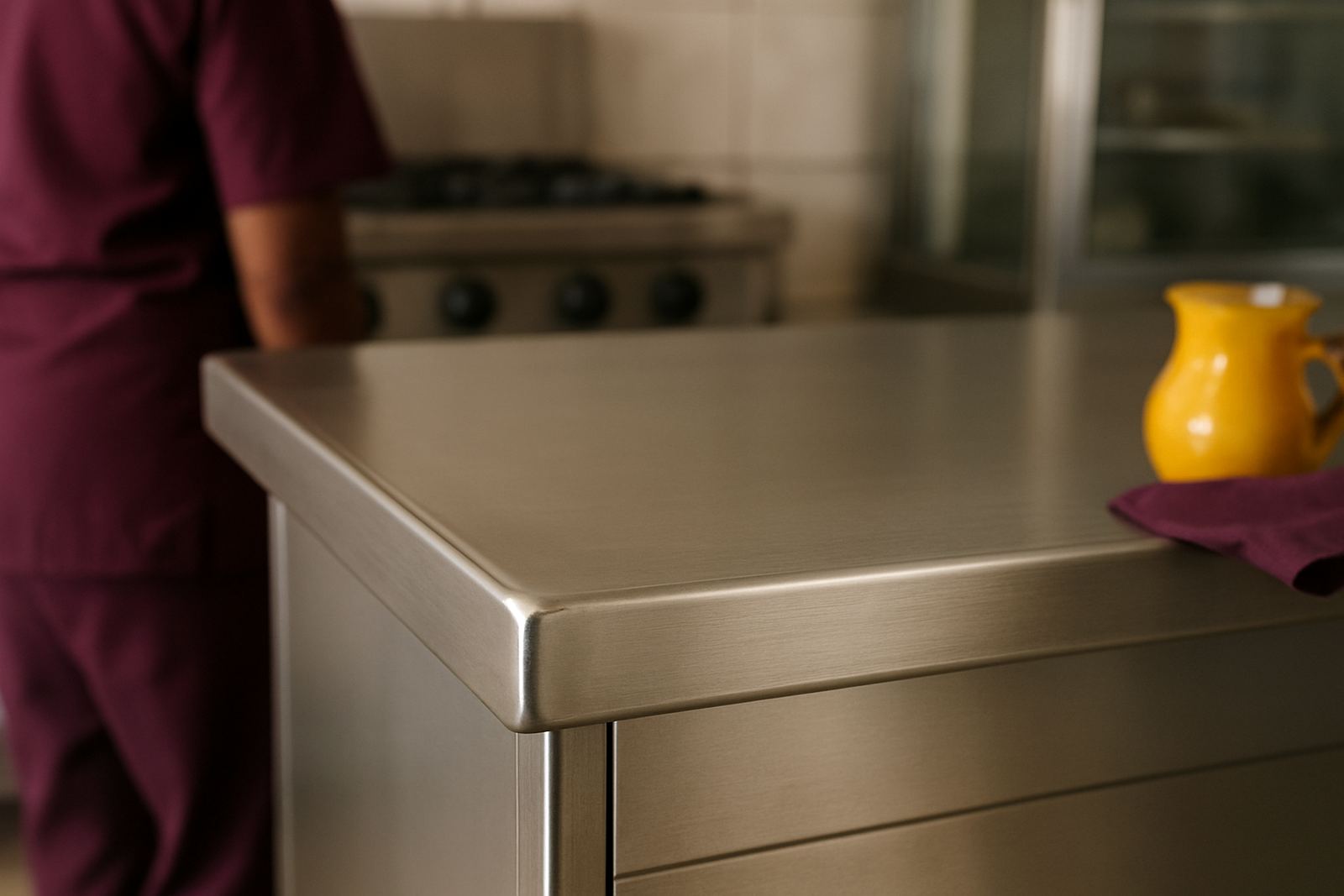
Stainless steel is still the practical choice for most service counters in Benoni and the East Rand because it handles heat, moisture and constant wiping better than painted board. For coastal deliveries too, proper grade material matters since humidity can mark cheaper finishes faster. A smooth brushed finish is usually easier to maintain than anything highly polished, because it hides light scratching and does not show fingerprints as quickly.
- Ask for a top with a slight fall or controlled drainage where water is used often.
- Keep decorative lips and deep returns to a minimum on food contact areas.
- Use full sheet panels rather than patched sections where possible.
Welded Joints Beat Open Seams In Busy Counter Areas
When a counter is made from several pieces, the join is often where cleaning becomes difficult. Open seams can trap juice, flour, curry residue and sticky drink spillages. Over time those lines discolour and become hard to keep sanitary. A properly welded and dressed joint is much simpler, because there is nowhere for waste to sit.
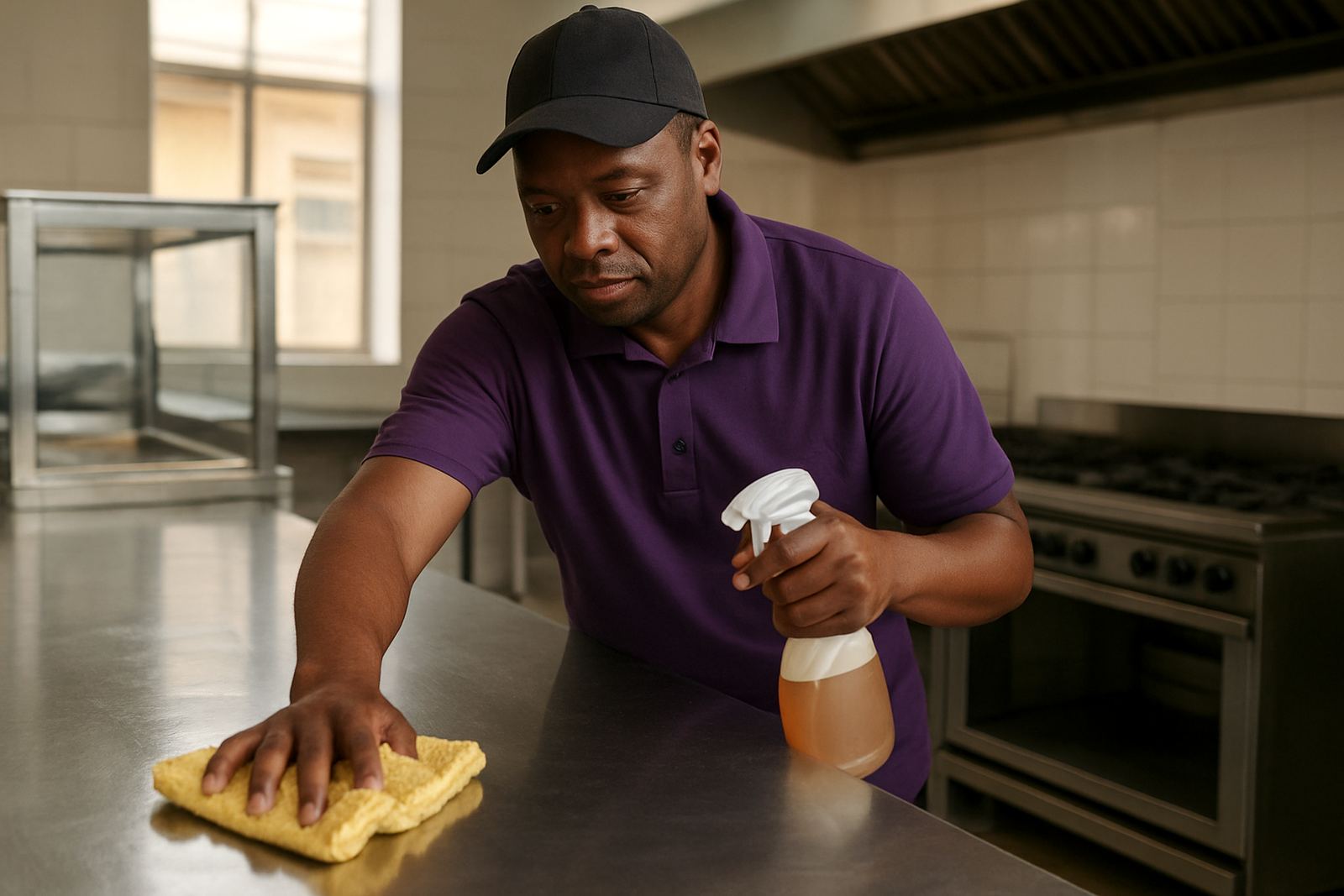
On a busy shop floor in Boksburg or Germiston, staff will usually wipe counters with a cloth and sanitiser between customers. If the joint has a ridge or gap, that quick clean takes longer and still leaves dirt behind. Smooth welds, neat corner finishing and careful grinding after fabrication all help the counter clean properly with one or two passes, not ten.
- Prefer continuous welds on working edges and splash zones.
- Avoid silicone lines where food splash is common unless they are easy to inspect and replace.
- Ask that corners are rounded enough for cleaning cloths to reach without snagging.
Choose Splashbacks That Protect Walls Without Creating Fuss
A good splashback saves the wall and makes end-of-day cleaning quicker. The trick is to keep it simple. A straight back upstand behind the counter catches drips from serving spoons, cups and trays without giving dust a place to settle. Very ornate trims look nice in a showroom, but they usually mean more wiping and more places for grease to build up.
For counters near fryers, bain-maries or drinks service, the wall behind can take a hammering from steam and splatter. In a Springs takeaway, for example, a plain stainless splashback is often easier to keep clean than tiled finishes with deep grout lines. Tiles can work, but the grout needs proper sealing and regular checking or it starts to hold stains. For many owners, less detail means less trouble.
- Use a height that covers the real splash zone, not just the visible wall line.
- Seal wall terminations neatly so water cannot creep behind the lining.
- Keep light fittings and power points away from direct splash where possible.
Make Storage And Lower Cabinets Easy To Reach
Easy-clean counters are not only about the top. The base matters too, especially where staff mop daily and crumbs collect under the front edge. Open bases or raised legs can make sweeping much quicker than full enclosed plinths, provided the layout still suits the site. In some kitchens, closed cupboards are needed for stock or packaging, but they should not create awkward corners that the mop cannot reach.
If the counter sits in a busy front-of-house area, removable lower panels are useful for checking for leaks and trapped dirt. A counter that can be inspected properly will stay in service longer, because small problems are caught early. On the East Rand, where many takeaways run long trading hours with limited cleaning breaks, that access saves real time after closing.
- Allow enough toe space for the cleaner to work along the front edge.
- Use removable panels where pipes, drains or gas lines need access.
- Keep shelf heights practical for cartons, tubs and daily stock rotation.
Match The Counter Detail To The Way You Trade
A sit-down café does not clean the same way as a street-facing takeaway or a hot food counter inside a fuel stop. The best fabrication detail depends on how the counter is used every day. Where customers lean on the front and staff hand over food quickly, rounded front edges are kinder to clothing and easier to wipe. Where pans, trays and plates move across the top, a hard-wearing flat work area is the better option.
For a Benoni supermarket deli, the counter may need display glass, a chilled base and easy access for staff behind the serve line. For a smaller Brakpan shop, a simple pass-through with a stainless work top and closed rear storage may be enough. The point is to avoid over-complicating the build. Every extra ridge, bracket or decorative panel adds one more place for dirt to sit and one more step at cleaning time.
- Front-of-house counters should prioritise quick wipe-downs between customers.
- Hot service counters need materials that can handle steam and heat without warping.
- Back-of-house prep counters should balance hygiene with practical storage and movement.
A Local Example From A Busy East Rand Counter
A small takeaway in Kempton Park recently needed a service counter that could stand up to sauce, steam and constant hand washing at the sink beside it. The owner wanted a cleaner front for customers, but the old unit had open seams, a tired laminate edge and a splashback that left the wall stained by midweek. The replacement focused on simple details: welded stainless corners, a plain upstand, easy access to the lower section and no deep trim work.
That change did not only improve the look. Staff could wipe the counter faster at closing time, and the cleaning cloth no longer caught on rough joins. The owner also reported less build-up around the sink cut-out, where water used to sit in the old edge line. It is a small shift in fabrication, but over a month it saves proper time. In a trade where every minute after supper counts, that matters.
For businesses across Benoni, Boksburg, Germiston and Springs, the lesson is simple. The easiest counter to maintain is usually the one that was planned for cleaning from the start, not patched later with extra trim or sealant.