Start With The Right Wipe Down After Service
The best time to clean stainless is while the surface is still warm, not hot, and before food residue has time to dry on. In a Benoni takeaway doing breakfast and lunch trade, that often means a quick wipe after the morning rush, then another proper clean once the lunch run is done.
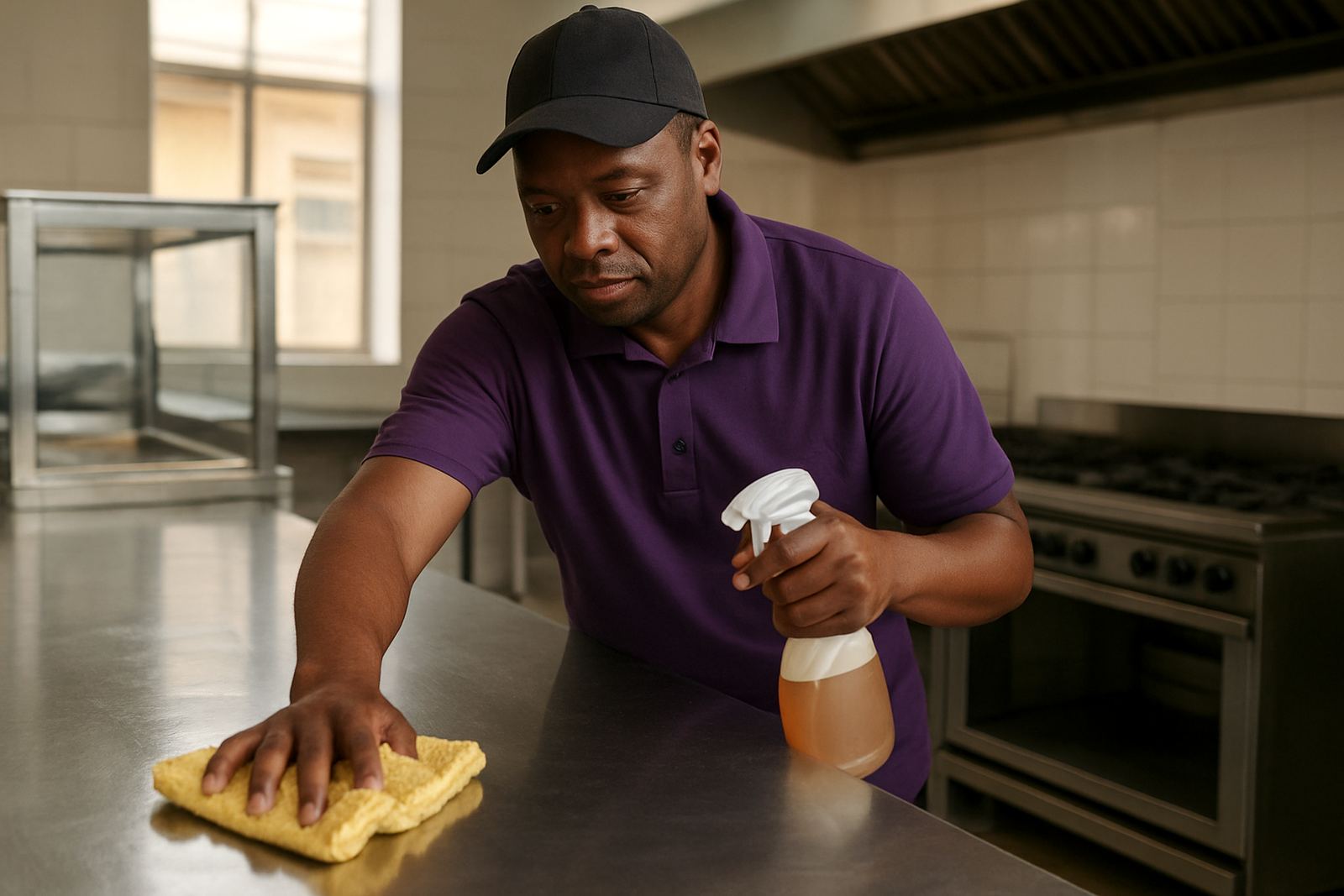
Use a soft microfibre cloth or clean cotton cloth with warm water and a mild detergent. Wipe in the direction of the grain if the finish shows one. That small habit makes a clear difference to how the surface looks the next day.
- Remove crumbs and loose dirt first
- Use a separate cloth for greasy areas
- Dry the surface fully to prevent water marks
- Check corners, joins and splash zones where dirt collects
Keep Grease And Sugar Off Before They Harden
Grease and syrup are the two common problems that turn a neat prep table into a sticky job by the end of the shift. If they are left overnight they set hard, and the cleaning job becomes slower and more aggressive than it should be.
A light spray of warm soapy water on the affected area works better than scrubbing at once. Let it sit for a minute, then wipe. If you are cleaning near bain-maries or hot display units, make sure the power is off and the surface has cooled enough for safe handling.
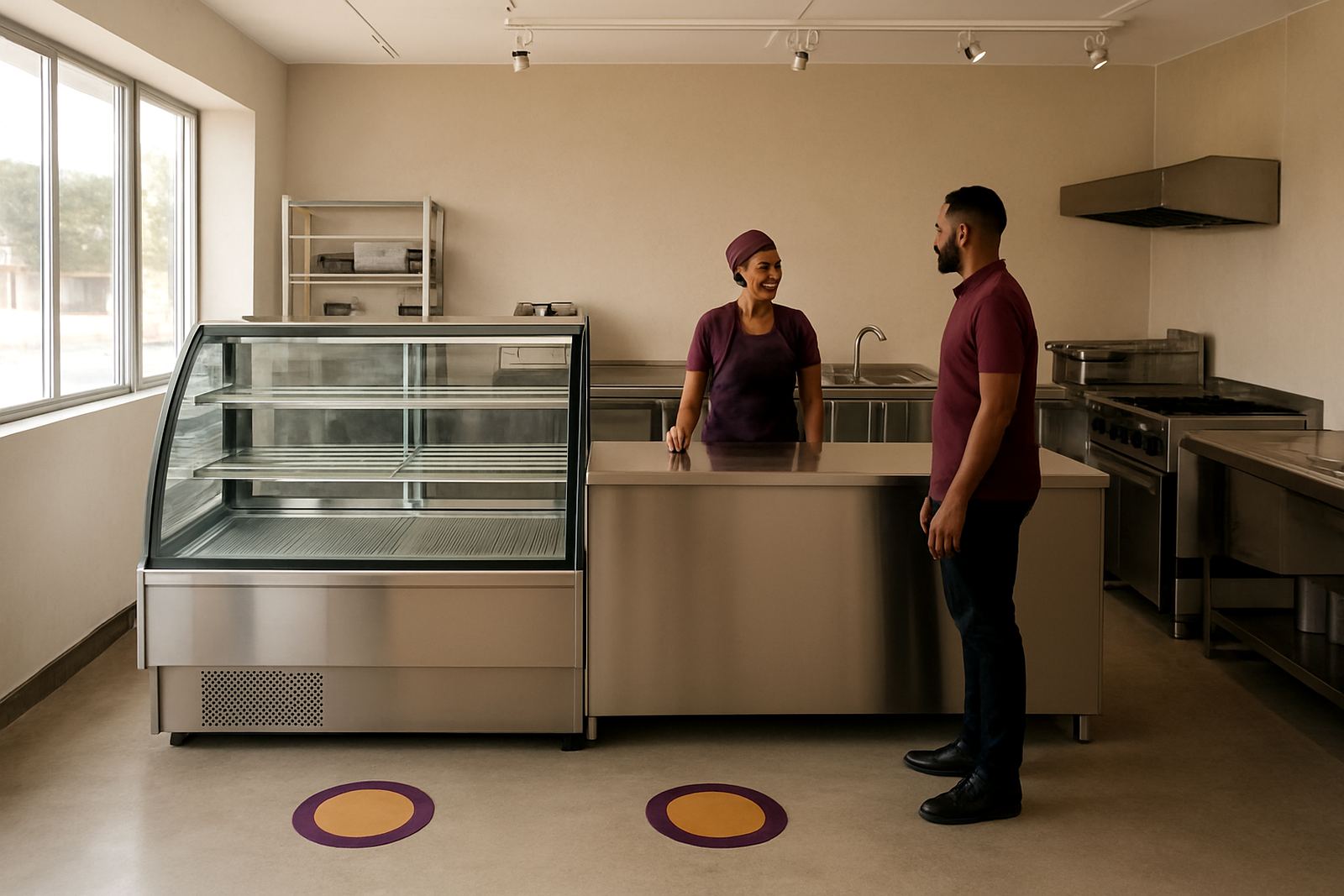
In East Rand kitchens where staff are working quickly between deliveries and walk-ins, the clean-as-you-go habit saves time later. It also keeps the front counter looking better for customers, which matters in smaller takeaway spaces where the prep area is partly visible.
Use The Right Cloths And Cleaning Products
Stainless can be marked by rough pads, strong chlorine products and old cloths that hold grit. Those things may seem harmless on a busy morning, but they can scratch the finish and leave dull patches that are hard to reverse. One bad wipe and the surface can look older than it is.
Keep a small cleaning set for each work area so cloths used on floors do not end up on prep counters. If your team uses detergent buckets, change the water often. Dirty water just moves the same film around. wipeing with a dry cloth after cleaning helps prevent streaks, especially on brushed finishes and display fronts.
- Use non-abrasive cloths only
- Avoid scouring pads unless the stain really needs it
- Do not use bleach on a routine basis
- Label cloths for prep, service and general cleaning
Watch The Edges, Welds And Splash Points
The clean centre of a table often gets attention, but the edges and welded joints are where grime starts building up. If you have custom prep tables, sinks or servery counters, check the seams daily for trapped crumbs, soap film and grease.
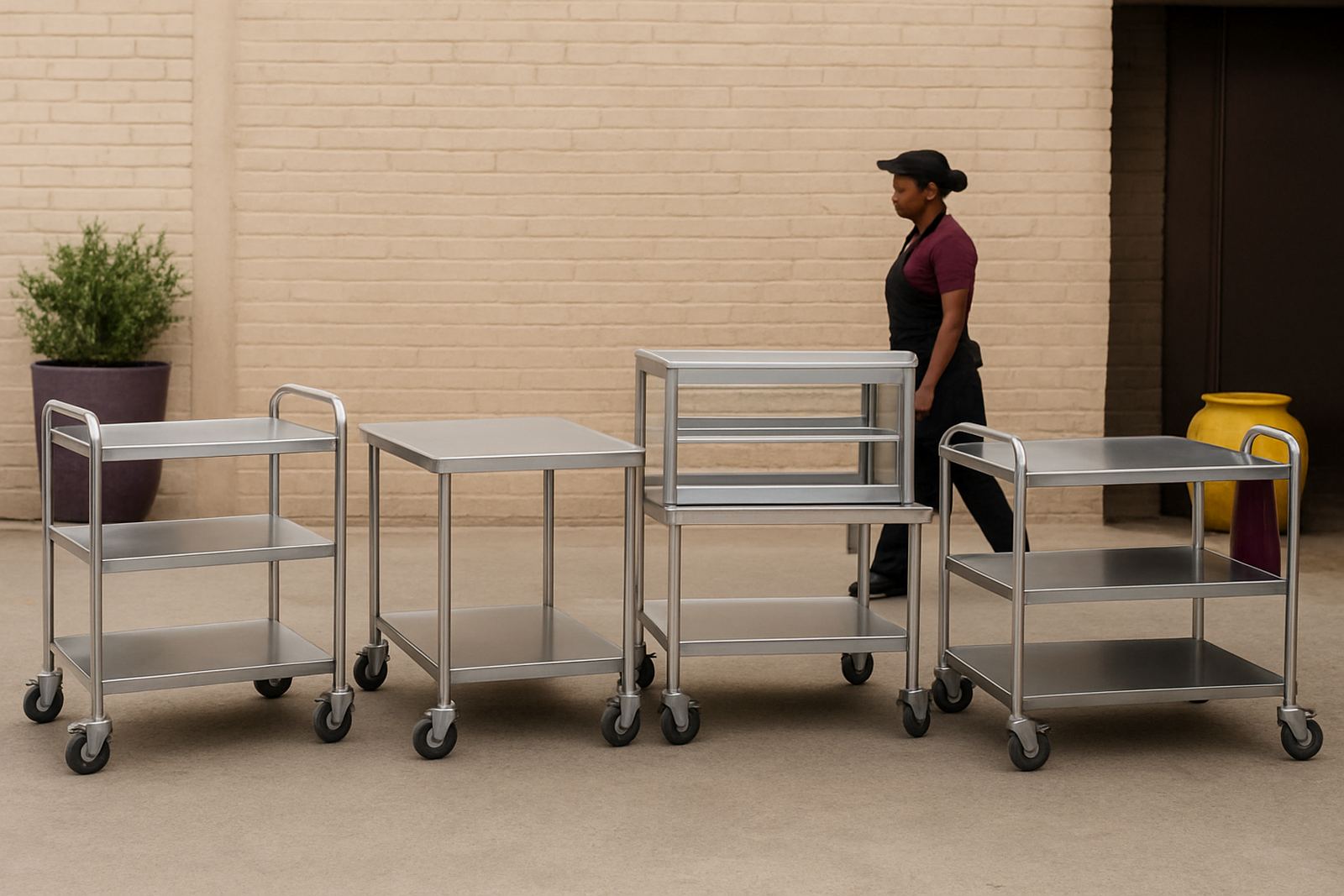
Springs and Germiston sites with high-volume service often deal with splash marks from rinsing, tipping and plating. A small brush, a damp cloth and a bit of patience are enough for most of these problem spots. Pay extra attention under shelves, around tap bases and behind mobile trolleys where dust settles quietly.
For counters near outside doors, coastal humidity is not the only concern. Dust from traffic and open windows can stick to damp steel and leave a grey film by closing time. A fast final wipe helps keep that from building into a bigger job the next morning.
Set A Closing Routine That Staff Can Repeat
The routine should be simple enough for every shift to follow, even when the day runs long. If it takes too many steps, it will be skipped. A good closing process is short, clear and the same every night.
- Clear all loose food and packaging first
- Wash the surface with warm water and detergent
- Rinse with a clean damp cloth
- Dry completely with a soft cloth
- Leave doors, drawers and shelves open if moisture is inside
Load-shedding can interrupt cleaning schedules, so it helps to keep a hand towel and backup torch nearby for final checks. If a unit has been switched off early, make sure no moisture is left around controls or under the base before the team leaves.
Make Stainless Last Longer In Busy East Rand Kitchens
A clean surface is not only about presentation. It also helps spot dents, loose fittings, leaks and heat marks before they become expensive repairs. That is useful in kitchens where equipment is moved often or where counters are modified to fit new service lines.
CaterKraft works with Benoni, Boksburg, Brakpan, Springs, Kempton Park and Germiston clients who need practical equipment that can handle daily use. For units like display bases, extractor canopies and stainless shelving, a regular clean keeps them service-ready and easier to inspect. It also helps staff notice when a panel needs attention rather than waiting until the problem grows.
If your prep area already has custom fabrication, a small care routine protects the money you have spent on it. Daily cleaning is cheaper than replacement and it keeps the kitchen looking organised even on the busiest trading days.
Simple Habits That Protect The Finish Long Term
Good stainless care is mostly about repetition. The surface does not need heavy treatment every day, it needs steady attention and the right habits from the team. Once those habits become part of opening and closing, the work gets easier and the steel keeps its professional look for longer.
- Train every new staff member on the same cleaning method
- Keep a small stock of cloths, detergent and spray bottles
- Check for water spots after sinks and handwash areas are used
- Do a quick visual inspection before lights are switched off
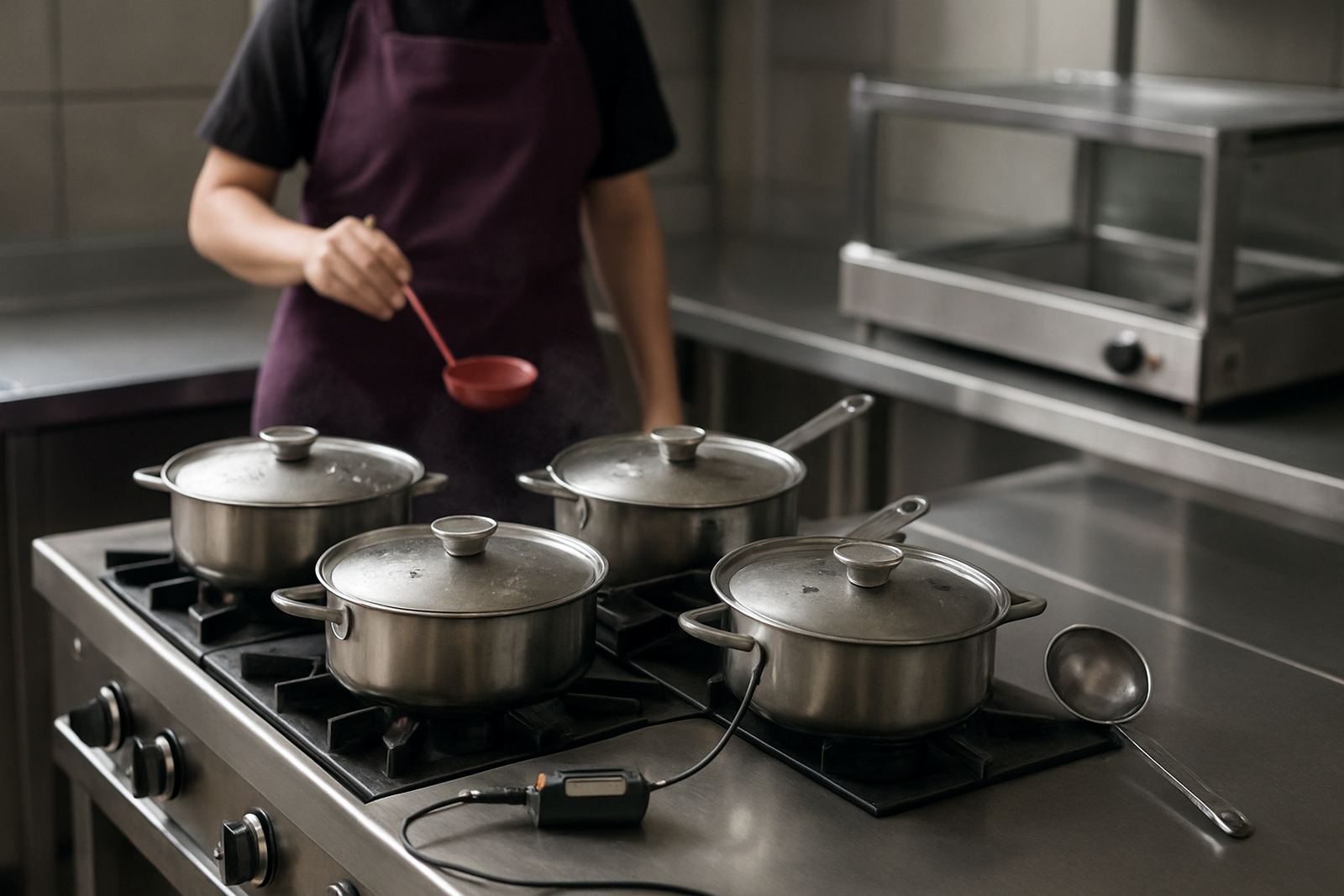
For kitchens in and around Benoni, that means less scrubbing after a busy service and fewer complaints about dull or stained surfaces. Clean stainless is not hard to maintain, but it does need discipline. Once the routine is in place, it becomes part of the day just like switching on the gas range or checking the bain-marie.