Start With The Type Of Service You Run
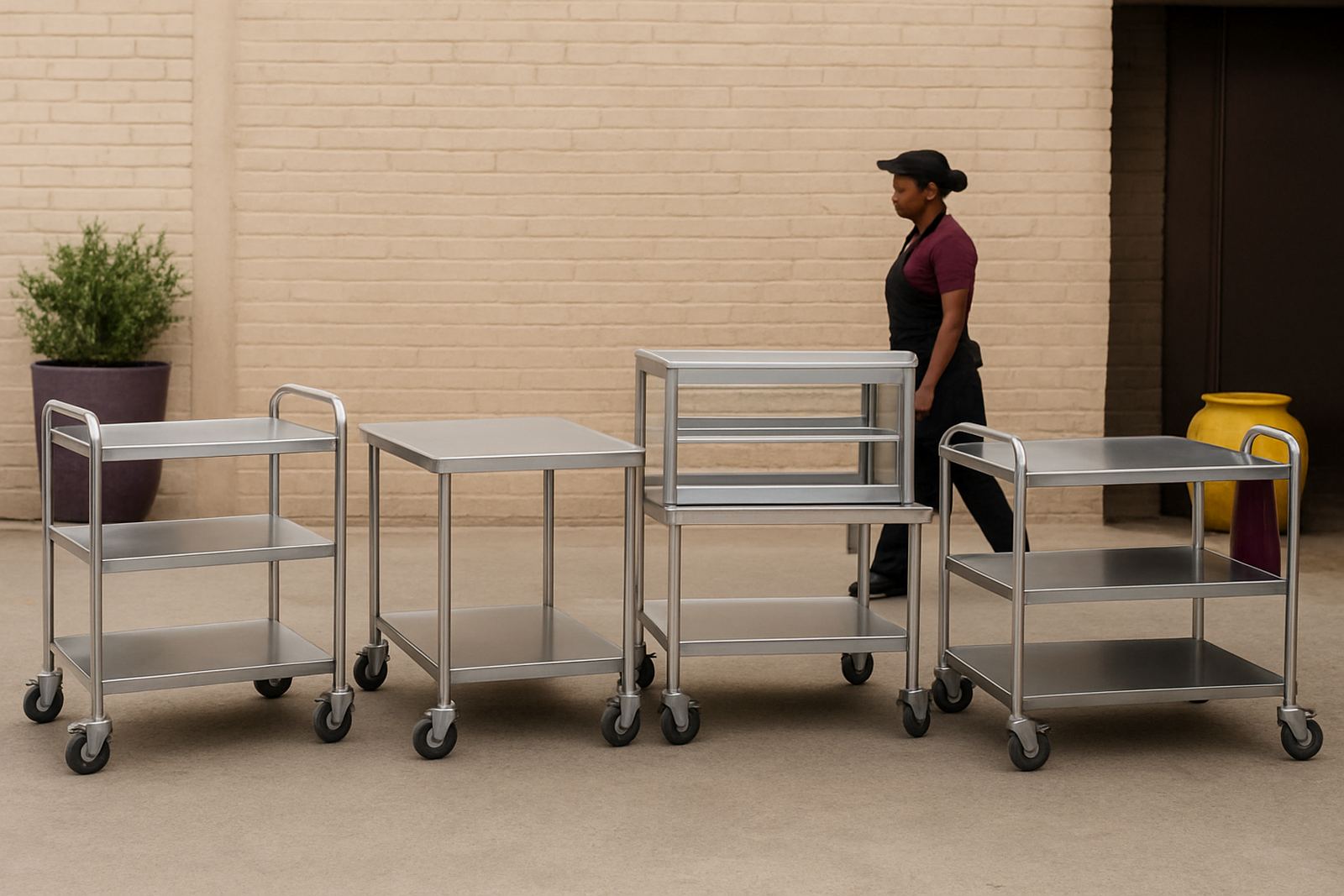
Not every trolley is meant for the same job. A clearing trolley in a canteen needs open space for used plates, bins and cups, while a plated service trolley must hold finished meals steady and presentable on the way to the dining area.
If you are running a hotel breakfast room in Benoni or a school dining hall in Springs, think about what happens on the trolley every hour, not just how it looks on delivery day. Clearing jobs need speed and easy rinsing. Plated service needs stable shelves, good edge protection and enough height so staff can work without bending too much.
- Clearing trolley: open, easy to clean and quick to load
- Plated service trolley: level shelves and steady movement
- Combo use: check if one trolley can handle both without becoming bulky
Check The Size Against Your Passages And Doors
A trolley that is too wide for a corridor becomes a daily frustration. Measure the narrowest point from kitchen to service area, including door frames, swing doors and any tight turns near the dishwash point. In older buildings around Germiston and Brakpan, passage widths can vary more than people expect.
Also check the working height. Staff should be able to load trays or stack plates without lifting too high, and the top shelf must clear counters and servery lips. A trolley that is right for a 600 mm door opening might still be awkward if the handle sticks out too far or the wheels sit too close to the frame.
- Measure width, length and height at the narrowest route
- Allow space for handles, tray lips and wheel movement
- Make sure the trolley can turn before it reaches the serving point
Wheel Choice Matters More Than Most Buyers Think
Wheels carry the real workload. A light trolley with poor castors will rattle over joints, stick on tiles and become hard to steer when fully loaded. On the East Rand, many kitchens deal with uneven paving at delivery points, small service lifts and floor drains so wheel quality matters from the start.
For indoor service on smooth floors, smaller wheels can work if the load is modest. For outdoor movement, loading bays or rougher surfaces, larger wheels with proper bearings make a clear difference. If the trolley will move through a loading yard in the rain or across a heat-damaged apron, ask for wheels that can handle moisture and daily cleaning without seizing up. A swivel brake on at least two wheels is a practical must.
- Choose larger wheels for rough floors or outdoor routes
- Use locking castors for loading, parking and safe service stops
- Ask how the wheels handle water, detergent and heat
Match Shelf Spacing To Plates, Trays And Bins
Shelf spacing is often the difference between a trolley that works and one that forces staff to stack in a rush. For plated service, the gap between shelves must suit the plate height, covered dishes or warming trays you use. For clearing, you need enough clearance for stacked crockery, tubs and cutlery bins without the top layer scraping the shelf above.
A well planned trolley reduces noise too. That matters in function venues and takeaway back-of-house areas where plates should move quietly from point A to point B. If you handle mixed loads, ask for a layout that suits the tallest item you expect to move most often, not just the smallest item on the list.
- Measure the tallest plate stack, tray or tub you will carry
- Leave space for safe loading and unloading
- Make sure the shelf edges help keep items in place during movement
Choose Materials That Can Take Daily Cleaning
In a commercial kitchen, the trolley will be washed often and exposed to steam, food scraps, sanitiser and constant handling. Stainless construction is usually the practical option because it handles cleaning well and suits warm, humid conditions near the coast or in closed prep rooms. Mild steel may look fine at first but can suffer once water, detergent and time get involved.
Look at the finish on all corners and joints. Rough welds trap grime and make cleaning slow. Solid surfaces are easier to keep in good order and better for food areas where hygiene checks matter. If the trolley will stand near a bain-marie line or hot pass, ask how it handles heat and whether the finish will mark easily over time.
- Prefer easy to wipe surfaces with neat weld finishing
- Check resistance to moisture, detergent and heat
- Ask for a design that is simple to hose down or wipe clean
Think About Service Speed, Noise And Staff Safety
A trolley should make service easier, not create a second job for staff. If it is too heavy, too noisy or hard to grip, it slows the whole shift. In busy takeaways and dining rooms around Boksburg and Kempton Park, the best trolley is often the one that rolls straight, stops where it should and does not need two people to push on a busy run.
Consider handle position, corner protection and whether the frame gives staff a proper hold when turning. If the trolley is used near customers, a neater finish and quieter movement help the room feel organised. For clearing work, a lower shelf or bin area can keep dirty items contained. For plated service, smooth movement matters because a single wobble can spoil a full tray of meals. A trolley should fit the way your team works, not force everyone to adjust on the fly.
- Check handle height for comfortable pushing and turning
- Ask about corner protection and brake placement
- Test for noise, wobble and steering when fully loaded
A Benoni Example: Picking The Right Trolley For A Busy Lunch Rush
A good local example is a small contract catering kitchen in Benoni that serves plated lunches to an office park and clears returns after each sitting. The team first wanted one general purpose trolley, but after measuring the route they found the lift was narrow and the service corridor had one sharp turn. The answer was a compact plated service trolley with strong castors for the lunch run, plus a separate clearing trolley closer to the wash area.
That split saved time because each trolley was set up for one task. The plated trolley kept meals level on the route to the dining area, while the clearing trolley handled stacked crockery and cups after service. If you are unsure which direction to go, start with your busiest job and your tightest passage. That gives you a real buying rule instead of guessing from a photo or brochure.
For kitchens in the East Rand, the same rule applies whether you are serving staff meals, school lunches or takeaway prep. Know the route, know the load, then choose the trolley that matches the work.