What A Saladette Counter Does In A Busy Kitchen
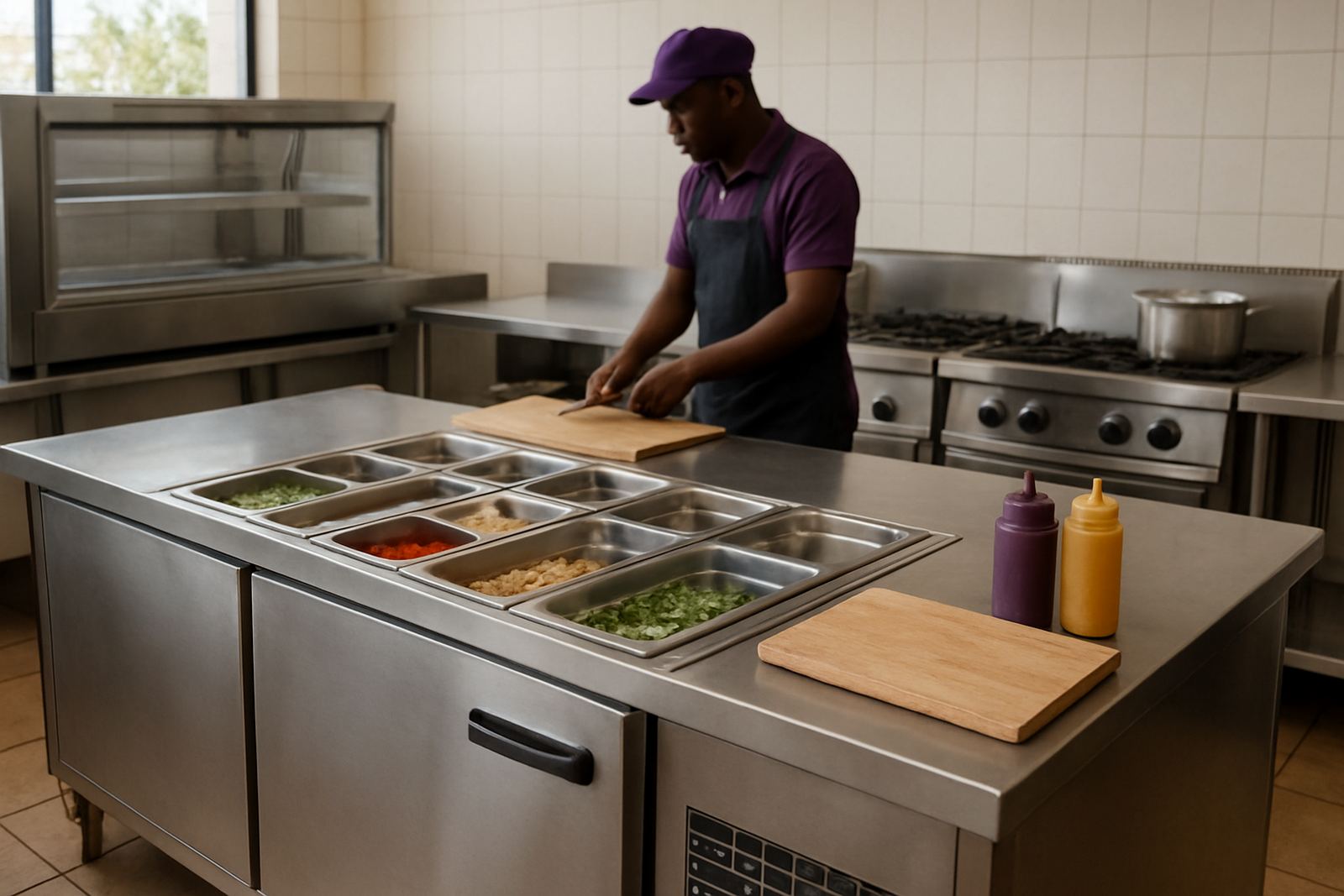
A saladette counter is a chilled prep station with an open or lidded top for gastronorm pans, plus a working surface for assembly. It keeps sliced vegetables, sauces, meats and garnishes within reach, so staff can build meals without walking back and forth to the cold room. In takeaway service that time saving matters, especially during lunch rushes and when loadshedding forces you to work with shorter service windows.
For CaterKraft clients in Benoni, Boksburg and Germiston, the usual brief is simple: keep ingredients cold, make the line easy to clean and give the counter enough strength for daily use. Stainless steel is the normal choice because it handles moisture, frequent wiping and the hard knocks that come with a fast kitchen. A well made saladette also helps with food safety, because the chilled zone stays separate from the cutting and packing area.
The units can be built as straight counters, with a glass sneeze screen, or with undercounter refrigerated storage for extra product. A lid or night cover is useful if the counter sits in front of customers and needs to hold temperature after hours. In a coastal town humidity is a factor, but even inland kitchens still deal with steam, grease and constant door opening. That is why finish quality and seal detail matter.
Sizes, Pan Layouts And Build Options
Saladette counters are usually made to fit the menu and the serving rhythm. Smaller shops often want a 1 200 mm to 1 500 mm unit, while busier counters may prefer 1 800 mm, 2 000 mm or longer. Depth is commonly around 700 mm to 800 mm, depending on the pan layout and whether the operator needs a back shelf. Heights are normally set for comfortable standing use, with castors or feet chosen to suit the floor and cleaning routine.
Pan openings can be arranged for GN pans in mixed depths, such as shallow pans for chopped lettuce and deeper pans for sauces or bulk ingredients. Some businesses want a flat prep lid, others ask for a raised ingredient rail, and others need extra undercounter doors for boxed stock. We also build for site conditions, so if the kitchen has a tight doorway, a narrow passage or a rough service area, the cabinet can be planned around that from the start.
If the counter is going into a mall kiosk, tuck shop or school canteen, the layout should allow quick cleaning and a clear service flow. A small typo in ordering details can cost you time later, so it is worth confirming pan sizes, left or right side access and whether the counter needs a backsplash. It sounds basic, but these small checks avoid a lot of frustration.
- Common lengths: 1 200 mm, 1 500 mm, 1 800 mm, 2 000 mm and custom sizes
- Typical depth: 700 mm to 800 mm
- Optional features: sneeze guard, lid, backsplash, castors, doors or drawers
- Pan format: GN pans and mixed depths, depending on your menu
Best Fit For Sandwich Bars, Wrap Counters And Quick-Service Lines
This product suits any kitchen where cold ingredients must stay close to the point of sale. Sandwich bars use it for sliced fillings and spreads. Wrap counters use it for salads, chicken, cheese and sauces. Cafés use it for breakfast prep and light lunch service. Takeaways use it for fast assembly during peak times, especially where a small team handles a big order volume.
It also works well in butcheries, deli counters and canteens where the service line must stay neat. In Springs or Kempton Park, where many kitchens run with limited back-of-house space, a saladette often replaces a separate fridge and open prep table by combining both functions in one footprint. That frees up movement around the grill, fryer or hot line.
For businesses serving from a front counter, a display version can be paired with a clear screen so customers see the ingredients but staff still work safely behind the barrier. If the unit is part of a larger servery, the surrounding counter height and tray return should be checked at the same time, not after installation. That saves rework and keeps the line tidy.
- Sandwich shops and wrap bars
- Cafés and coffee shops
- Takeaways and fast casual kitchens
- School, church and canteen serving lines
- Deli, butchery and fresh food counters
Power, Refrigeration And Site Requirements
Most saladette counters are electrically refrigerated and need a suitable plug point and stable supply. They should be installed on a level surface with enough rear and side clearance for airflow. If the compressor cannot breathe, the unit will run harder, use more power and struggle during hot afternoons. Where loadshedding is common, it helps to plan backup power or a service schedule that avoids overfilling the pans before a power cut.
There is normally no gas requirement on the saladette itself, but it must be placed away from direct heat from fryers, ovens and gas ranges. Heat from nearby equipment can force the refrigeration system to work too hard. For that reason we check the kitchen layout before fabrication or delivery, especially where the counter must sit close to a hot line or against a wall with limited ventilation.
Drainage needs depend on the model. Some units have a condensate tray, while others may need a drain connection or regular emptying. On site we also look at floor slope, access for cleaning, and whether the counter must pass through narrow doors or around steps. In the East Rand and surrounding industrial areas, these small site issues are often the difference between a quick install and a delayed one.
- Electrical supply required for refrigeration
- Level floor and clear airflow around the cabinet
- Keep away from direct fryer, oven or braai heat
- Plan for drainage or condensate management where needed
- Check doorway widths and access before delivery
Care, Cleaning And Servicing Over Time
Good cleaning habits keep a saladette working properly and make the food safer to serve. Wipe stainless surfaces with warm water and a mild detergent, then dry them so water marks do not build up. Remove pans daily, clean under them and check the gasket seals for crumbs or sticky residue. If sauce spills into the corners and sits overnight, that soon becomes a hygiene issue. not worth the trouble.
Once a week, inspect the condenser area and clear dust from the vents if the model allows access. A blocked vent can shorten compressor life and increase running cost. Door seals should close firmly, and castors or feet should be checked for wobble. If the unit is holding temperature badly, cycling too often or frosting where it should not, it is time for a service call before the problem grows.
CaterKraft supports clients across Benoni and the East Rand with fabrication, site measuring and after-sales help on custom kitchen equipment. For a saladette counter, that means we can help with replacement pans, minor counter adjustments and practical servicing advice based on how the unit is actually used day to day. Kitchens do not all run the same way, so service should be matched to the load and cleaning routine.
- Clean stainless surfaces daily and dry after wiping
- Keep vents and condenser areas free of dust
- Check seals, castors and feet regularly
- Service early if temperature holding changes
What To Confirm Before You Order
Before you place an order, confirm the product width, depth and height, then work through the pan layout and service style. Decide whether you need open access or a lid, a glass screen, undercounter storage or a simple prep top. If the counter is going into a tight kitchen, measure the delivery route as well as the final position. That includes doors, corners and any raised thresholds.
You should also check the power point position, the available breaker size and whether the kitchen has reliable backup power. If the counter will sit in a busy customer-facing line, think about the finish and how fingerprints will show during service. For schools, tuck shops and municipal sites, hygiene and access rules can affect the final layout, so it is smart to plan these early rather than change the order later.
If you are in Benoni, Boksburg, Brakpan, Springs, Kempton Park or Germiston, CaterKraft can help you match the counter to the space and the menu. We build for endurance, but the best result comes from getting the details right first, not after installation.
- Exact size and pan layout
- Power point and backup power plan
- Access route for delivery and placement
- Need for lid, screen, doors or drawers
- Cleaning, drainage and service access
Key facts
| Product type | Chilled prep counter for cold ingredient assembly |
|---|---|
| Common sizes | 1 200 mm, 1 500 mm, 1 800 mm, 2 000 mm and custom |
| Typical depth | 700 mm to 800 mm |
| Material | Stainless steel body and work surface |
| Power | Electric refrigeration with standard site supply |
| Options | GN pans, sneeze screen, lid, castors, doors, drawers, backsplash |