Built for heavier wash-up in busy kitchens
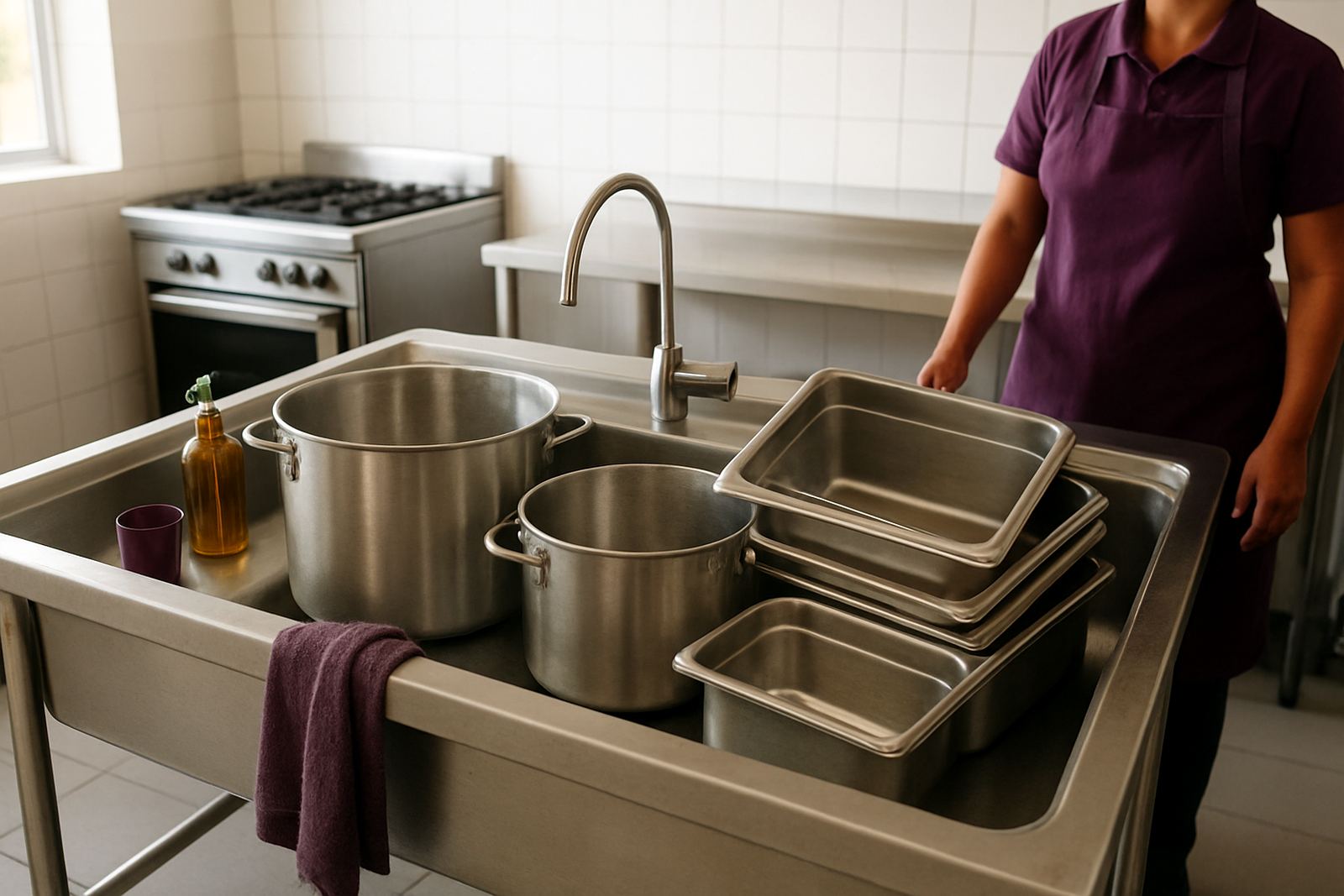
A pot wash sink is deeper than a normal handwash or vegetable sink, so stock pots, trays, pans and mixing bowls sit lower in the bowl with less splashing. For takeaways, school kitchens, butcheries and catering prep areas, that depth makes a proper difference when the rush starts and staff need to clear goods fast.
At CaterKraft we build these sinks for practical use, not showpiece use. Stainless steel is the usual choice because it handles repeated hot water rinsing, food residue and daily cleaning better than painted mild steel. In Benoni and across the East Rand, that matters in kitchens where humidity, steam and constant wash-downs can wear cheaper fittings quickly.
- Deep bowl for bulky cookware and trays
- Useful where pots need soaking before scrubbing
- Works well beside prep tables and dishwasher points
- Can be made as a single or double bowl unit
Sizes, bowl depth and practical options
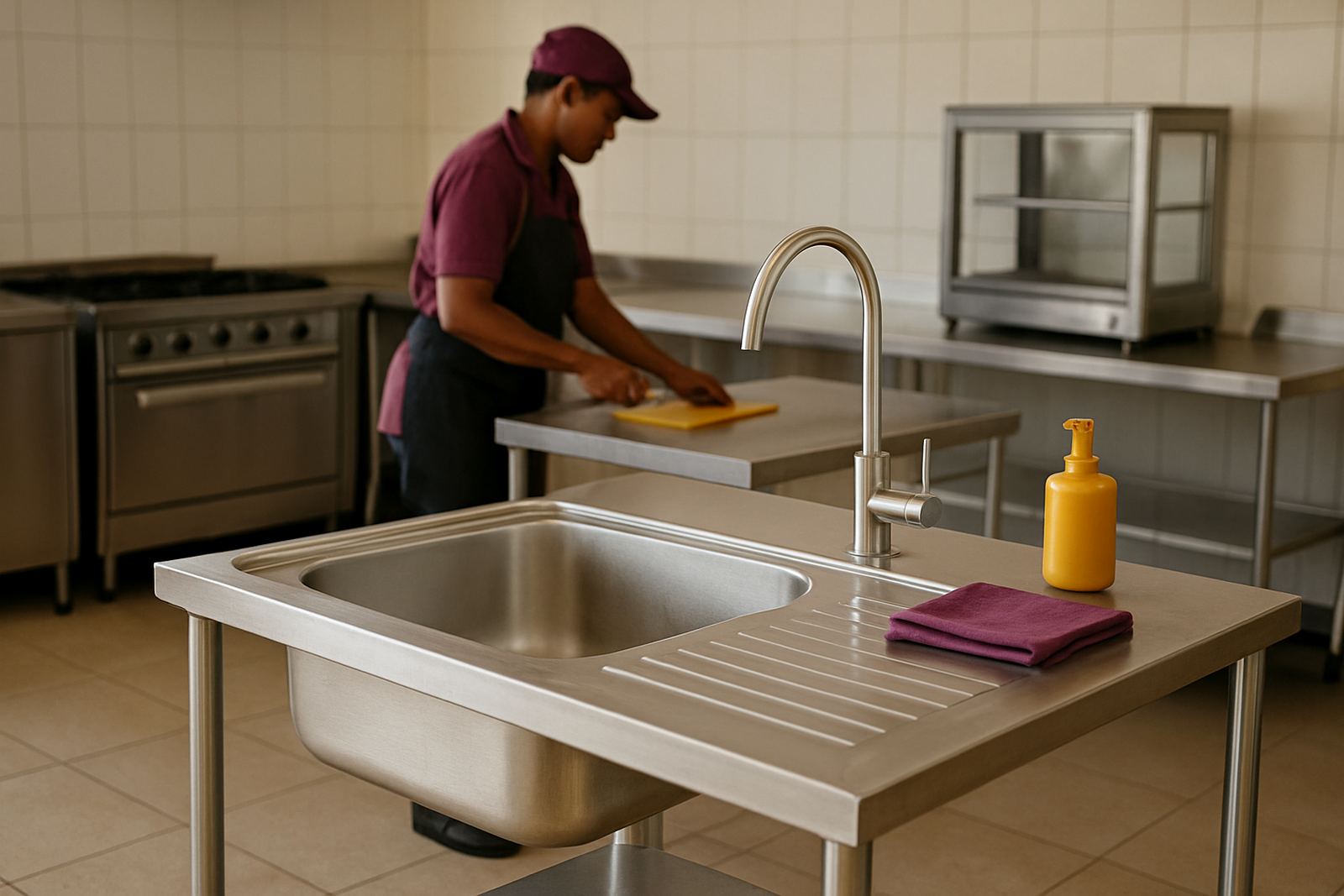
Pot wash sinks are usually made to suit the space you have and the way your team works. A common setup is a single deep bowl with an undershelf, but some kitchens need a wider unit with one deep bowl and a smaller rinse area. We also make units with splashbacks, drain boards and foot rails where the job calls for them.
Typical bowl depths range from about 300 mm to 450 mm, depending on the use case. For bigger pots and long soak times, the deeper end of that range is usually better. Width and length can be adjusted to fit narrow scullery lines or larger production kitchens, and we can match the sink height to existing counters so staff are not bending too far during shift work.
- Single deep bowl or double bowl layout
- Optional left or right drain board
- Backsplash height commonly 150 mm to 300 mm
- Undershelf or open frame support options
We can also add tap holes, mixer tap points or pre-cut waste positions according to the plumbing setup on site. If you are fitting out a new kitchen in Boksburg, Germiston or Springs, it helps to measure early so the sink and the plumbing land in the right place first time.
Where a pot wash sink fits best
This sink is most useful anywhere large utensils build up through the day. It suits catering kitchens, fast food prep areas, bakeries, butcheries, canteens, hospitals, spaza kitchens with a hot section and any scullery that handles frequent wash cycles. If trays come back hot and greasy, or if equipment must be soaked before cleaning, a deep pot wash sink saves time and reduces mess on the floor.
It also works well in back-of-house spaces where staff need a clear separation between prep, wash-up and storage. In many East Rand kitchens, space is tight so one good sink often does more than two poor ones. A properly placed pot wash sink can sit next to a prep table, a shelving unit or a servery counter, giving the team one clean workflow from dirty to clean.
- Takeaways and quick service kitchens
- School and institutional food prep areas
- Catering stores and off-site service points
- Back-of-house sculleries in restaurants
Installation, water points and utility needs
Pot wash sinks do not need power or gas themselves, but the site must have the right plumbing and drainage in place. That includes a suitable water feed, a waste outlet that can cope with heavy rinse volumes, and enough fall on the drain line so food solids do not sit and block the pipe. If there is a nearby hot water point, that makes daily use much easier.
For floor-mounted units, the base should sit level and firm, especially in older buildings where tiles or screed are uneven. Wall clearance matters too, because splashback panels and tap reach need space. In some municipal or rental properties in the East Rand, drainage changes may need approval or an inspection before alterations are made, so it is worth checking early.
- Check water inlet positions before fabrication
- Confirm waste pipe diameter and floor trap location
- Allow clear access for cleaning around the base
- Plan for hot water use during peak wash-up periods
If your kitchen runs through load-shedding, the sink still does its job but the wider wash-up area should be planned around backup water heating and any pump-based drainage on site. We can work from site measurements and help you avoid clashes with existing counters, canopies or racking.
Care, cleaning and servicing over time
Stainless pot wash sinks need simple care, not special treatment. Rinse off food acids, wipe down after service and avoid leaving bleach or harsh chemicals sitting on the surface. Over time, standing water and grit can dull the finish so it is better to keep the bowl dry when the shift ends. A quick daily wipe is usually enough to keep it in good condition.
Check the waste basket, seals and taps regularly for drips or build-up. In a busy kitchen, small leaks can go unnoticed until the floor becomes slippery or the cabinet base starts to stain. If the sink is welded into a servery or counter line, any movement in the surrounding frame should be looked at early before it turns into a bigger repair.
- Use non-abrasive cloths and mild cleaners
- Flush the waste line often in greasy kitchens
- Inspect seals and tap fittings every few weeks
- Get cracked welds or loose brackets repaired quickly
Our service team can assist with maintenance checks, minor adjustments and replacement parts where needed. That is useful for busy sites in Benoni, Kempton Park and Germiston where a sink down-time can slow the whole scullery.
What to confirm before you place an order
Before ordering, confirm the size of the largest item you wash, the space available on site and whether the sink must fit beside an existing prep line. Measure the wall length, the floor space, the tap height and the drain position. If the sink will be used by more than one staff member at once, allow enough working room so people are not knocking elbows during a rush.
It also helps to know whether you need a plain bowl or a unit with extras like an undershelf, splashback, drain board or reinforced legs. If the unit must support very heavy stock pots, ask for thicker material and stronger framing. A site measure is the safest way to avoid mistakes, especially where older kitchens have non-standard corners or low pipework.
- Largest cookware and tray dimensions
- Available wall length and floor depth
- Tap type and waste outlet position
- Need for splashback, shelf or drain board
CaterKraft supplies from Benoni across the East Rand and delivers nationally. If your project needs a custom sink to match prep tables, extractor canopies or a full scullery line, we can measure, build and coordinate the fit-out around your kitchen’s actual conditions.
Key facts
| Product type | Deep stainless steel pot wash sink |
|---|---|
| Typical bowl depth | 300 mm to 450 mm |
| Material | Stainless steel |
| Common options | Single bowl, double bowl, drain board, splashback, undershelf |
| Installation needs | Plumbing, waste outlet, level base, hot water access |
| Supply area | Benoni, East Rand and national delivery |