What a Heated Display Counter Does in Daily Service
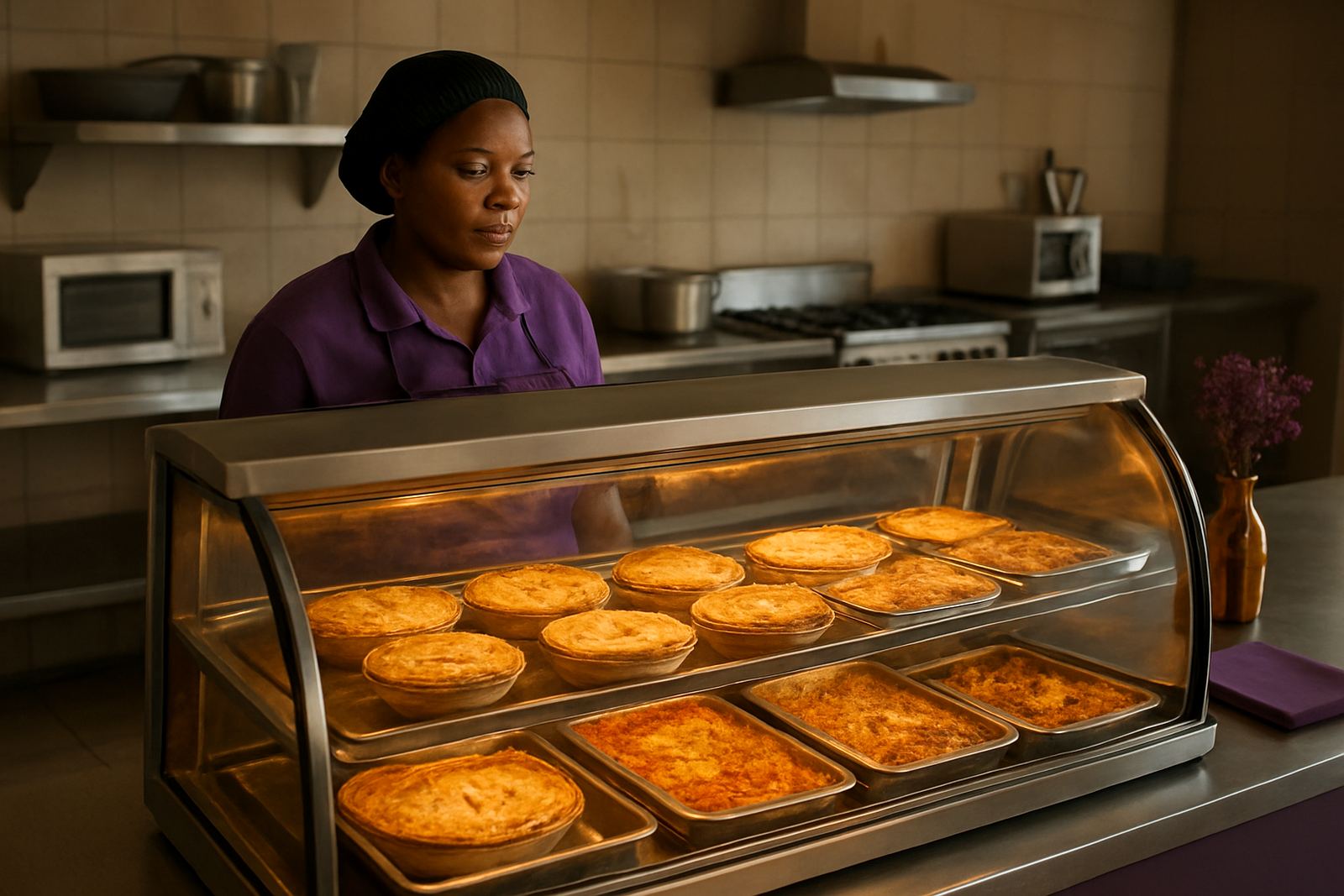
A heated display counter is a front-of-house holding unit that keeps cooked meals warm after they leave the kitchen and before they are served. It is used for items such as pies, baked meals, vetkoek fillings, roast portions, sausage rolls, curries and plated meals that need to stay ready for customers through lunch and supper rushes. The unit is not for cooking, it is for holding food at a workable serving temperature while keeping the counter neat and easy to serve from.
For many East Rand food businesses, this kind of unit helps reduce queue delays and food waste. It gives staff a clear serving point and helps customers see what is ready. In a takeaway or canteen, that matters during peak periods when the power goes off, orders stack up and the kitchen needs to move fast. A well made heated display counter must hold temperature evenly, clean easily and cope with daily use without warping or rusting.
At CaterKraft, these counters are made for practical service conditions, including busy Benoni shops, school food lines and municipal canteens where equipment gets used hard every day. The focus is on good heat hold, neat food presentation and long life.
Sizes, Pan Layouts and Build Options
Heated display counters are usually built to suit the available front-of-house space and the type of food being sold. Smaller units can sit in a narrow takeaway front, while longer counters suit bakeries, cafeterias and busy lunch counters. The top can be arranged with open display pans, a flat heated deck or a mixed layout depending on how food is served.
- Typical lengths: 1 200 mm, 1 500 mm, 1 800 mm and 2 400 mm
- Common depths: 700 mm to 900 mm
- Standard working height: about 850 mm to 900 mm
- Pan options: full size, half size or mixed pan layout
- Front finish: stainless steel, glass front, or closed panel base
- Base options: fixed base, storage base, or open leg frame
The food holding section can be made for wet heat or dry heat depending on the menu. Wet heat suits foods that should not dry out too quickly, while dry heat can be simpler for certain baked items and plated food. Glass front panels help with presentation and cut down on dust, which is useful for counters near entrances or open serving areas.
For heavier use, the frame and top should be fully stainless so that spills, steam and frequent wiping do not damage the unit. If the counter is going into a coastal or high-humidity area, proper stainless grades and sealed joins matter even more.
Where This Counter Fits Best
This product suits takeaways, school tuck shops, cafés, service stations, hotel breakfast areas, lunch counters, church halls and small food outlets that need a controlled hot display point. It is also useful in canteens that serve at set times, where food must be ready in batches and kept presentable until the last customer is served.
In Benoni, Boksburg, Brakpan, Springs, Kempton Park and Germiston, we often see heated display counters used in shops with limited back-of-house space. The unit keeps the service point organised and helps avoid carrying hot trays back and forth from the kitchen. That cuts down on spills, burnt fingers and wasted time. For larger projects, we can match the display counter with prep tables, servery counters and shelving so the full serving line works as one setup.
If you are planning a new layout, think about queue flow, access for staff and where customers will collect food. A counter that is too deep can slow service, while one that is too small may not hold enough product during a rush. The right size depends on turnover, menu range and available floor space.
Power, Heat Control and Site Setup
Most heated display counters need a stable electrical supply and a proper plug point positioned near the serving area. The heating system can be designed for standard mains power, with controls set up for simple on and off use or for adjustable temperature control. In areas where load-shedding is a concern, many businesses pair the unit with backup power planning so the food does not fall out of serving temperature during interruptions.
Good installation is important. The floor should be level, the counter should stand steady and there should be enough space behind or below the unit for cleaning and maintenance access. Ventilation around the counter is also worth checking, especially when the unit sits near gas equipment or a busy hot kitchen. If the display is placed close to a wall or under a canopy, make sure there is room for heat to escape and for staff to reach switches safely.
- Check the available power point position before ordering
- Confirm whether the unit will run on wet heat or dry heat
- Allow space for cleaning around the base and rear
- Keep the counter away from direct draughts and open doors
- Plan for backup supply if your site loses power often
For gas heated kitchen lines, the heated display counter itself may still need electricity for controls or lights, so the site layout should be checked carefully before fabrication starts.
Cleaning, Care and Long Service Life
A heated display counter lasts longer when it is cleaned properly every day. Food spills should be wiped as soon as the unit cools down enough to work on safely. Stainless surfaces can be washed with warm water and mild detergent, then dried to stop water marks and surface build up. Avoid harsh scouring pads that scratch the finish, because those marks hold dirt and make the unit look tired sooner.
On wet heat units, water levels should be checked regularly so the system runs correctly and does not run dry. On dry heat units, make sure the heating zone is not blocked by foil, trays or debris that could affect airflow or heat spread. If glass is part of the display, clean it with a soft cloth so customers get a clear view of the food. Hinges, doors and castors should also be checked from time to time, especially where the counter gets moved for cleaning.
We build for service, but even good equipment needs attention. A scheduled service check helps pick up thermostat issues, worn seals, loose fittings and heating faults before they stop the counter from working during a busy lunch period. That is better than waiting until a Friday rush when you need every serving point running.
What to Confirm Before You Order
Before ordering, it helps to confirm the food list, the number of pans or display sections, and the exact space available at your premises. Measure the wall length, doorway widths and any corners the unit must pass through on delivery. If you are in a mall, food court or municipal building, also check any site rules about ventilation, splash zones and electrical connections. A small mistake at the measuring stage can slow the installation and add avoidable cost.
Please also tell us whether the counter should match other stainless equipment on site, whether you need a closed storage base, and whether customer-facing glass is required. If the unit will sit beside a servery counter or extractor canopy, we can set the height and finish to suit the rest of the line. A few details upfront save time later.
- Overall length, depth and preferred working height
- Food type and expected daily volume
- Wet heat or dry heat preference
- Power point position and available supply
- Need for storage below the display area
- Delivery access, stairs, ramps or narrow passages
CaterKraft works from Benoni on the East Rand and delivers nationally, so whether your counter is for a small takeaway in Springs or a bigger food line in Germiston, we can size it to fit the job properly.
Key facts
| Product type | Heated food display counter for front-of-house hot holding |
|---|---|
| Typical lengths | 1 200 mm, 1 500 mm, 1 800 mm, 2 400 mm |
| Typical depth | 700 mm to 900 mm |
| Build material | Stainless steel food-contact surfaces and frame |
| Heat options | Wet heat or dry heat, depending on menu and site needs |
| Power needs | Standard mains connection, subject to final specification |