Why a chest freezer works in busy food operations
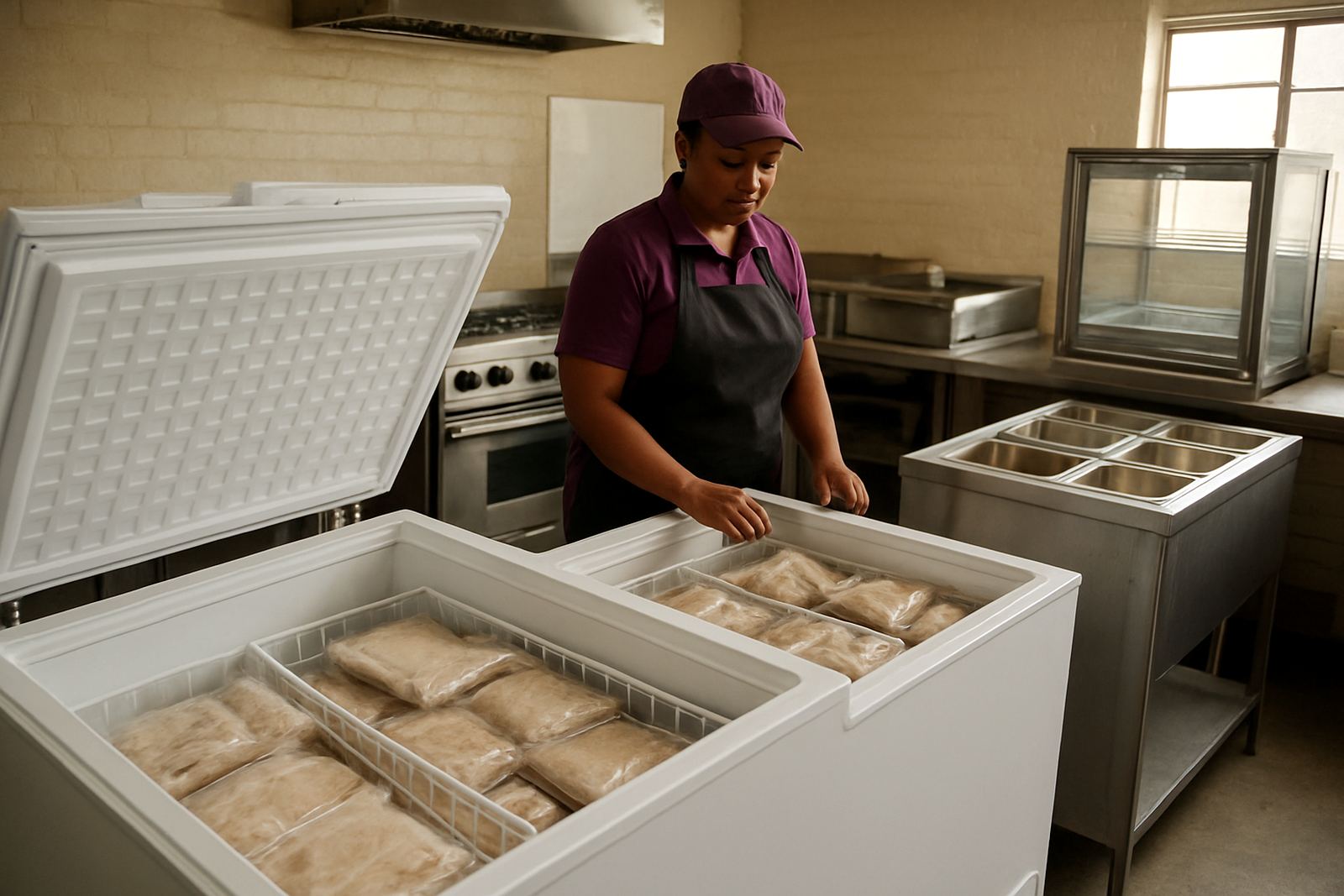
A chest freezer stores frozen goods in a deep horizontal cabinet, with the lid opening from the top. That layout helps keep cold air inside when staff load and unload product, so it is useful where stock is taken out often through the day. In busy kitchens, especially on the East Rand where load-shedding can hit at peak time a chest freezer gives you a practical buffer for meat, chips, desserts and emergency stock.
It is not the same as a display unit or a upright domestic fridge. This is a storage unit for holding volume, keeping product cold for longer periods, and handling the rougher pace of takeaway service. If your business needs a place for frozen vegetables, pre-portioned meat, pastry shells or ice cream tubs, it is a straightforward option that fits into tight back-of-house areas.
Available sizes and freezer layout options
Chest freezers are usually selected by litres of storage, not by how tall they stand. Smaller units suit kiosks and snack bars, while larger units work better for takeaways, canteens and bakeries with weekly stock deliveries. A good supplier will match the cabinet size to your floor space, power point position and the amount of stock you actually turn.
- Small units for limited prep areas and low-volume stock
- Medium units for standard takeaway use and ice cream storage
- Large units for bulk buying, backup stock and busy service periods
- Sliding or solid lid options depending on access and staff traffic
- Wire baskets for separating fast-moving products from deep stock
For most operators, the key is not buying too small. If the freezer is always packed solid, staff struggle to find product and the lid stays open longer. If you have enough room to sort stock into sections, service runs smoother and stock takes are quicker.
Where it suits best in Benoni and beyond
These freezers suit takeaway kitchens, cafes, tuck shops, butcheries, church halls, school kitchens and small caterers who need extra frozen holding. They also work well as backup storage next to a main cold room or upright freezer. If your operation handles pre-portioned meals or frozen ingredients in bulk, a chest freezer is often the most practical second unit to add.
For premises in Benoni, Boksburg, Brakpan, Springs, Kempton Park and Germiston, space is usually at a premium and access matters. A chest freezer can sit against a wall or under a prep flow without blocking movement. It also helps when you need one unit for slow-moving stock and another for daily items, instead of overloading a single freezer and risking spoilage.
Power supply, placement and installation checks
Chest freezers run on electricity only, so the main question is whether you have a stable socket, proper earthing and enough space around the compressor for ventilation. They should stand level on a firm floor, with enough clearance for the lid to open fully. If you are placing the freezer in a warm kitchen or near an oven, allow extra breathing space so the motor does not work harder than it should.
Before installation, check your supply against the unit rating and make sure the plug point is not shared with heavy draw equipment. During load-shedding, frozen stock lasts longer if the lid stays shut and the freezer is not overpacked with warm product. A generator or backup power system can help, but the cabinet still needs to be used properly for temperature to hold. Gas is not required for this product, only the right electrical connection.
- Keep the unit away from direct sunlight and hot surfaces
- Do not block the motor ventilation area
- Allow for safe access for cleaning and stock checks
- Use a dedicated plug point where possible
Care, cleaning and service life
A chest freezer lasts longer when it is cleaned regularly and used with common sense. Ice build-up should be checked, the lid seal wiped down, and spills removed before they freeze onto the liner. If staff are rough with baskets or slam the lid, seals wear out sooner and the cabinet loses efficiency. For coastal clients or kitchens with high humidity, regular wiping helps reduce rust on external fittings and keeps the unit looking tidy.
Routine servicing should include checking the thermostat, compressor noise, seals and drain condition. If the unit starts cycling too often or frost forms unevenly, it is worth having it checked before stock is affected. For long service life, do not overload the base with loose packs, and avoid storing hot items inside. Let product cool first, then pack it neatly so air can move around it.
What to confirm before you place an order
Before ordering, measure the floor area, doorway widths and the route the freezer will follow into the kitchen. It sounds basic, but many delays happen because the unit fits the room yet will not pass through the entrance. You should also confirm the storage volume, lid style and whether you need baskets or a lockable lid for stock control.
- Required litres or cubic capacity
- Available floor space and doorway clearance
- Electrical point location and plug type
- Whether you need baskets, dividers or a lock
- How often the lid will be opened during service
- Whether the freezer is for backup stock or daily turnover
If you are expanding from a small takeaway into larger production, it helps to plan for growth now rather than replacing the unit later. We can also assist with site measuring if the space is tight or the freezer needs to sit alongside prep tables, shelves or counters.
Key facts
| Product type | Horizontal chest freezer for frozen storage |
|---|---|
| Capacity range | Available in small, medium and large storage volumes |
| Power | Electric only, single-phase supply depending on unit size |
| Temperature use | Designed for frozen holding of stock and ingredients |
| Construction | Insulated cabinet with lift-up lid and internal baskets |
| Typical use | Takeaways, kitchens, butcheries, bakeries and backup stock |