What a food truck base has to carry every day
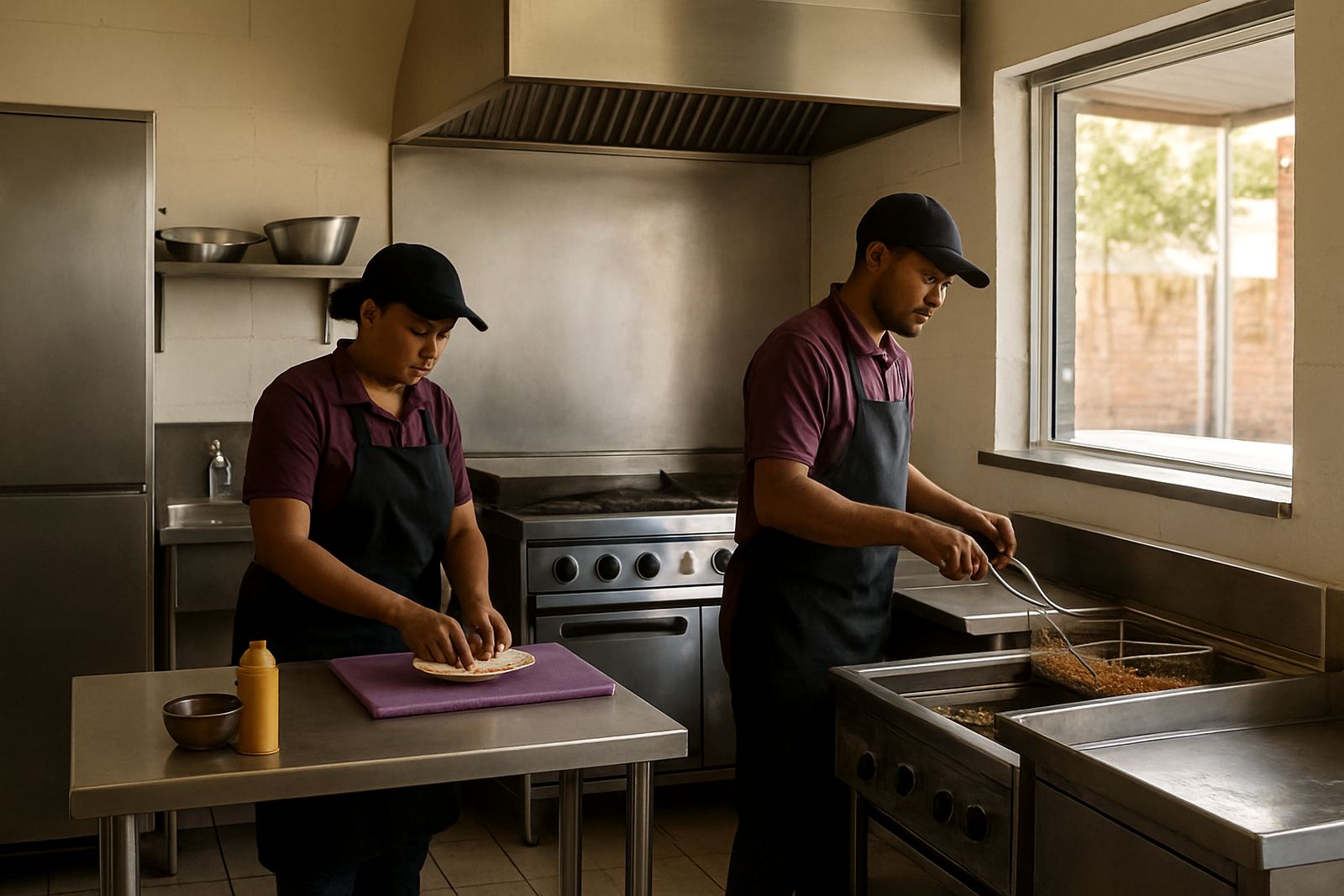
A good food truck base is more than a place to store pots and pans. It has to support the whole service rhythm, from early prep and portioning to hot holding, packing, washing and quick reloading before the next shift. In Benoni, where many operators run from shared kitchens or back-of-house prep rooms, the base equipment must be easy to clean, tough enough for constant movement, and sized so two or three people can work without bumping into each other.
For commissary kitchens feeding mobile operators, the layout usually needs stainless prep tables, sinks, shelf space, hot holding points and clear routes between raw and cooked product. If the kitchen backs onto a truck loading area, floor space matters too because there is no point putting in oversized counters that block crates, gas bottles or holding cabinets. We build around the actual workflow, not just the room size.
Typical equipment set for a mobile food operation
Most food truck support kitchens need a mix of prep, wash and holding stations. The exact list depends on the menu, but the usual set includes:
- Stainless prep tables with undershelves for pans, trays and dry goods
- Custom sinks for wash-up, handwashing and vegetable prep where needed
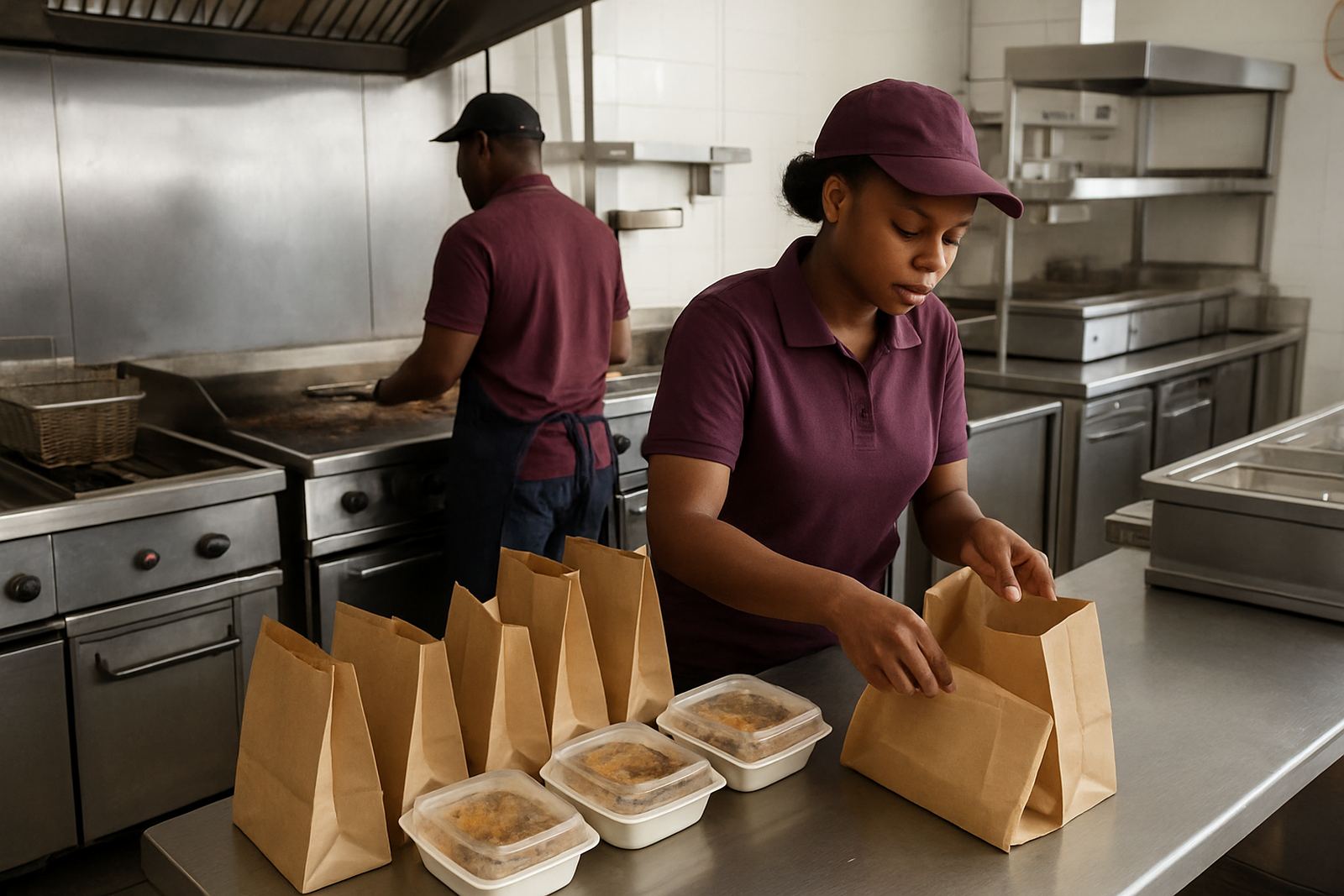
- Servery counters for packing and handover
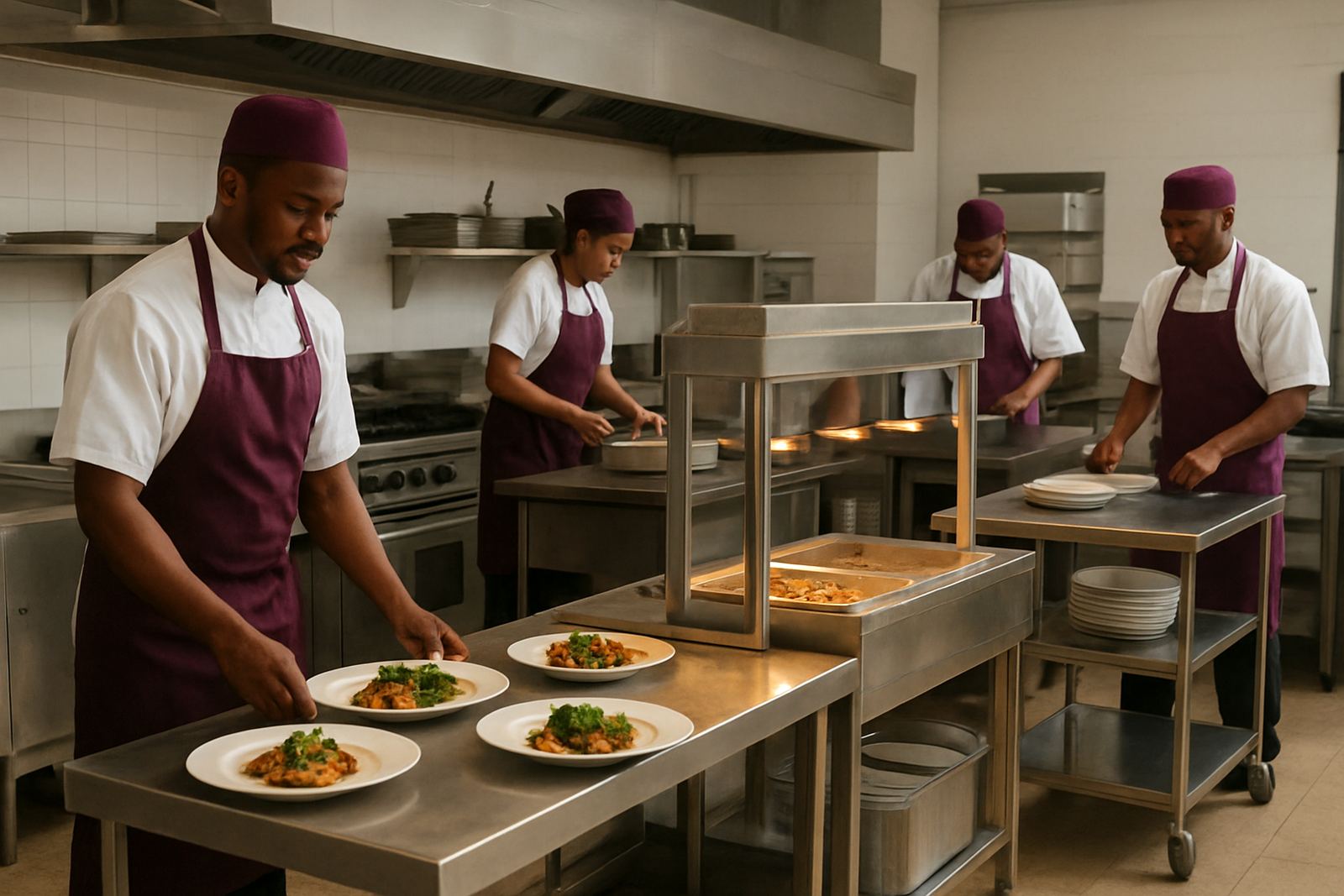
- Bain-maries or heated holding units for sauces, curry, rice and plated food
- Extractor canopies above cooking or finishing points
- Mobile trolleys for crates, gas bottle movement or tray transfers
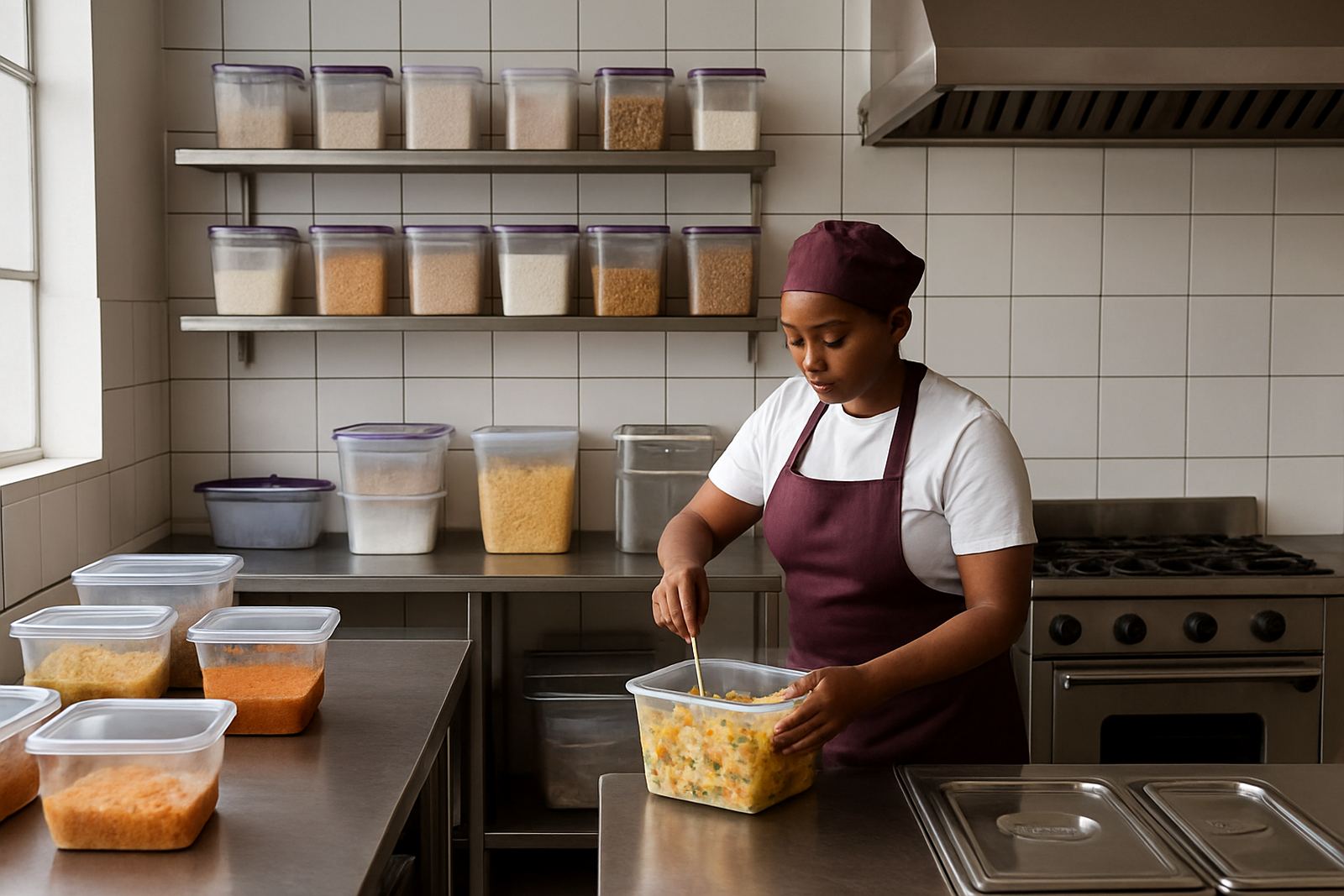
- Shelving and racking for labels, packaging and dry stock
- Display unit bases where the food is shown before loading or service
For takeaways that prep for more than one truck, the holding side becomes as important as the cooking side. A well set base keeps food in order during load-shedding too, because not every site has the same backup power. In those cases we plan for gas where possible and keep the high use points grouped together for easier changeovers.
Layout planning that saves time during service
Food truck bases work best when the kitchen flow is short and direct. Raw materials should enter one side, prep should happen in the middle, then holding and dispatch should sit near the exit or loading point. If staff have to cross paths with hot pans, dish tubs and delivery crates, delays start building up straight away.
We usually advise clients to measure the full room before ordering anything. Door widths, drain positions, wall joints and power points all affect the final layout. In Benoni and the wider East Rand, many premises are repurposed light industrial units so the walls are not always square and the floor may fall away slightly. Site measuring helps avoid costly rework later on.
- Keep wash-up away from dry stock to reduce splash and contamination
- Leave enough aisle space for a trolley to pass without turning sideways
- Put heat-producing equipment near extraction, not near packing points
- Allow space for daily cleaning under and behind counters
- Plan for gas bottle storage, power outlets and access for maintenance
Common mistakes in commissary kitchens for trucks
One common mistake is ordering equipment for the menu on day one and forgetting the growth plan. A kitchen may start with two trucks, then add a breakfast unit or a dessert cart three months later. If the counters and shelving are fixed too tightly, the operation runs out of breathing room very quickly.
Another mistake is buying equipment that looks neat but cannot handle daily cleaning. In this market, surfaces get wiped down several times a shift and corners need to be accessible. Poor welds, weak legs and narrow shelves cause problems fast, especially in humid coastal deliveries or busy inland kitchens with grease and steam.
It is also easy to under-spec the holding side. A truck base must keep food moving in order and on temperature. If the servery counter is too small or the bain-marie bank is badly placed, service slows and the food quality drops. That is where practical fabrication makes a difference, because the counter should suit the product not the other way round.
Budget ranges for food truck bases in Rand
Budget depends on size, finish and how much custom work is involved. A simple base setup for a small mobile operator may start around R18 000 to R35 000 for essential prep and storage. A mid-sized commissary support area with custom sinks, extra shelving, a servery counter and a holding unit can sit between R45 000 and R95 000. Larger kitchens with multiple prep lines, extractor work and several custom stations can go beyond R120 000.
The biggest drivers are stainless thickness, the number of units, whether the work is wall fixed or freestanding, and if the site needs modifications. Counter modifications, stainless recladding and extractor canopies can change the price quite a bit. We often help clients separate the must-haves from the nice-to-haves so the first spend supports trading from day one.
For businesses in Boksburg, Brakpan, Springs, Kempton Park and Germiston, it is worth comparing the equipment against fuel, staff time and prep losses. A stronger base often pays back through less breakage, quicker turnaround and better use of labour.
Why local fabrication helps mobile operators
Food truck operators need equipment that can take knocks, cleaning chemicals and repeated movement without loosening up. Local fabrication also makes it easier to correct small issues, add a shelf or modify a counter opening when the menu changes. That matters for real trading, because menus change faster than people expect.
CaterKraft works from Benoni and supports food truck bases across the East Rand and nationally. The team includes Lerato Khumalo, Ayesha Naidoo, Pieter van der Merwe, Sibusiso Dlamini and Megan Jacobs, with site measuring, fabrication and after-sales support handled in house. If you are fitting out a commissary kitchen for mobile service, the goal is simple: equipment that stays straight, cleans easily and holds up under daily use.
For planning, we usually start with the menu, the number of trucks being fed and the actual room dimensions. Then we build the prep and holding setup around that, so the operation can move without waste or bottlenecks.