Where Stainless Recladding Helps Most
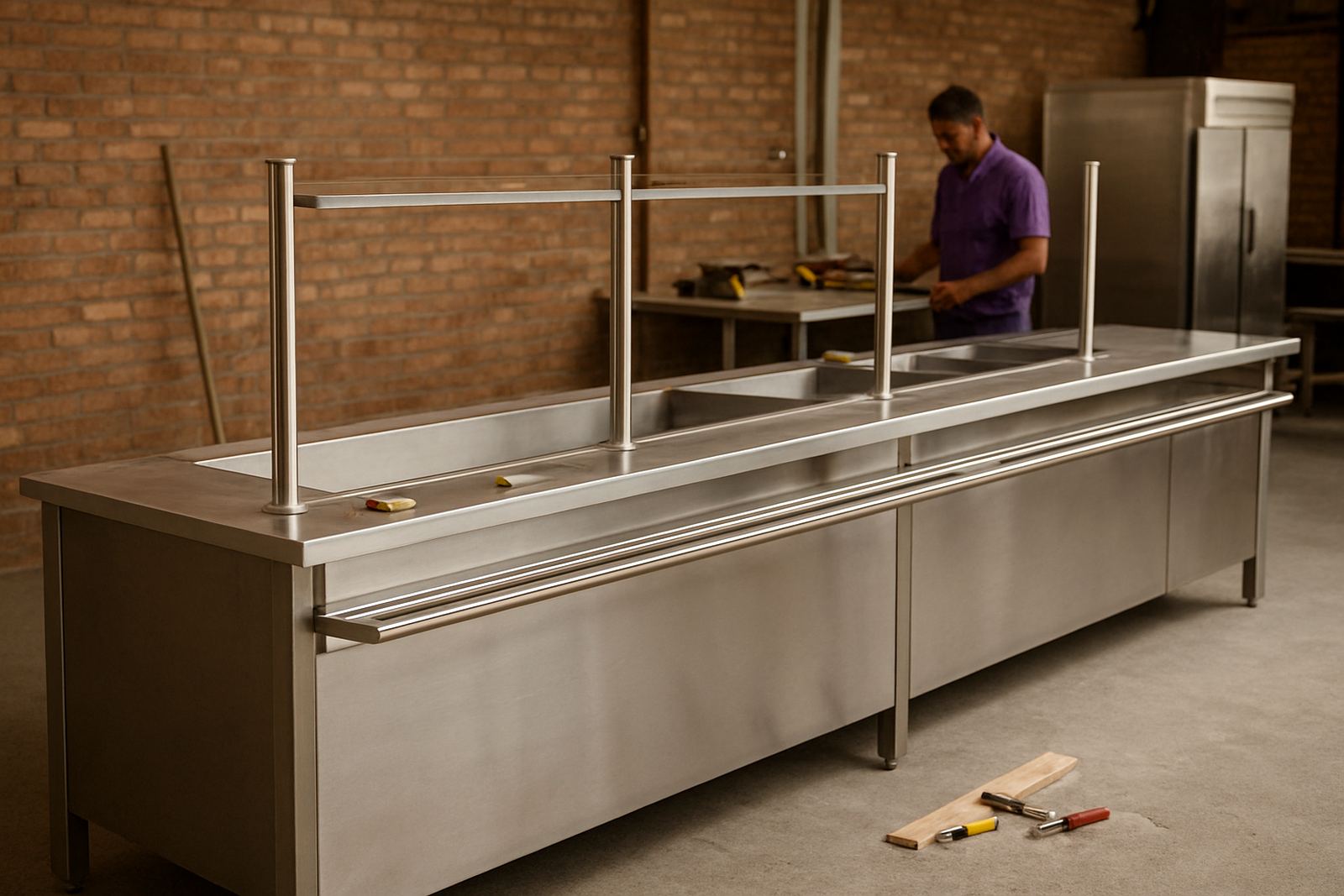
Recladding is a practical fix when the base unit is still sound but the visible surfaces are tired, scratched or stained. It works well on prep counters, pass-throughs, servery fronts, splash panels, sink surrounds and service stations that have picked up years of heat, moisture and heavy cleaning.
In Benoni, Boksburg, Brakpan and Germiston we often see older laminated or painted surfaces lifting at the edges, especially in kitchens dealing with steam and frequent wash-downs. Stainless cladding replaces those problem faces with a cleaner finish that holds up better in busy service areas.
- Prep counter fronts and top skirts
- Servery counters and cashier fronts
- Splash backs behind sinks and hot equipment
- Canopy cladding and exposed risers
- Cold room surrounds and display plinths
What We Include In A Recladding Job
Each job starts with a close look at the existing structure so we can work out what can be kept and what must be replaced. If the frame is square and dry, we can usually reclad over it. If there is swelling, rust or loose joins, those areas are corrected first so the new finish lasts.
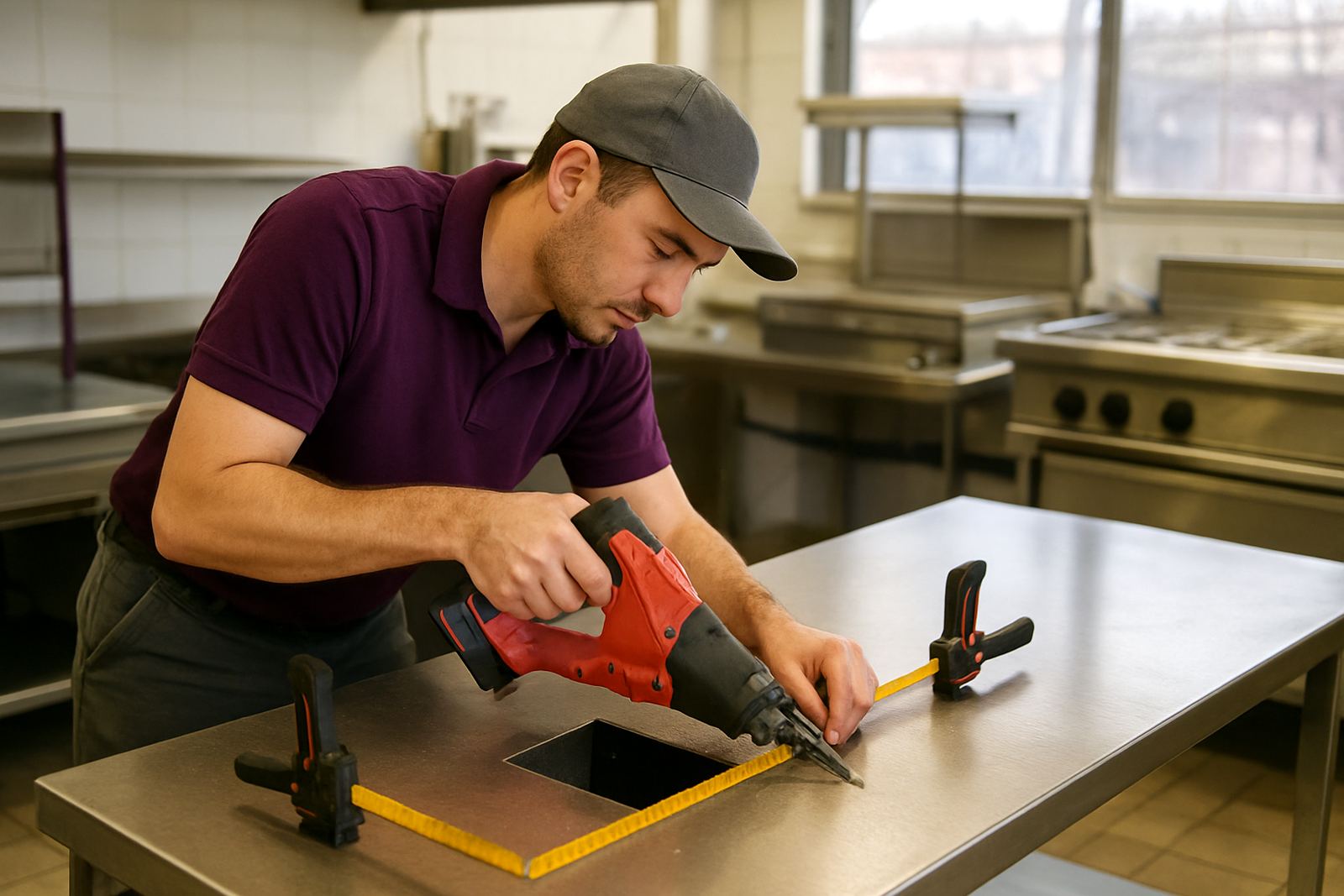
We use stainless sheet cut to suit the site, with tidy edge returns, sealed joins and practical fixing points where needed. Typical material is 1.2 mm stainless for exposed panels and 0.9 mm to 1.0 mm for lighter covers and trims, depending on the use of the area.
- Site measuring and panel set-out
- Removal of loose or damaged covering
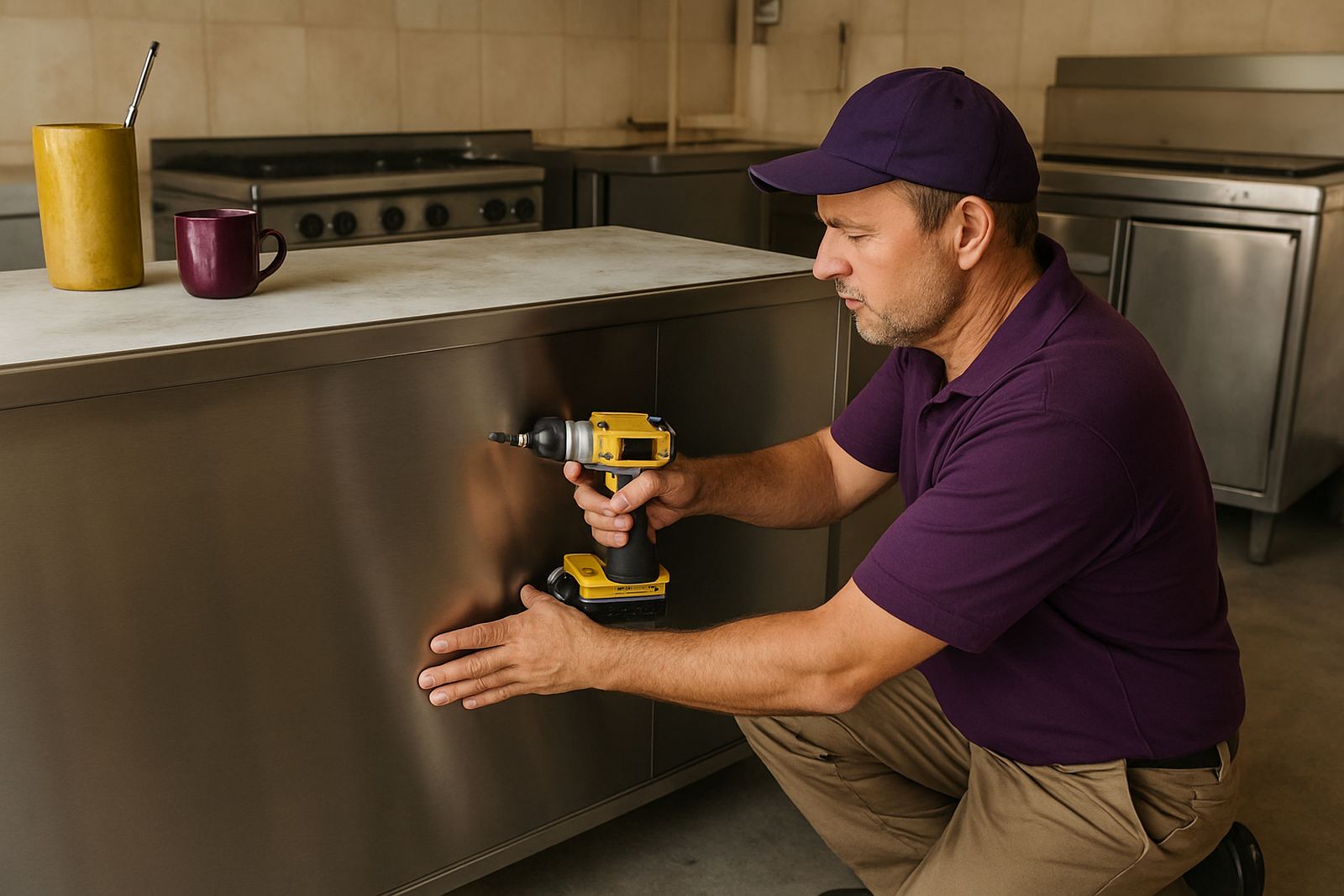
- New stainless sheet cladding to agreed areas
- Trims, folded edges and corner finishes
- Basic sealing at splash and wash zones
How The Process Runs On Site
We keep the process simple so kitchens can stay in operation where possible. First we measure the area, check access and confirm which sections can be done in one visit. If the job is in a trading takeaway or canteen, we plan around quiet hours or after service to cut down on disruption.
Once the sheets are prepared, our team fits them with attention to alignment and hygiene friendly joints. We aim for tight corners and easy wipe-down surfaces, because that is what matters in a kitchen that runs every day. When the work is complete, we clean the area and hand over the finished sections for inspection.
- Initial site measure and condition check
- Confirm panel layout, finish and fixing method
- Fabricate and prepare sheets in the workshop
- Install, seal and check fit on site
- Final wipe down and handover
Turnaround For Benoni, East Rand And National Jobs
Smaller recladding jobs can often be turned around in a few working days once measurements are approved. Larger service areas, canopies or multi-counter projects may take longer, especially if custom bends, cut-outs or matching to existing equipment are required.
For East Rand sites we can usually schedule a quicker site visit, while national deliveries are packed for safer transport and fitted by arrangement. We always allow for the realities of load-shedding, access times and municipal site rules, because a kitchen job done in a rush often leads to rework later on.
- Small panel replacement: 2 to 5 working days
- Medium counter or servery recladding: 5 to 10 working days
- Complex or multi-area fit-outs: by project scope
Pricing Approach And What Affects Cost
Pricing depends on size, sheet thickness, number of bends, access on site and the condition of the existing base. A clean straight counter front is quicker and cheaper than a damaged unit that needs repairs before cladding can start. We quote after site measuring so there are no guesswork allowances.
Because stainless prices move with material and fabrication needs, we price recladding as a practical project rather than by one fixed metre rate. If the job can be grouped with other work such as sink surrounds, shelving or counter modifications, that can improve value. We will tell you upfront where you can save money and where cutting corners will cost more later.
- Sheet thickness and finish selected for the duty level
- Size of the area and number of returns
- Prep work needed on the existing structure
- Site access, travel and off-site fabrication time
Care And Maintenance After Recladding
Stainless cladding is simple to maintain, but it still needs proper cleaning to stay presentable. Daily wiping with a soft cloth and a mild cleaner is usually enough. Avoid harsh scourers and strong chlorine products, because they can mark the finish over time. In coastal conditions or humid kitchens, a regular rinse and dry-down helps prevent water spotting.
We suggest a quick maintenance check every 6 to 12 months for busy food sites. That is the right time to look at seal lines, loose fixings, sealant around wash areas and any impact damage from trolleys or bins. If a panel gets dented or a joint opens, it is normally better to repair it early rather than wait until moisture gets behind the cladding.
- Daily: wipe with mild detergent and dry cloth
- Weekly: inspect corners, splash zones and fasteners
- 6 to 12 months: full check on seals and wear points
Key facts
| Material options | Stainless sheet for visible service surfaces and splash zones |
|---|---|
| Typical thickness | 0.9 mm to 1.2 mm depending on duty and exposure |
| Finish | Brushed, practical foodservice finish |
| Common applications | Counters, servery fronts, sinks, canopies and display bases |
| Service area | Benoni, Boksburg, Brakpan, Springs, Kempton Park, Germiston and national delivery |
| Base | Benoni, East Rand |