Storage Built For Real Kitchen Work
Shelving and racking in a catering space has to do more than hold boxes. It must keep dry goods off the floor, give staff clear access during service, and stand up to constant wiping, steam, splashes and heavy stock rotation. We build units for prep rooms, sculleries, cold rooms, dry stores, takeaways and front-of-house back walls where space is tight and the movement is constant.
Our work includes wall shelves, overshelves for prep tables, freestanding storage racks, pot and pan storage, tray holding frames and mobile storage trolleys. Materials are selected for the site conditions in Benoni, Boksburg, Brakpan, Springs, Kempton Park and Germiston, including high moisture areas and the heat that comes with gas kitchens and long load shedding periods.
What Is Included In The Service
Each order starts with the practical layout of the room. We look at wall lengths, ceiling height, traffic paths, cleaning access and where stock is lifted in and out each day. If the space needs to work around sinks, canopies, fridges or servery counters, the shelving is drawn to fit those points properly.
- Site measuring at your Benoni showroom visit or at your premises
- Custom shelf lengths, heights and depths
- Wall-mounted shelves with suitable brackets and fixings
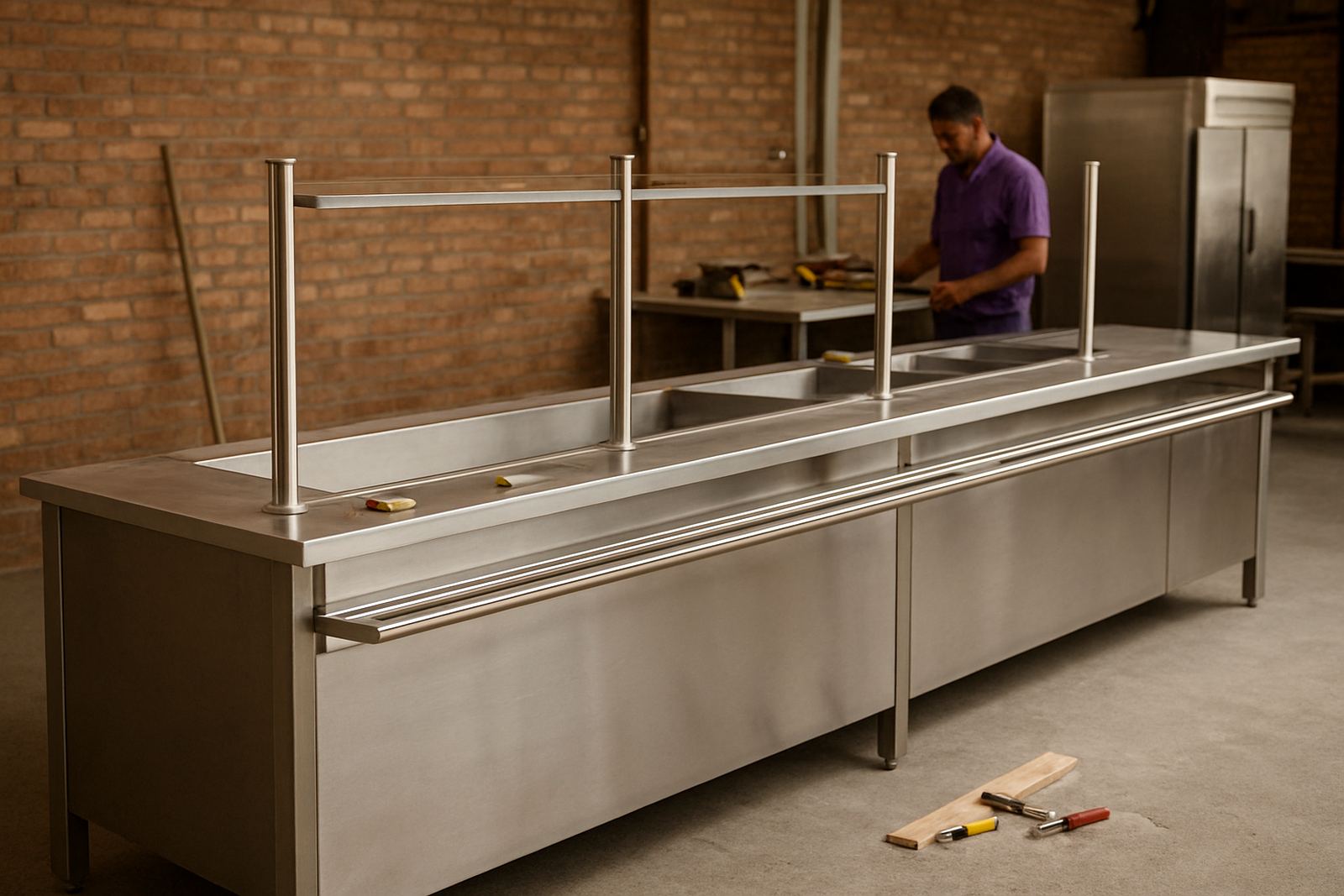
- Overshelves for prep tables and service counters
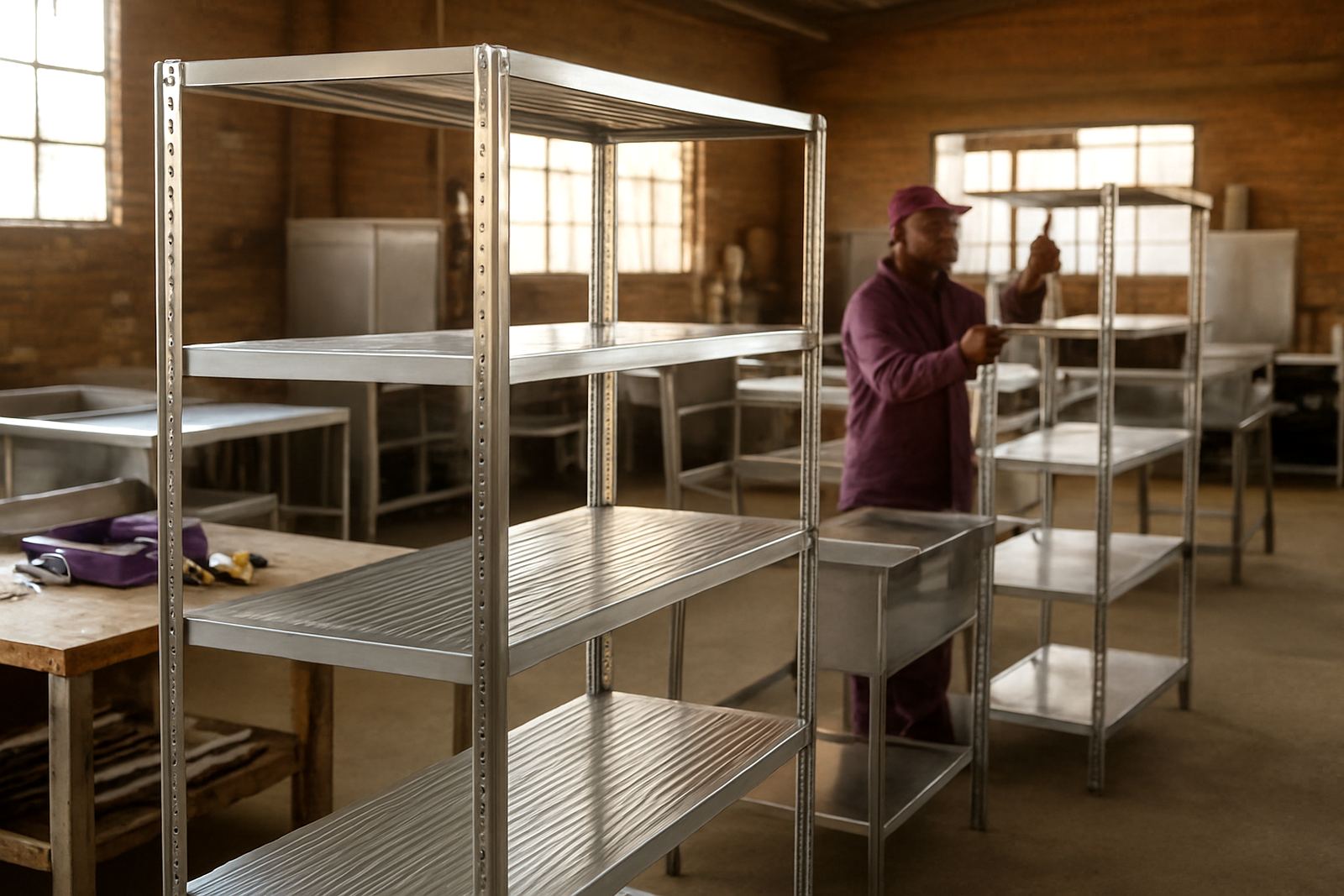
- Freestanding racking for dry stores and back-up stock
- Optional stainless drip edges, lips and lower reinforcements
- Numbered layout drawing for approval before fabrication
For kitchens that need extra hygiene control, we can supply smooth welded corners and easy-wipe finishes so dust and grease do not build up around joins. In a few cases, a simple change in shelf depth makes the whole room easier to use, especially where staff are moving in a small area and every centimetre counts.
Common Sizes, Materials And Load Options
We build shelving in stainless steel for wet and high-traffic areas, and in mixed metal frames where the application allows it. Shelf depth is usually between 300 mm and 600 mm for wall runs, while overshelves are commonly set to suit prep tables at around 300 mm to 450 mm above the work surface. Racking heights are often made to 1.8 m to 2.4 m, depending on ceiling clearance and staff access.
Load capacity depends on span, fixing method and what is stored. As a guide, lighter wall shelves are suited to containers and small stock, while reinforced shelves and racking are better for boxed dry goods, tins, trays and equipment parts. For heavy items, we always size the frame and brackets for the actual load rather than guessing, because sagging shelves become a daily problem very quickly.
In coastal humidity or where frequent mopping is part of the routine, stainless is the better choice. It resists surface corrosion and is easier to keep clean, especially where salt air or steam would shorten the life of painted storage. If a room has uneven walls or old tiles, we measure that properly and allow for the fixing points so the finished unit sits straight and level.
How We Handle Design, Fabrication And Installation
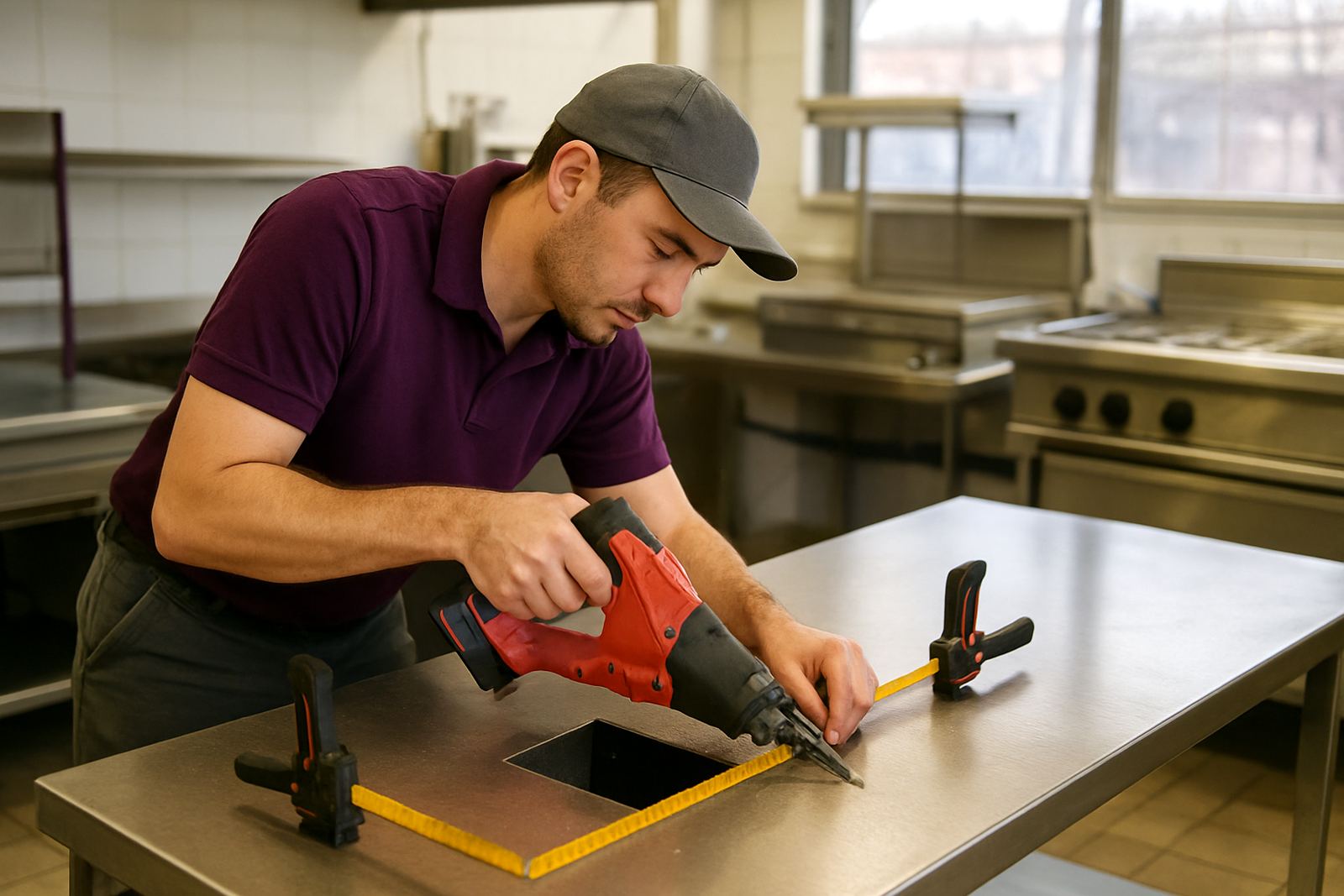
Our process is straightforward. First, we confirm the room layout and the type of stock to be stored. Then we prepare a practical design with shelf spacing, fixing points and access widths. Once approved, fabrication takes place at our Benoni base where our team builds and finishes the unit to size.
- Step 1: Site measuring and requirement check
- Step 2: Sketch or layout confirmation with dimensions
- Step 3: Fabrication of shelves, frames and brackets
- Step 4: Fitment or delivery with install instructions
- Step 5: Final positioning, checking and handover
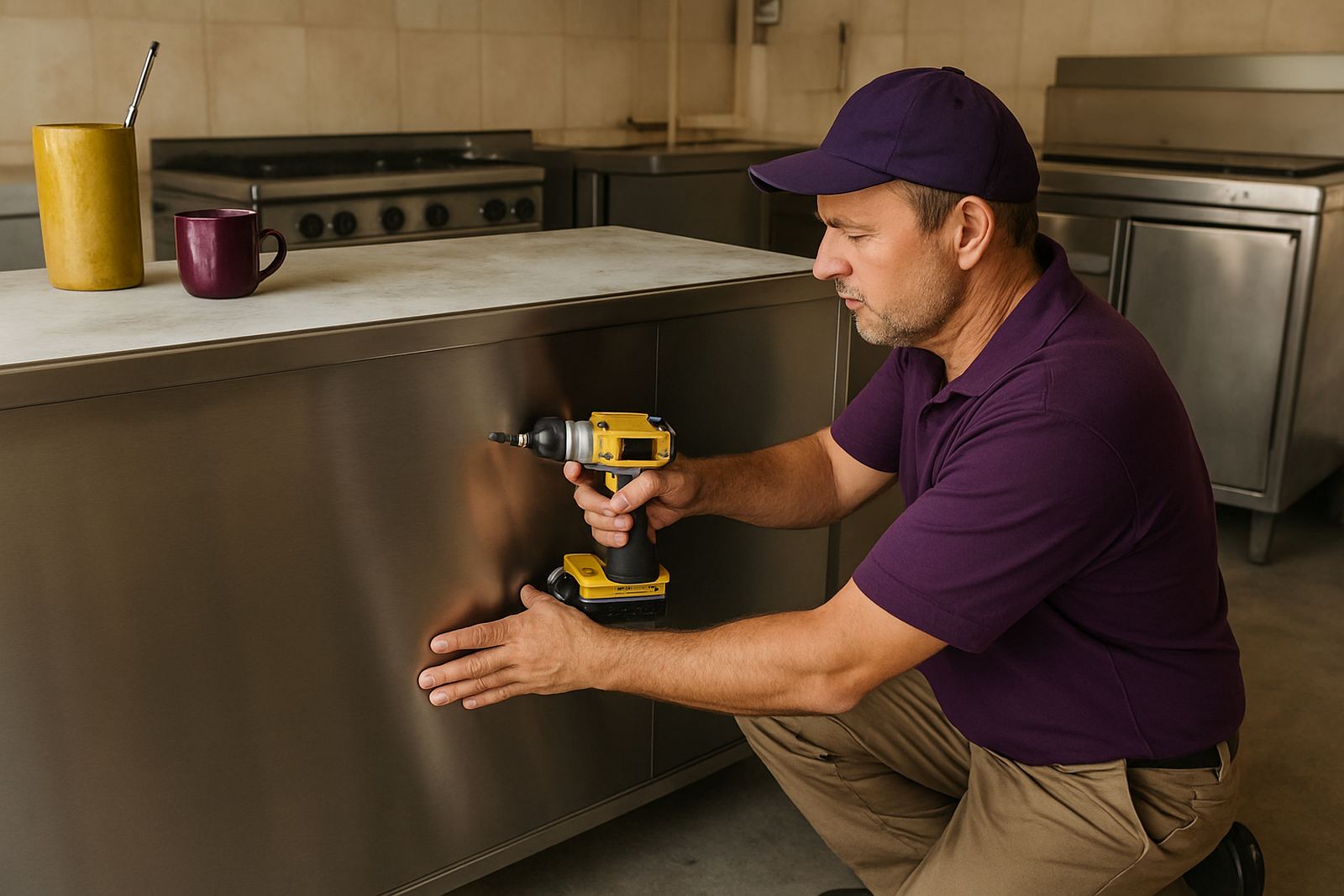
Where installation is required, we arrange it to suit trading hours and avoid disruption to service. If the site already has wall movement, loose plaster or tired tiles, we will advise on the right fixing method before drilling starts. That saves time and avoids having to rework the job later, which can be a pain for busy operators.
Pricing That Matches The Scope Of The Job
We price shelving and racking according to size, material, load requirement, number of shelves, fixing method and whether the unit is wall mounted or freestanding. A small stainless wall shelf for a tea station is not priced the same as a full dry store rack with reinforced levels and custom feet. The same applies to overshelves that have to line up with existing prep tables or counter lines.
Because each site is different, especially in older kitchens and takeaway shops, we prefer to quote from actual measurements rather than rough guesses. That keeps the pricing fair and avoids hidden extras after work has started. For larger projects in Germiston, Springs or Kempton Park, we can package shelving with prep tables, sinks or counter modifications so the whole fit-out stays in budget.
We do not push overspec on clients who only need a simple storage solution. If a lighter shelf setup will do the job safely, we say so. If the space needs heavier frames or extra support, we explain why and show the difference in the quote.
Maintenance, Cleaning And Service Intervals
Shelving and racking need very little attention when they are made properly, but a short routine keeps them in good shape. In a takeaway or kitchen that works daily, we suggest a quick visual check every week and a deeper clean every month. That is usually enough to catch loose fixings, bent brackets or build-up around wall mounts before it becomes a problem.
- Weekly wipe-down with a non-abrasive cleaner
- Monthly check of brackets, fasteners and shelf level
- Quarterly review in high-volume kitchens or sculleries
- Immediate inspection after any heavy impact or overloading
If the store is near the coast or runs in a humid room, inspect for staining or trapped moisture around joints a little more often. Stainless still needs care, especially where bleach or harsh chemicals are left sitting on the surface. A clean dry cloth after washing goes a long way, and it helps the finish keep its look for longer.
Local Support From Benoni To National Delivery
CaterKraft is based in Benoni on the East Rand, with work carried out for clients in Boksburg, Brakpan, Springs, Kempton Park and Germiston, plus national delivery when the project calls for it. Our team includes Lerato Khumalo, Ayesha Naidoo, Pieter van der Merwe, Sibusiso Dlamini and Megan Jacobs, so enquiries are handled by people who know the day-to-day demands of catering spaces.
Whether you are fitting out a new takeaway, reorganising a prep kitchen or replacing tired storage in a busy back area, we can help plan a layout that keeps stock off the floor and staff moving. Send the room dimensions and the type of items to be stored to sales@caterkraftsa.co.za, and we will work from there.
Key facts
| Typical shelf depth | 300 mm to 600 mm depending on use |
|---|---|
| Overshelf height | Usually 300 mm to 450 mm above the work surface |
| Racking height | Commonly 1.8 m to 2.4 m |
| Material options | Stainless steel or mixed metal where suitable |
| Load use | Light stock, boxed goods, trays, pans and small equipment |
| Service area | Benoni, East Rand and nationwide delivery |