Built for moving food, stock and service gear
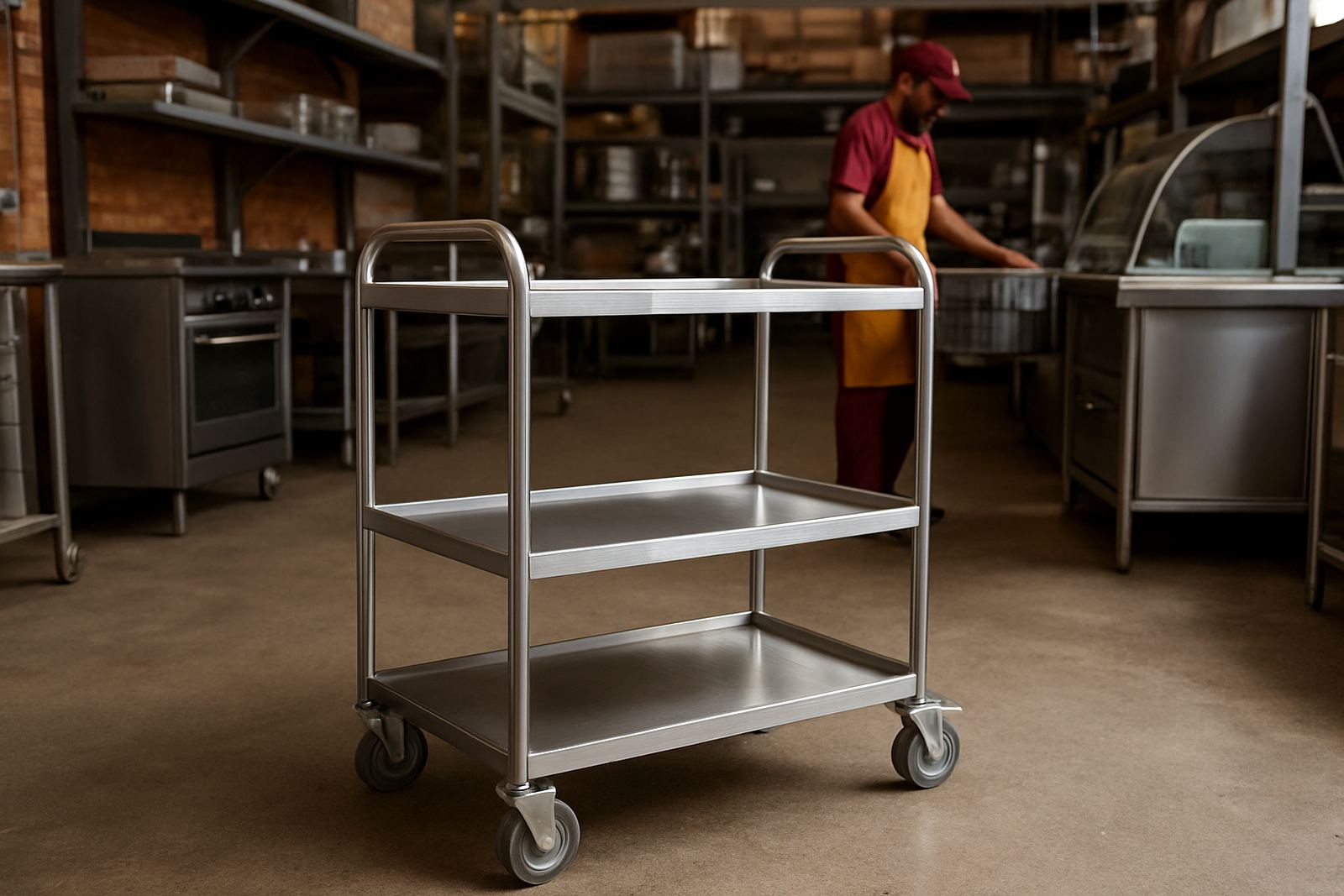
Our mobile trolleys are made for practical use in kitchens, dining rooms, sculleries and event spaces where things need to move quickly and safely. Whether you need a simple service trolley for plated meals, a clearing trolley for used crockery, or a stronger unit for bulk ingredients and equipment, we build to suit the task. Most clients want a trolley that rolls well on smooth floors, stands up to constant washing and does not wobble after a few months of use.
We work with stainless steel because it handles moisture, cleaning chemicals and daily knocks better than painted mild steel. In a busy Benoni kitchen, or a coastal venue where humidity is always present, a proper stainless trolley keeps its shape and stays easier to clean. If you need shelves, lips, undershelves, lockable castors or a welded handle, we can set that into the design from the start.
- Single shelf or multi shelf trolleys
- Flat top, lipped top, or tray carrying formats
- Swivel castors or fixed and swivel mixed sets
- Locking castors for safe loading and stopping
- Optional push handles, bump rails and removable trays
What is included in a CaterKraft trolley order
Each trolley order starts with the use case. A function venue may need a light trolley that can move between kitchen and floor service, while a takeaway may need a stronger unit for crates, containers and stock transfer. We look at width, height, shelf spacing, wheel size and how the trolley will be cleaned at the end of the shift. If needed, we also adjust the frame so the trolley fits through standard kitchen doors and service gaps.
Our fabrication team can include the main parts below, depending on your setup and budget. We keep the build practical, because a trolley that is overdone becomes too heavy to move. On the other hand, one that is too light will flex and wear out too soon, so we balance both sides carefully.
- Stainless steel frame and top surfaces
- 2 shelf or 3 shelf layouts
- Castors sized for smooth indoor use or rougher service yards
- Welded corners for added strength
- Edge lips to keep trays, plates and containers in place
- Optional lower rails for extra stiffness
How we measure and build the right trolley
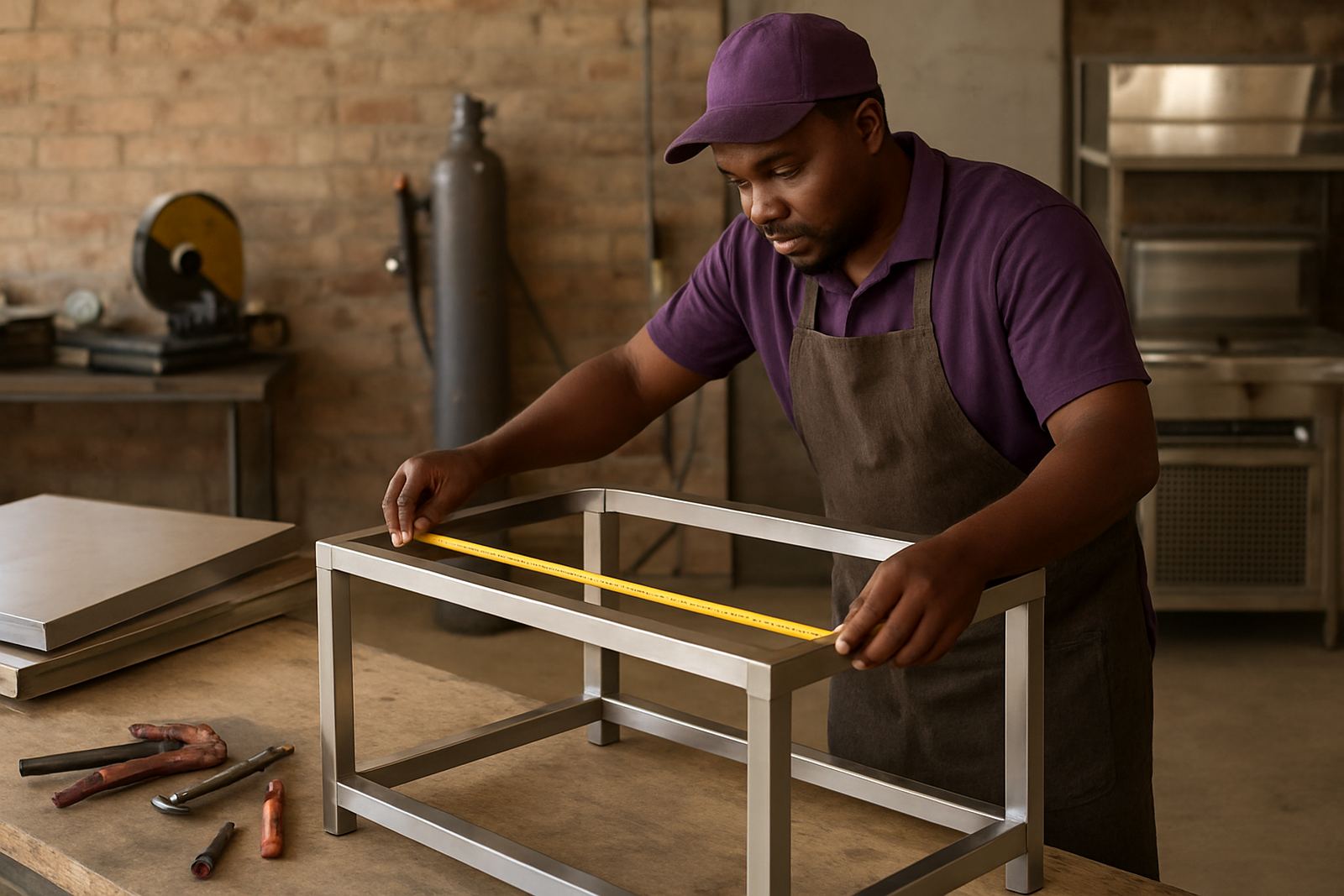
For custom trolleys, we can measure on site or work from clear dimensions that you send us. This is useful when you have narrow passages, uneven floors or a specific serving route between kitchen, store room and floor. Site measuring helps us avoid trolley heights that do not clear counters, or widths that are too tight once the load is on. It also helps with turning circles, especially in older buildings where space is limited.
Our process is simple. We confirm the duty of the trolley, set the dimensions, choose the material thickness, then fabricate and test the unit before handover. If there are any special needs like heat exposure near a bain marie, wet floors near a prep sink, or outdoor use at an event venue, we factor that in. A small typo in measuring can cost time later, so we check twice before we cut.
- Initial call or email with your size and use details
- Site measuring in Benoni, Boksburg, Brakpan, Springs, Kempton Park or Germiston
- Drawing and material confirmation
- Fabrication and fit-up in our workshop
- Final check for wheel movement, balance and finish
Turnaround times that suit busy kitchens
Turnaround depends on the number of units, the level of custom work and how quickly measurements are confirmed. Simple standard trolleys can move through faster, while heavier duty or made-to-size units need extra time for fabrication, finishing and castor fitting. If you are replacing damaged equipment during a trading week, we will tell you upfront what can be done quickly and what needs a longer lead time.
For many local jobs, the build is planned around your trading hours so delivery and installation do not interfere with service. We know that kitchens do not stop for long, especially when stock arrives early or an event has already been booked. If a trolley is needed for a new opening, refurbishment or seasonal rush, tell us early and we will set a realistic schedule.
- Standard trolley builds: usually faster than custom units
- Custom size or multiple shelf units: allow extra fabrication time
- Repair or modification work: depends on condition and access to the unit
- Delivery can be arranged locally or nationally
Pricing that stays clear from the start
We price mobile trolleys according to size, material grade, shelf count, castor type and finish. A small serving trolley is a different job from a heavy duty stock trolley, so we do not use one fixed figure for all orders. If you are comparing options, we can quote on a like for like basis so you can see where the cost sits and what you get for it.
Clients often ask whether it is worth spending more on stainless steel. In our view, yes, if the trolley is used every day and washed often. The better built unit usually lasts longer, needs less repair and keeps a cleaner look. We can also explain where you can save money, for example by simplifying the shelf layout or reducing non essential extras. That way you get a sensible build instead of paying for features you will not use.
We also take into account access, delivery distance and any on site fitting required. For East Rand customers the cost is often straightforward, while national deliveries are quoted with transport included so there are no surprises later.
Care and maintenance for longer service life
Mobile trolleys need simple but regular care if you want them to last. Wheels should be checked for debris, loose fittings and wear, especially in kitchens where flour, grease and water collect on the floor. Stainless surfaces should be washed and dried after use, then inspected for dents, loose welds or movement in the shelf joints. A quick monthly check saves a bigger repair later, that much is certain.
We recommend the following maintenance intervals for busy sites. In light use, a quarterly inspection may be enough, but in a takeaway, school kitchen or event venue with daily movement, monthly checks are better. If a castor starts sticking, replace it before it damages the floor or strains the frame. For trolleys used near salt air, cleaning should be more frequent so the finish stays in good condition.
- Daily: wipe down surfaces and dry off water spots
- Weekly: check wheels, brakes and handles
- Monthly: inspect welds, joints and shelf alignment
- Every 6 months: service high use units and replace worn castors where needed
Key facts
| Material | Stainless steel construction with welded frame options |
|---|---|
| Shelf options | Single, 2 shelf or 3 shelf layouts |
| Wheel type | Swivel castors, fixed castors or locking castors |
| Common use | Internal transport, clearing, plating and event service |
| Size range | Made to suit doorways, corridors and prep areas |
| Delivery | Collected in Benoni or delivered nationally |