

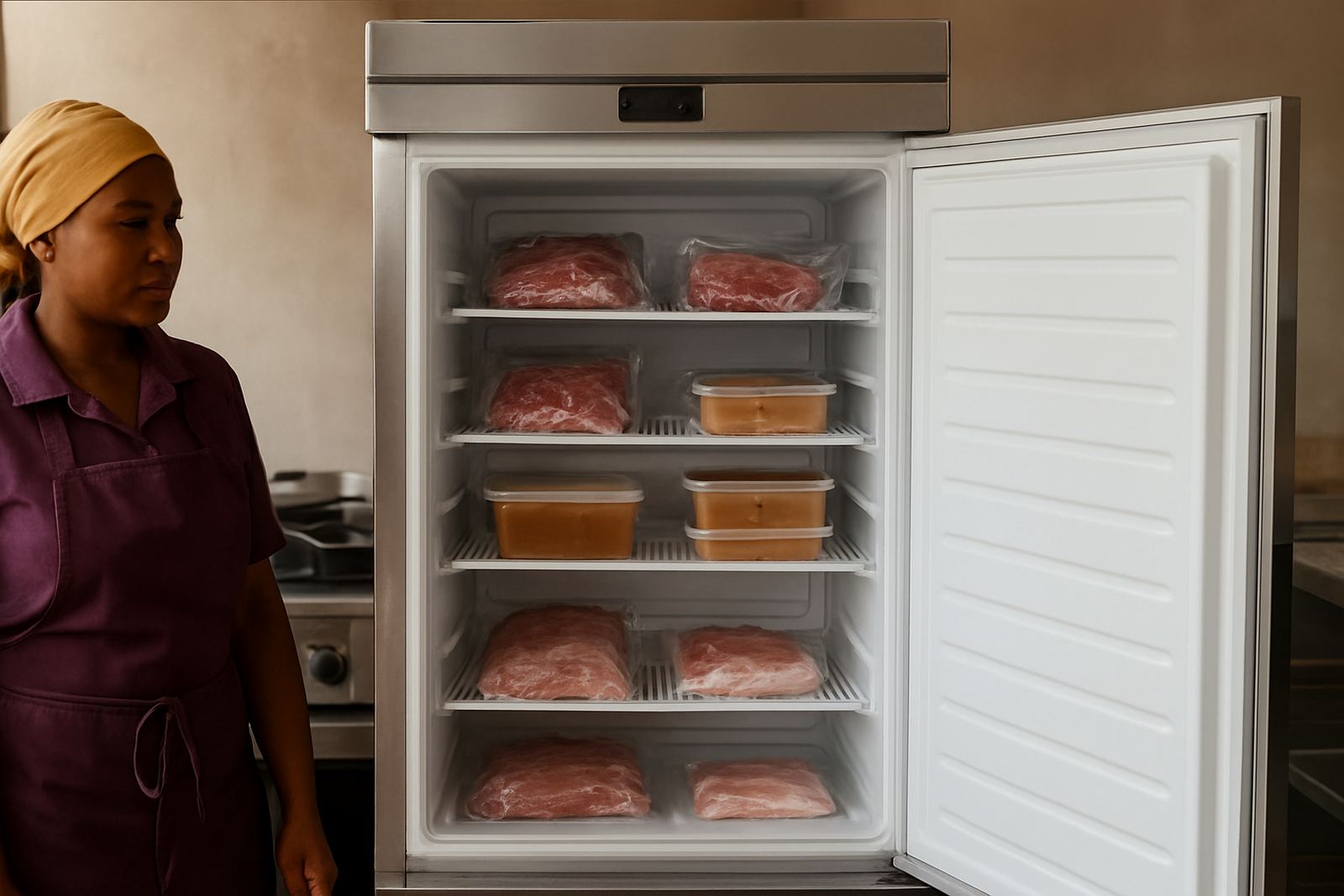
Upright Freezer
Home / Catalogue / Upright Freezer

Catalogue

Upright Freezer

An upright freezer keeps frozen stock sorted, easy to reach and off the floor in busy kitchens. It suits production sites, takeaways and bakeries that need reliable storage for chips, meat, pastry, veg and prepped items.

Built For Busy Frozen Storage

An upright freezer is the vertical answer when floor space is tight but frozen stock keeps growing. Instead of stacking boxes in a chest unit, shelves let staff sort stock by day, product type or prep area, which saves time during service and stock counts.

CaterKraft supplies upright freezer options for kitchens that need practical storage in Benoni, Boksburg, Germiston, Brakpan, Springs and Kempton Park, with delivery nationwide. For many sites, the main advantage is simple: you open one door, find what you need quickly, and close it before cold air escapes. That helps during load-shedding too, because less door time means less temperature loss.

Most commercial upright freezers use a stainless or coated outer finish, a high-density insulated cabinet, adjustable shelves and a self-closing or firm seal door. For catering use, the interior should be easy to wipe out and the door seal should hold well, even in warm prep rooms. A small scrape or loose gasket can turn into heavy ice build-up fast, so the cabinet has to be checked regularly.

Sizes, Doors And Internal Layout

Upright freezers come in single-door and double-door formats, depending on the volume of stock you keep. A single-door unit is often the better choice for smaller takeaways, coffee shops and canteens, while a double-door unit suits butcheries, production kitchens and central prep areas that turn stock daily.

  • Small upright units: about 300 to 400 litres for limited frozen holding
  • Medium units: about 400 to 700 litres for busy takeaway and prep kitchens
  • Large units: 700 litres plus for higher-volume storage
  • Adjustable wire or solid shelves for trays, tubs and packaged goods
  • Reversible door options may suit awkward kitchen layouts

If you are storing boxed product, the shelf spacing matters as much as the total volume. Tall cartons, stock crates and GN pans need enough clearance to slide in without forcing the door shut. In humid coastal conditions or in kitchens with frequent door opening, units with stronger insulation and better sealing tend to cope better over time.

For sites handling different product lines, a freezer with clear shelf zones helps staff avoid mixing raw and cooked stock. That is important where municipal inspections are strict about separation and labelling. It also makes end-of-day closing faster, which every team appreciates.

Where An Upright Freezer Suits Best

This unit fits production kitchens, takeaway counters, bakeries, small restaurants and school or staff canteens. It also works well in prep rooms where stock needs to be visible at a glance. If you are freezing marinated meat, pastry, veg packs, sauces or portions for batch cooking, the upright format keeps everything in order.

It is a good match for sites that need a cleaner workflow around the freezer, since the footprint is narrow and the door opens forward. That makes it easier to place against a wall, near a cold room or beside a prep bench. In Benoni and across the East Rand, many kitchens use one upright freezer for daily turnover stock and a second unit for reserve stock, especially when trading through week ends or functions.

  • Takeaways needing fast access to chips, patties and ice cream stock
  • Bakeries storing pastry, dough and frozen ingredients
  • Restaurants with portioned meat and sauce stock
  • Contract caterers moving between events and prep sites
  • Butchery kitchens where stock rotation must stay organised

Installation, Power And Site Checks

Before installation, check that the floor is level, the doorway clearance is wide enough and the unit will have space for air flow around the condenser area. Upright freezers work best when there is enough breathing room at the back and sides, because hot air has to move away from the cabinet. If you place a freezer too close to a wall, it will work harder and draw more power.

Most commercial upright freezers run on standard electric supply and need a dedicated plug point. For kitchens with unstable supply or regular outages, it is worth planning for a surge protector and backup power suitable for the actual load. Always confirm the rated amps before installation, especially if the unit is going onto a shared circuit with fridges, prep equipment or a bain-marie line. Gas is not used for the freezer itself, but the site layout should still allow safe separation from gas appliances and heat sources.

During site measuring, we also look at door swing, traffic flow and cleaning access. The freezer should not block a wash-up route or sit where staff bump it during rush periods. If the room gets hot from ovens or canopies are not extracting properly, the freezer will struggle. A cooler room makes a big difference to running costs and product life.

Care, Defrosting And Servicing

Good freezer care is mostly about routine. Keep stock rotated, wipe spills quickly and check the seal so warm air does not creep in. Ice build-up reduces usable space and puts strain on the motor, so manual defrosting or scheduled maintenance is important when the unit starts frosting up around the door edges or shelves.

Clean the condenser area and keep dust, flour and grease away from vents. In bakery and takeaway kitchens, airborne grease can collect faster than many owners expect, especially near extractor canopies that are not pulling properly. A blocked condenser makes the freezer run hot, which means more wear and higher electricity use. It is one of those small jobs that saves money later.

  • Check door seals for cracks, gaps and dirt build-up
  • Do not overload shelves past the airflow line
  • Allow hot food to cool before freezing where possible
  • Keep stock labelled by date and product type
  • Schedule service before the unit starts warming up or icing heavily

What To Check Before You Order

Before ordering, measure the space properly and confirm the door opening route from delivery point to final position. Check whether you need a single-door or double-door cabinet, and work out the kind of trays, tubs or boxes you will store inside. A good freezer should match your real stock pattern, not just the available floor space.

You should also confirm the power point position, whether the floor can take the weight, and whether there is enough clearance for cleaning around the back and sides. If the freezer is going into a new kitchen or a modified prep area, it helps to plan it with the rest of the stainless work. That way the unit sits where staff can use it properly instead of being squeezed into a corner and forgotten.

For custom kitchens, CaterKraft can assist with site measuring, counter modifications and related stainless work so the freezer fits the room and the work flow. If you are ordering for a branch in Boksburg, Germiston or Springs, or shipping to another province, we can discuss the best layout before dispatch. It saves back-and-forth and avoids nasty surprises on install day.

Key facts

Product typeVertical commercial freezer
Capacity rangeAbout 300 to 700+ litres depending on model
Door optionsSingle-door or double-door
InteriorAdjustable shelving for trays, tubs and boxed stock
PowerStandard electric supply, dedicated plug point recommended
Typical useFrozen stock storage for kitchens, takeaways and bakeries

What clients say

Questions we get asked

Is an upright freezer better than a chest freezer for a kitchen?

If you need quick access and stock sorting, yes. Upright units keep product visible and easier to rotate, while chest units suit bulk storage but take longer to search through.

Can an upright freezer handle load-shedding?

It can, provided the unit is well sealed and not opened often. For regular outages, plan backup power around the freezer's actual electrical load and keep the door closed as much as possible.

How often should the freezer be serviced?

Check seals and cleanliness regularly, and arrange servicing when cooling drops, ice builds up or the motor runs longer than usual. Busy kitchens usually benefit from scheduled maintenance rather than waiting for a fault.

Planning something? Email the team.

sales@caterkraftsa.co.za