Built For Hot Kitchens And Busy Service
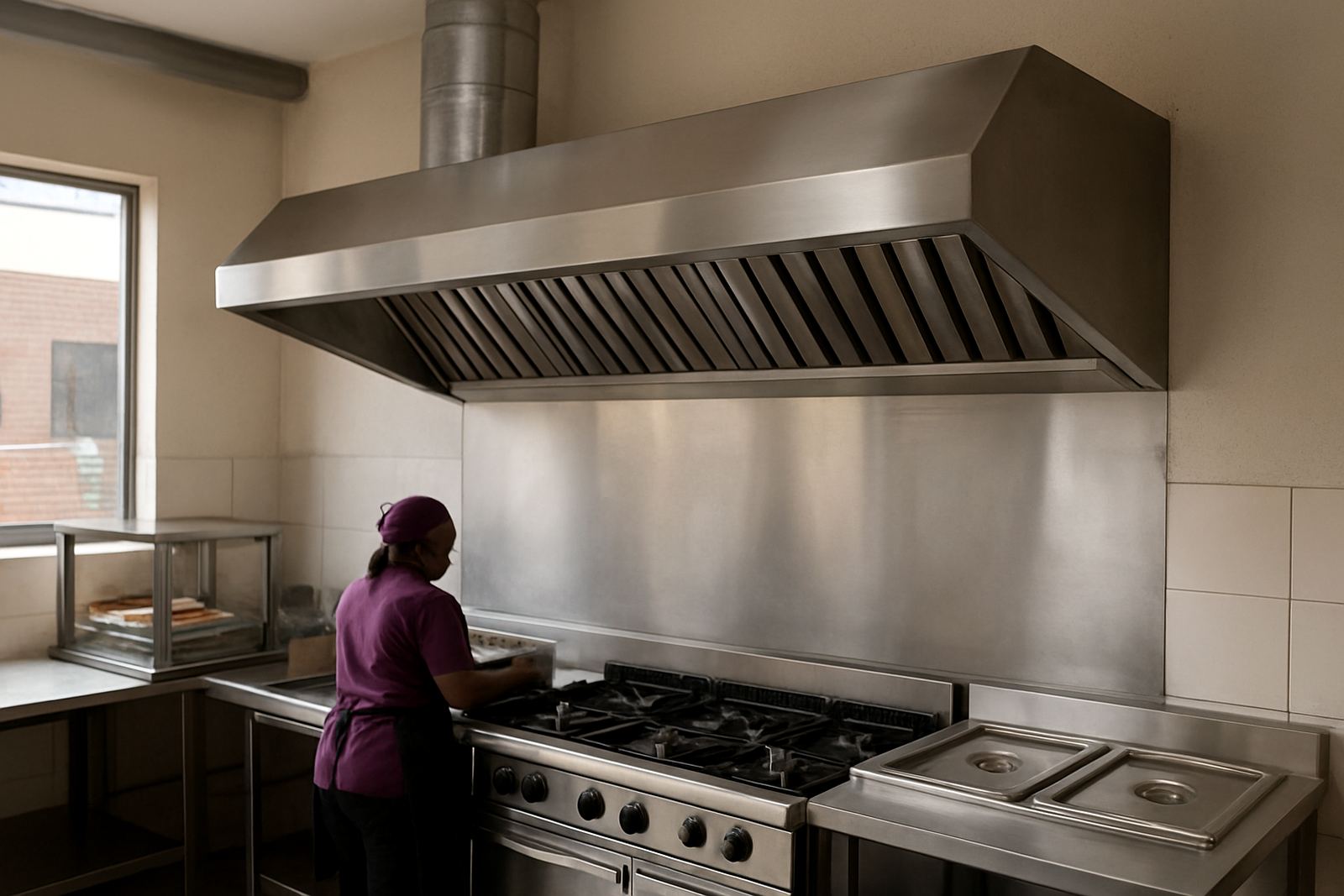
An extractor canopy sits above a stove line, fryer bank, chargrill or griller and captures rising heat, smoke, steam and airborne grease before it spreads through the room. In a tight kitchen this matters every day, especially where the fryer is running hard and the pass is close to the cook line. A good canopy also helps reduce buildup on walls, ceilings and ducting, which saves on cleaning and keeps the work area more manageable.
We make canopies in stainless steel for catering spaces that need regular wash down and steady service. That includes restaurants, school kitchens, canteens, butcheries with hot sections, takeaways and production kitchens. For coastal deliveries, the stainless finish is a practical choice against humidity and salt air. In inland sites it holds up well where heat and condensation are part of the job.
Typical canopy use includes fixed cook lines, wall mounted extraction over a single row of equipment, and larger island style setups where cooking happens in the centre of the room. If the kitchen layout changes later, we can also look at counter modifications or matching stainless additions so the canopy sits properly above the equipment.
Common Sizes, Layouts And Finish Options
Extractor canopies are usually made to suit the actual cooking line, not the other way round. We work from site measuring, equipment sizes and the available ceiling height so the canopy clears pots, pans and tall appliances while still catching vapour effectively. Standard sizes can be made in shorter runs for compact takeaway kitchens or in longer sections for line cooking and batch prep.
- Wall mounted canopies for straight cook lines
- Island canopies for central kitchen layouts
- Box canopies with straight or sloped front profiles
- Stainless steel construction for easy cleaning
- Removable grease filters where required
- Drip trays and grease collection details for maintenance
Finishes are usually brushed stainless, which is easier on the eye in a working kitchen and hides small marks better than a polished surface. Where a site needs more capture area, the canopy can be made deeper or wider than the appliances below it. As a rule, the canopy should cover the full heat source with a sensible overhang each side, not sit too tight and miss the vapour at the edges.
Where An Extractor Canopy Suits Best
This product suits any kitchen that produces heat, steam or cooking fumes on a regular basis. In Benoni and the East Rand we often supply canopies for fast moving takeaway kitchens, church hall kitchens, small restaurants and production areas where frying or grilling happens all day. It is also a sensible fit for food prep rooms where a gas range is used near the main work area.
A canopy can be paired with extractor fans and ducting to move air out of the building, subject to local rules and the building layout. In some cases municipal or landlord approval is needed before penetrations are made through walls or roofs, so it helps to check this early. On commercial properties, ceiling height, duct route and roof access can change the final design quite a bit.
- Takeaways with fryers and griddles
- Restaurants with open cook lines
- School and clinic kitchens
- Butcheries with hot food service areas
- Compact prep kitchens where space is limited
- Production kitchens running in shifts
Installation, Power And Gas Considerations
Extractor canopy installation is usually done after the site measuring is complete and the cooking equipment position is fixed. That way the canopy height can be set correctly above the line and the duct route planned without clashes. If the canopy is too low, staff can bump their heads or trap heat. If it is too high, it may not catch vapour properly and the room gets uncomfortable fast.
The canopy itself does not use gas, but it works around gas appliances and hot equipment, so clearances matter. Where a gas range or fryer is part of the line, leave enough space for safe operation and service access. Power may be needed for extractor fans, lights or controls depending on the setup, and the electrical point should be placed with the technician in mind. Load-shedding is part of everyday life, so it is worth asking how the ventilation will behave when power is off and whether backup power is available for the kitchen.
For fitment, we can supply the canopy as part of a bigger stainless package or as a stand alone item. If the site needs support framing, wall brackets or hanging points, these are planned from the start. On older premises, especially in Germiston or Brakpan, we often find uneven walls or dated ceiling structures, so a proper site check avoids extra rework later.
Care, Cleaning And Ongoing Service
A stainless canopy is easy to keep in good condition if it is cleaned often and the grease traps are not left to clog. Wipe down the visible surfaces after service and remove built up oil from filters before it hardens. In busy kitchens, weekly cleaning is better than waiting until month end, because grease becomes stubborn very quickly and starts smelling.
Servicing should include a check of the filters, fixings, fan connection points and any exposed seals. If the canopy is vibrating, rattling or showing grease marks in odd places, that can mean airflow is poor or the ducting needs attention. It is a small thing to ignore at first, but it usually becomes a bigger job later. We also advise checking the unit after any major kitchen change, such as new equipment, extra fryers or a changed cook line.
- Clean filters regularly and replace damaged ones
- Check wall fixings and hanging points every few months
- Watch for grease trails around joins and corners
- Keep the canopy clear of stored boxes and packaging
- Book a service check if extraction sound changes
What To Check Before You Order
Before ordering an extractor canopy, it helps to have a few facts ready. Measure the full length of the cooking line, note the depth of the appliances and confirm the ceiling height. If the kitchen has gas equipment, tell us where the gas line sits and whether the canopy must clear any pipes, lights or beams. Photos of the wall or ceiling area also save time, especially on busy sites where access is tight.
Think about what sits under the canopy now and what may be added later. If the line may grow, it is usually better to allow a bit more cover now than to replace a unit later. Also check whether the site has a straight wall mounted run or an island position, because the support method changes. If the kitchen forms part of a mall, school, clinic or leased premises, there may be building rules to follow before cutting, drilling or routing ducting.
If you are unsure, our team can assist with site measuring and practical layout advice. We work with kitchens in Benoni, Boksburg, Springs, Kempton Park, Germiston and further afield, and we deliver nationally. That means the canopy is planned around the actual room, not guessed from a rough sketch.
Key facts
| Material | Stainless steel construction for wash down areas |
|---|---|
| Typical Use | Cooking lines with fryers, grills, ranges and hot prep |
| Mounting Types | Wall mounted or island suspended |
| Sizes | Made to suit site measurements and appliance line length |
| Options | Grease filters, drip tray, light fittings, duct connection points |
| Service Area | Benoni, East Rand and nationwide delivery |