What A Rice Warmer Does In Daily Service
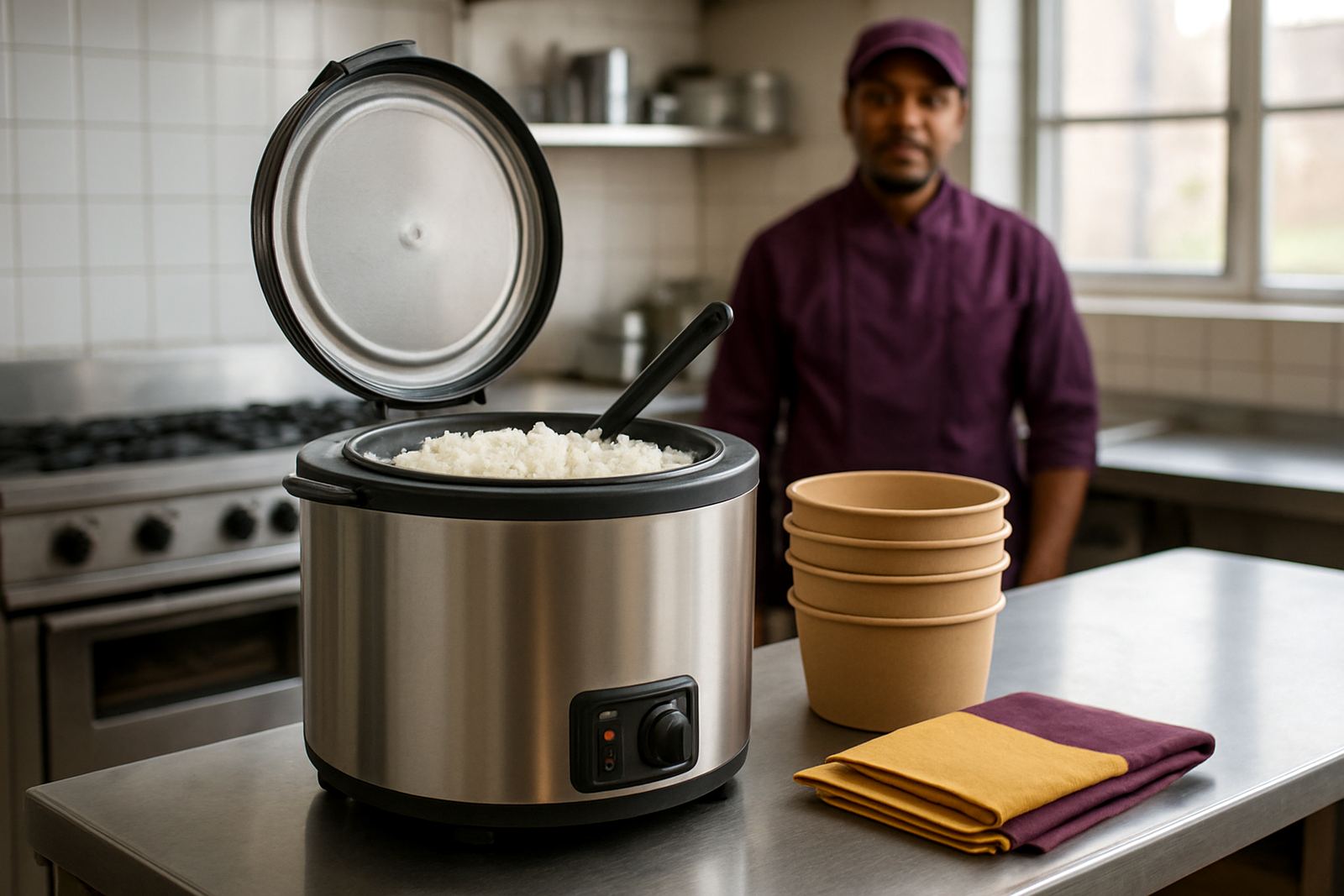
A rice warmer is a holding unit made to keep cooked rice at serving temperature after it has been prepared. It is not a cooker, so it works best once the rice is done and you need a clean way to hold it through lunch rush, supper trade or school break service. In practical use it helps keep the texture more even, and reduces the stop start reheating that wastes time.
For East Rand kitchens this matters when the power is unstable or when one person is plating while another is still cooking in the back. A proper warmer gives you a set point for service and keeps the front counter moving. It also cuts down on open pots crowding the hob, which matters in tight prep spaces.
- Holds cooked rice at serving temperature
- Supports counter service and buffet lines
- Reduces repeated reheating during busy periods
- Works well with takeaways, canteens and caterers
Sizes, Capacity And Build Options
Rice warmers are usually selected by the amount of rice you need to hold at one time and by the space available on the counter. A compact unit suits a small takeaway, while a larger insulated model is better for schools, staff canteens and high-volume catering. We can also guide you on whether a single chamber or a larger multi-pot setup will suit your service pattern better.
Build details matter. Stainless steel is the usual choice for the outer body because it handles heat, moisture and regular cleaning better than painted finishes. Internal pans may be removable for faster changeovers, and lids can be fitted to help reduce drying out. In humid coastal deliveries, corrosion resistance matters even more, so the finish and seam quality should be checked before ordering.
- Countertop or freestanding formats
- Single pot or larger holding capacity
- Stainless body for easier cleaning
- Removable pans and lids where required
Where A Rice Warmer Suits Best
This unit suits kitchens that need a dependable holding point for rice service, especially where portions go out in steady waves instead of all at once. It is common in takeaway counters, buffet service lines, contract catering, school kitchens and restaurant pass-through areas. It also works well in smaller setups where the cooker and the serving point are not in the same room.
In Benoni, Boksburg, Brakpan and Germiston clients often ask for something simple to place near the servery, because space is limited and the team needs quick access. If your menu includes rice bowls, curries, stews or buffet dishes that sit beside rice, a warmer helps keep the serving line organised and safer for staff and customers.
- Takeaways and food counters
- School, factory and mine canteens
- Buffet stations and self-service areas
- Restaurant back-of-house holding
Power, Space And Installation Basics
Most rice warmers are electrically heated, so the first check is the supply available at the installation point. Before fitting, confirm the plug type, cable length and socket position, because dodgy extension leads cause problems in busy kitchens. If the site has load-shedding, you may want to plan the warmer around backup power or connect it to the same managed supply used for other holding equipment.
Allow enough bench space for ventilation and safe access to the lid or pan. The unit should sit level on a stable surface, with clearance so steam does not hit nearby walls or electrical fittings. In some kitchens a custom stainless table or counter cut-out makes the unit easier to use, and that is often worth doing properly rather than forcing it onto a crowded prep line.
- Check socket position and cable reach
- Keep the unit level and stable
- Leave space for steam and ventilation
- Plan for backup power if service must continue during outages
Cleaning, Care And Servicing
Rice warmers last longer when they are cleaned daily and not left with dried starch build-up. Switch off, allow the unit to cool enough for safe handling, then wipe all food-contact surfaces with warm water and a food-safe cleaner. Do not use harsh scrapers on stainless corners or heating surfaces, because scratches trap residue and make cleaning harder over time. Small bits left behind can also affect the smell and look of the next batch.
Check seals, lids, switches and internal pans often, especially in high-turnover kitchens. If the unit starts heating unevenly, holding too hot, or showing moisture where it shouldnt, it should be looked at before it affects service. Routine servicing also helps in coastal areas where humidity can speed up wear on contacts and fittings.
What To Confirm Before You Order
The right rice warmer is the one that matches your menu, daily volume and counter space. Before ordering, count how many portions you need ready at peak service, measure the exact footprint available and check whether you need a simple holding unit or one that forms part of a larger servery setup. It helps to know if the unit will sit beside a bain-marie, under a canopy, or on a mobile trolley.
For quoted work we also look at access to power, the finish you need and whether any counter modification is required. If you are fitting out a new site in Springs, Kempton Park or on the East Rand, site measuring can save a lot of back and forth later. Better to check the details now than find the unit blocks a service hatch on delivery day.
- Daily portion count at peak service
- Available counter width and depth
- Power point location and supply type
- Whether you need stainless matching or custom base work