Curved-glass display for chilled cakes and desserts
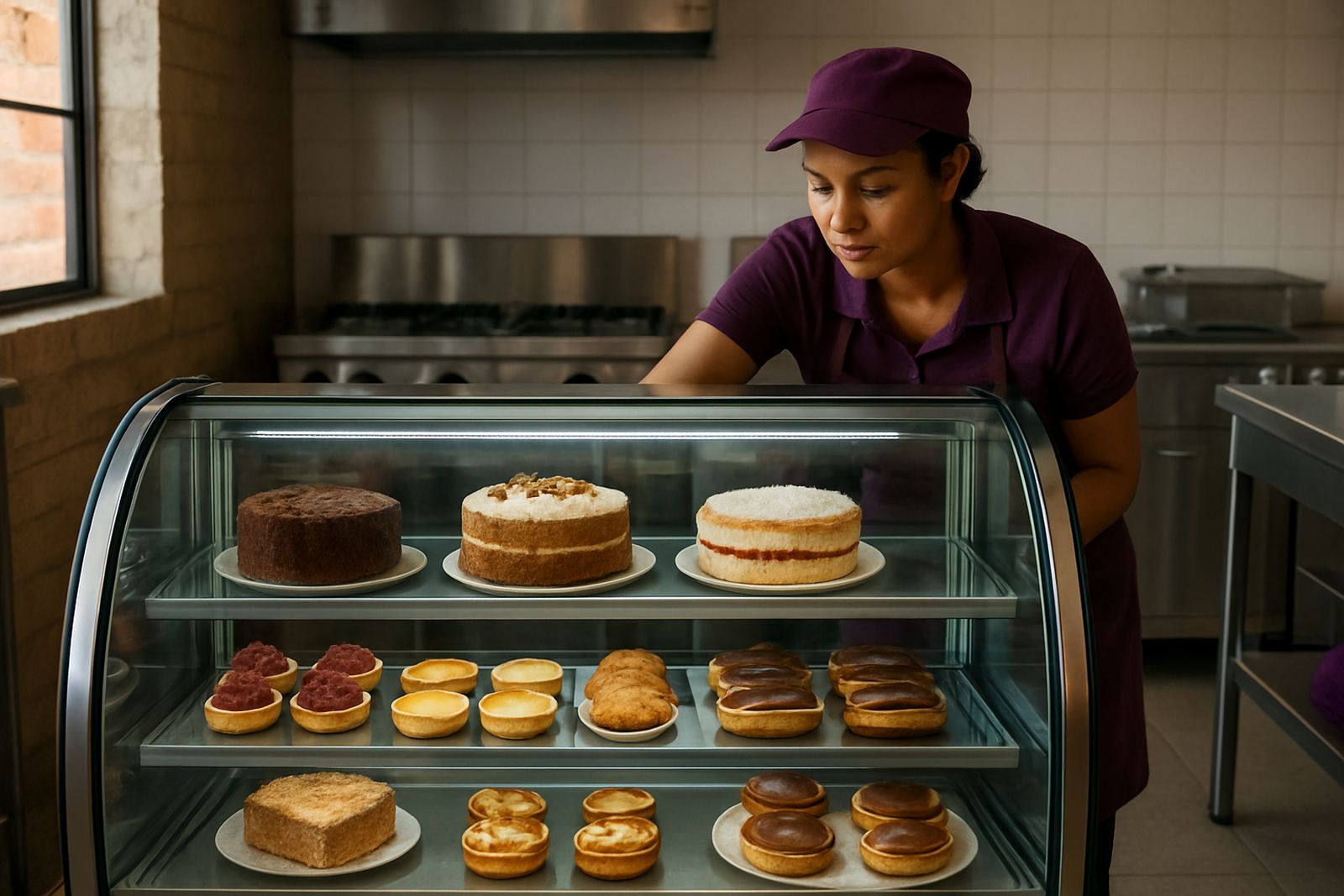
A cake display fridge is a refrigerated display unit with curved front glass, shelves and internal lighting for selling cakes, slices, mousses and plated desserts at the counter. It keeps stock at a controlled chilled temperature while letting customers see the range clearly, which helps with impulse sales and cleaner presentation. In a busy shop you need a unit that can hold its temperature when the door is opened often and the room gets warm, especially in summer or near hot ovens.
These units are commonly used in bakeries, coffee shops, hotel breakfast areas, school cafeterias and takeaway counters. The glass front gives a tidy view of the product while the back opening makes it easier for staff to load trays and rotate stock through the day. For towns like Benoni, Boksburg and Germiston, where kitchens often run long hours and load-shedding can interrupt service, it is worth choosing a fridge with dependable insulation and a compressor sized for real daily use.
Sizes, shelf layouts and finish options
Cake display fridges are available in compact counter units and larger multi-shelf models. The right size depends on how many cakes you show at once, the width of your service counter and how much back-of-house space you have for loading. Most units are built with stainless steel framing, glass panels and adjustable shelves so the layout can suit whole cakes, sliced portions or mixed dessert items. If you need a unit for a small café in Kempton Park or a busy bakery in Brakpan, measuring the counter opening first saves time later.
- Compact models for limited counter space, usually 900 mm to 1200 mm wide
- Medium units for everyday retail use, often 1200 mm to 1500 mm wide
- Larger display units for higher volume service, often 1500 mm to 1800 mm wide
- Adjustable glass shelves for mixed product heights
- Stainless steel base and internal lining for easier cleaning
- LED lighting to improve visibility without warming the cabinet too much
Some buyers want a straight front, but a curved-glass face gives a softer display line and helps the cakes stand out from the queue side. Shelf spacing matters too. A tall birthday cake needs more headroom than a tray of slices, so it is better to plan for the tallest product you expect to sell rather than the shortest. That avoids wasted space and reduces the need for awkward stacking.
Where a cake display fridge works best
This unit suits any business that sells chilled desserts over the counter and needs them visible from the customer side. It is a practical fit for cake shops, deli counters, cafés, guest houses, lunchrooms and canteen service points. It also works in takeaway stores that sell dessert add-ons with meals. In coastal areas a fridge with proper airflow and corrosion-resistant finishes is important because humidity can affect both appearance and service life.
For new setups in the East Rand, it is also useful to think about queue flow. The fridge should sit where staff can serve quickly without crossing prep areas, and where customers can read the display without leaning over the counter. If the unit is going into a narrow shop front, confirm the doorway width, turning space and floor strength before delivery. A heavy display cabinet on uneven tiles can shift out of level and that affects door seals and condensate drainage.
- Bakeries selling whole cakes and by-the-slice items
- Cafés needing plated dessert storage near the till
- Takeaways with a small dessert section at the counter
- Hotels and guest houses with breakfast or coffee service
- School tuckshops and staff canteens with chilled treat sales
Power supply, placement and installation details
A cake display fridge normally runs on standard single-phase electricity, but the exact amperage and plug arrangement depend on the cabinet size and compressor load. It should be installed on a level floor with enough clear space at the rear or base for ventilation. If the condenser cannot breathe properly, the unit works harder and that pushes up power use. In areas where load-shedding is common, many operators keep the fridge on backup power or plan stock levels around the outage schedule.
Before installation, check the route for bringing the unit into the shop, the location of the nearest socket and whether the counter height allows easy loading from the staff side. A small gap behind the cabinet helps with heat dissipation and cleaning. If the fridge is positioned close to an oven, griddle or sunny window, the compressor will cycle more often. That can shorten service life. Good placement saves money and keeps the interior steadier during busy trading hours.
- Single-phase electrical connection unless otherwise specified
- Level floor and clear airflow around the compressor area
- Allow space for opening rear doors or loading panels
- Keep away from direct sun, hot equipment and steam points
- Plan for backup power during outages if stock must stay chilled
Cleaning, temperature control and servicing
Daily cleaning keeps the display hygienic and helps the fridge run well. Wipe the glass, shelves and door handles with a food-safe cleaner, then dry the surfaces so there are no streaks or water marks. The seals should be checked for crumbs and sugar spillages because sticky residue can stop the door closing fully. Interior temperature should stay consistent through trading hours and staff should avoid overfilling the cabinet, since that blocks air flow and causes uneven cooling.
Routine servicing should include checking the thermostat, fan operation, condenser coil and door seals. In humid or dusty environments the condenser may need more frequent cleaning than in a dry kitchen. If the unit is used near the coast, corrosion control matters too. A technician should inspect for early wear, especially if the fridge runs for long stretches during weekend trade. A small fault picked up early is usually cheaper to fix than a compressor failure later, and that is often the difference between a steady week and lost stock.
If a display unit starts running warm, frosting up or cycling too often, stop overloading it and check the airflow before calling for service. Temperature issues are often linked to dirty coils, weak door seals or a bad site position. Not every fault is electrical and sometimes the fix is simply a better installation point or a proper clean out.
What to confirm before you place an order
Ordering a cake display fridge is easier when the size, layout and service needs are confirmed upfront. Measure the available floor or counter space, the doorway width and the height of the serving area. Then decide how many shelves you need and whether the unit must hold whole cakes, slices or plated desserts. If your product mix changes often, ask for adjustable shelving so you are not locked into one arrangement.
It also helps to confirm the power point location and whether the cabinet will sit against a wall or in an open service line. If you need matching stainless trim, branding panels or a modified counter opening, that should be planned before fabrication. Lerato Khumalo and the CaterKraft team in Benoni work with cafés, bakeries and takeaway shops across the East Rand and deliver nationally, so the team can help check measurements before the unit leaves the workshop. We also handle site measuring when a space is tight or the installation has to fit around an existing counter.
- Overall width, depth and height of the available space
- Preferred shelf count and shelf height for your products
- Electrical point location and load-shedding backup plan
- Whether the cabinet must fit under a counter or stand alone
- Finish requirements for stainless, glass and trim panels
- Delivery access, doorway size and floor level at site
Local supply for the East Rand and beyond
CaterKraft is based in Benoni on the East Rand and supplies cake display fridges and related stainless equipment to customers in Boksburg, Brakpan, Springs, Kempton Park and Germiston, with national delivery available. The team works with new shop fit-outs, replacements and custom modifications where a display unit must sit into an existing counter line. If your business needs a cake display fridge, the best starting point is a proper size check and a clear idea of the products you want to sell.
For bakeries and cafés, the unit should do more than look neat. It must keep desserts cool, fit the trading space and hold up to daily use. That is what matters when the doors open early, the kitchen gets hot and the till area stays busy right through the day.
Key facts
| Product type | Curved-glass refrigerated cake display cabinet |
|---|---|
| Use | For cakes, slices, plated desserts and chilled pastries |
| Typical widths | 900 mm, 1200 mm, 1500 mm, 1800 mm |
| Temperature range | Approx 2 C to 8 C depending on load and site conditions |
| Construction | Stainless steel base, glass display panels, adjustable shelves |
| Power | Single-phase electrical supply, model dependent |