Built for larger pots and steady heat
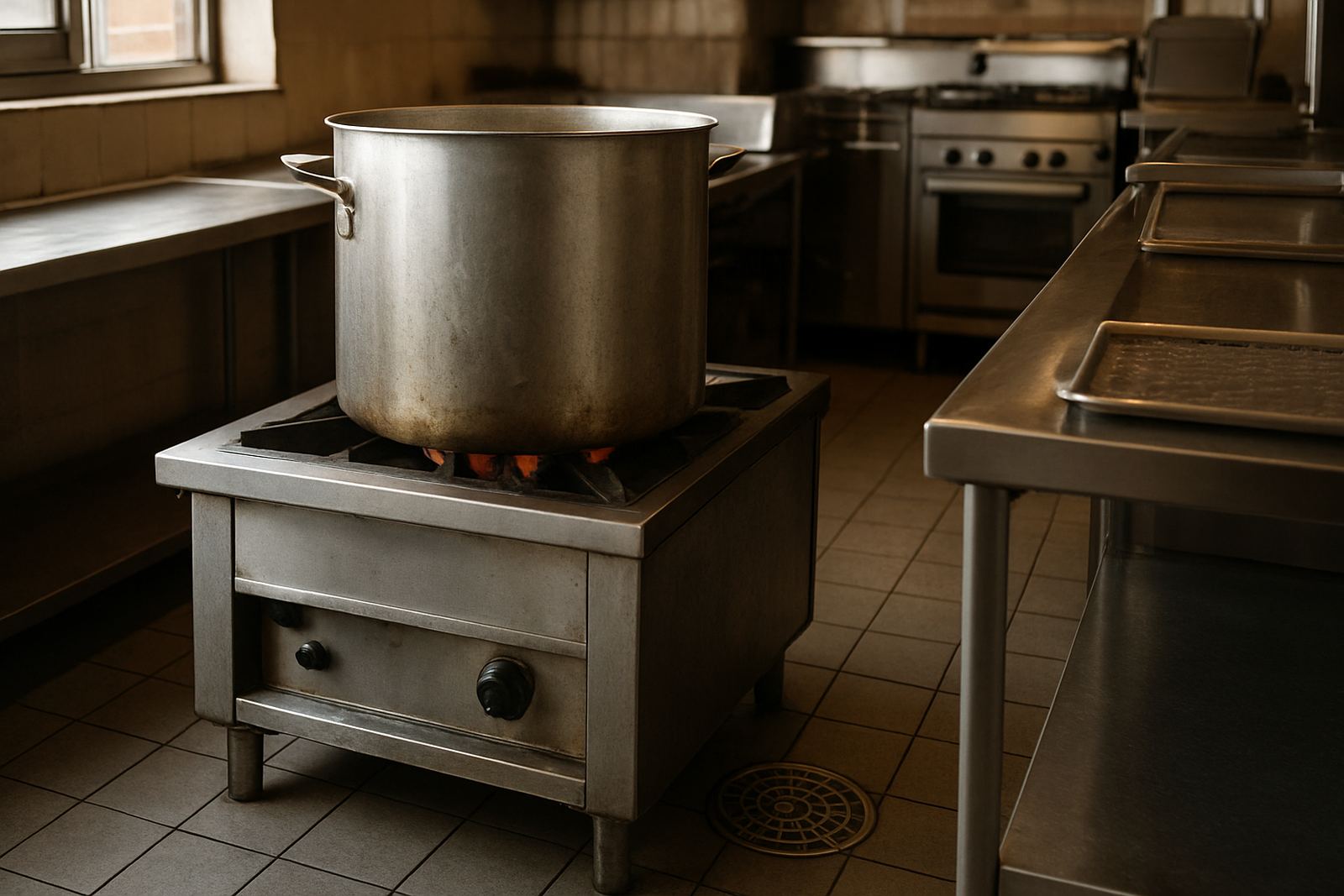
A stockpot stove is a low-profile gas unit made to hold heavy stock pots, boilers and wide cookware without wasting flame around the sides. It gives you a direct, even heat source for soup bases, stews, broth, pasta, vegetables and bulk water boiling, which makes it useful in takeaways, school kitchens, canteens and small restaurants that run long service hours.
Because the burner sits lower than a standard range, the pot is easier to lift on and off, and staff do not have to work as high over the flame. That matters when you are moving 20 litre to 80 litre pots during a lunch rush. The frame is usually built from stainless steel for daily use and easy cleaning, with strong pot supports and a burner layout suited to heavy loads.
For East Rand kitchens, the main benefit is simple: gas keeps you cooking during load-shedding and voltage drops. If your menu depends on soup, gravy or bulk boiling, this unit gives you another layer of control when power is uncertain.
Sizes and setup options for different kitchens
Stockpot stoves can be supplied in compact single-burner forms or as larger multi-burner units for higher output. The right size depends on your pot diameter, the number of batches you cook per day, and how much floor space you can spare. In Benoni and surrounding industrial areas, many buyers need a unit that fits against a wall but still leaves room for cleaning and safe movement.
- Single-burner units for smaller prep areas or one-pot operation
- Two or more burners for stew lines, canteens and high-volume boiling
- Stainless frames for indoor kitchens and wet cleaning areas
- Raised pot supports to suit larger stock pots and cooking drums
- Custom widths where the stove must fit beside a prep table or servery counter
We can also supply a layout that matches your existing workflow. If you are working with a narrow kitchen, it helps to measure the clear space, not just the wall size. Allow enough space for the pot handle, gas hose route and cleaning access behind the unit.
Where a stockpot stove fits best
This type of stove suits kitchens that cook in batches rather than plate by plate. You will see it used in takeaways, butcheries, caterers, buffet kitchens, institutional kitchens and food prep rooms where large volumes are part of the day. It is also handy for tea kitchens and production areas that make sauces, fillings, soup, porridge or pre-cooked ingredients.
In humid coastal conditions the finish and joints matter, but around the East Rand the bigger issue is daily wear from scrubbing, steam and grease. Stainless steel gives better life in that environment if it is wiped down properly and not left with acidic residue overnight. A well-built unit also helps where municipal inspectors want tidy, easy-to-clean surfaces and clear separation around gas equipment.
- Takeaways making soups, gravy and bulk chips-water heating
- Caterers needing fast boiling between functions
- Schools and feeding schemes cooking large batches safely
- Restaurants that rely on stock and sauce production every day
Gas, ventilation and installation needs
A stockpot stove normally runs on LPG gas, so you need a proper gas bottle setup or a piped system designed by a competent installer. The burner output, regulator size and hose routing must suit the unit you order. If you are replacing an old stove, do not assume the existing line is correct for a new burner size because the demand can change quite a bit.
Good ventilation is important. These stoves should be placed under an extractor canopy where heat, steam and combustion gases can be removed properly. If the stove sits near a wall, there should still be enough clearance for safe use, maintenance and cleaning. On sites in Germiston or Boksburg where kitchen space is tight, we often advise site measuring first so the unit, gas point and canopy line up properly.
There is no electrical demand for the stove itself unless your setup includes ignition or nearby equipment. That makes it useful during power cuts, but the gas system still needs to be checked, secured and kept away from traffic areas. A loose bottle or kinked hose creates avoidable risk.
Care that keeps the unit working day after day
Daily care is straightforward, but it should be consistent. Wipe away spills while the unit is still warm enough to clean, then wash down grease before it hardens on the frame. Burners should be kept clear of food residue and soot so flame spread stays even. If one side starts burning yellow or weak, the burner may need cleaning or service attention.
The cooking surface and support points should not be overloaded beyond the pot size the frame was built for. Heavy pots can warp supports over time if staff drag them across the stove instead of lifting them. In busy kitchens, that small habit makes a big difference to life span.
- Check gas connections for wear and secure fittings weekly
- Keep burner ports clear of blocked food or grease
- Use a soft cloth and mild cleaner on stainless surfaces
- Book servicing if flame colour changes or ignition becomes uneven
- Do not store cloths, boxes or cleaning chemicals near open flame
Key facts
| Type | Low-profile gas stockpot stove |
|---|---|
| Construction | Stainless steel body with heavy-duty pot supports |
| Fuel | LPG gas |
| Use | Bulk boiling, stews, soups, sauces and large pots |
| Installation | Indoor use with proper ventilation and extractor support |
| Options | Single or multi-burner layouts, custom sizes available |