What A Serving Trolley Does In A Busy Kitchen
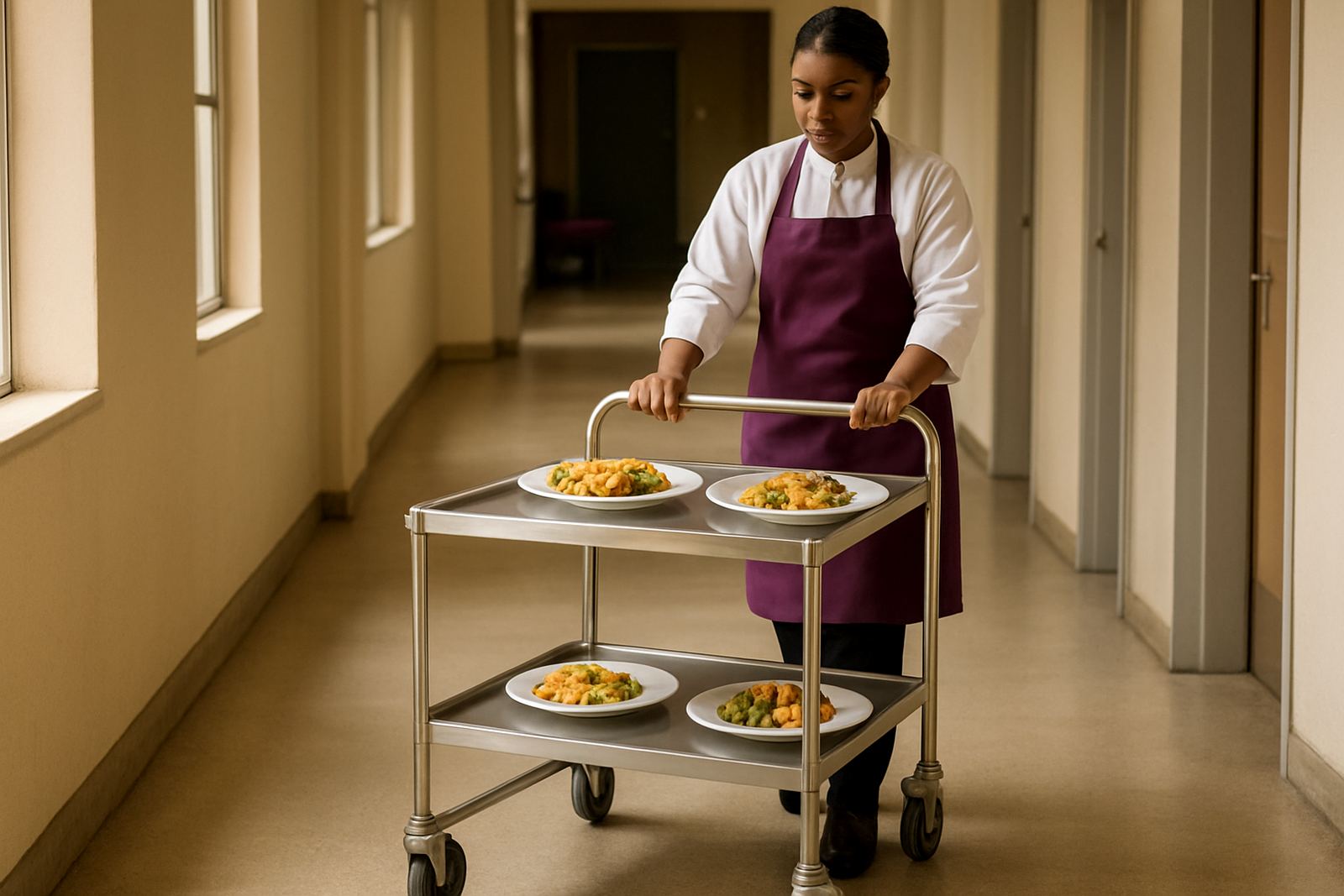
A serving trolley is a wheeled stainless unit used to move plates, trays, cutlery, hotpots and packed orders between prep, service and wash-up areas. It is also handy for clearing tables quickly after functions or moving stock around a back-of-house area where speed matters.
For Benoni kitchens, school canteens, small cafés and takeaway operations across the East Rand, the main value is simple: less carrying by hand and fewer trips across a hot or crowded floor. That saves time during lunch rush and helps reduce spills, breakages and strain on staff.
Our serving trolleys are made for daily use in commercial spaces, with stainless construction that handles moisture, cleaning chemicals and the knocks that come with service work. In humid coastal conditions or in a kitchen that runs through load-shedding with backups, stainless is the safer choice because it is easier to keep clean and less likely to rust if cared for properly.
Standard Sizes, Shelf Layouts And Handy Options
Serving trolleys are usually built to suit the space available and the kind of items being moved. A compact model works well in tight takeaway kitchens, while a wider unit suits hotels, functions and larger canteens where more trays need to move at once.
Common build options include two-tier and three-tier layouts, plain top surfaces, raised edges to help keep trays in place, and lower shelves for heavier items. Castor size and wheel type can also be matched to your floors. Smooth tiles need one type of wheel, while uneven cement or paving may need a tougher wheel setup.
- Length options: 600 mm to 1500 mm, depending on passage width and load needs
- Width options: 450 mm to 750 mm for compact or full service use
- Height options: around 800 mm to 950 mm for comfortable handling
- Shelf options: 2-tier, 3-tier, or customised tray spacing
- Edge options: flat top, upturned lip, or enclosed side rails
- Wheel options: swivel castors, braked castors, or heavy duty fixed and swivel mix
If you need a trolley for plated meals, a slightly higher lip helps. If you move crates or bulk items, an open and stronger frame is better. We can also match the trolley to other stainless furniture so the kitchen layout feels organised and consistent.
Where It Suits Best Across Benoni And The East Rand
Serving trolleys are used in more places than people think. They are useful in restaurants, takeaway prep rooms, caterers, school kitchens, staff canteens, conference venues and retirement facilities. They also work well in butchery back areas, hospital food service points and function venues where items need to move fast between rooms.
For local operators in Benoni, Boksburg, Brakpan, Springs, Kempton Park and Germiston, one of the most common uses is table clearing at busy times. Another is internal service movement, where plated food, crockery or packaged meals need to travel from prep to pass without slowing the team down.
Because the trolley stays mobile, it is also useful in sites that change layout for events or deep cleaning. A good trolley must roll straight, turn easily and stop properly when loaded. If the floor is sloped or the walkway is narrow, that should be considered at the planning stage.
Fitting It Into Your Space And Power Or Gas Needs
A serving trolley itself does not need gas or electricity, which makes it useful in load-shedding affected kitchens where movement and service must continue even when cooking equipment is limited. It is one of the simplest pieces of equipment to keep working because it only needs proper sizing, good wheels and a level route.
Installation is straightforward, but the space around it still matters. Measure doorways, service aisles, lift access if applicable, and the turning space between counters. A trolley that is too wide can slow staff down more than it helps. If the floor is uneven or the route passes thresholds, the wheel setup should be checked before ordering.
- Allow enough clearance for corners and tight pantry doors
- Check floor type, tile joints, drainage grates and threshold lips
- Choose brake wheels where the trolley will park while loading
- Confirm if the unit must fit under a counter or inside a wash-up bay
- For outdoor use, ask for corrosion-resistant detailing and sealed fittings
If the trolley will be used near hot equipment or in a dishwash area, ask for heavier gauge stainless and stronger welds. That extra strength helps in long shifts, especially where staff may be pushing the unit quickly and turning it often.
Care, Cleaning And Service Life
Stainless trolleys are easy to care for, but they still need routine cleaning. Wipe down after use, especially where sauces, salt, acidic food or cleaning chemicals may collect. If liquid is left on the frame or around the wheel mounts, marks can build up and fittings may wear sooner than expected.
A quick check each week helps: look at the castors, wheel movement, bolts, shelf alignment and any sharp edges from knocks. If a trolley starts pulling to one side, the wheel bearings or floor surface may need attention. This kind of small fault is easier to fix early than after a wheel fails during service.
In coastal areas or kitchens that see a lot of moisture, drying the trolley after wash-downs makes a big difference. Stainless lasts well, but neglect is what causes most problems. A clean, dry trolley also looks better when serving in front-of-house areas or during functions.
What To Check Before You Order
Before ordering a serving trolley, decide what it will carry and who will use it. A trolley for light plate clearing is not the same as a trolley for bulk pots, stacked trays or crates. The more exact the brief, the better the final unit will fit the job.
We usually ask clients to confirm size, shelf count, wheel type and the route the trolley must travel. If the trolley must pass through a narrow hatch or be lifted over a lip, that should be noted upfront. It is also wise to mention whether the floor is tiled, sealed concrete or rough paving, because that affects stability.
- What items will be moved most often
- How wide the doorways and serving routes are
- Whether the trolley needs brakes or a side handle
- Preferred stainless finish and edge detail
- Any height limit for storage under counters or in storerooms
- Whether the trolley will be used indoors only or in damp areas
For clients across the East Rand and national deliveries, clear measurements save time and reduce the risk of changes later. If you are unsure, our team can work from site measurements and help set the right dimensions before fabrication begins.
Key facts
| Product type | Wheeled stainless serving trolley |
|---|---|
| Typical use | Clearing, transport and internal service movement |
| Material | Stainless steel construction |
| Common sizes | 600 mm to 1500 mm length, 450 mm to 750 mm width |
| Shelf options | 2-tier, 3-tier or custom spacing |
| Wheel options | Swivel, braked or heavy duty castors |