What a Dish Landing Table Does in a Busy Wash-Up Area
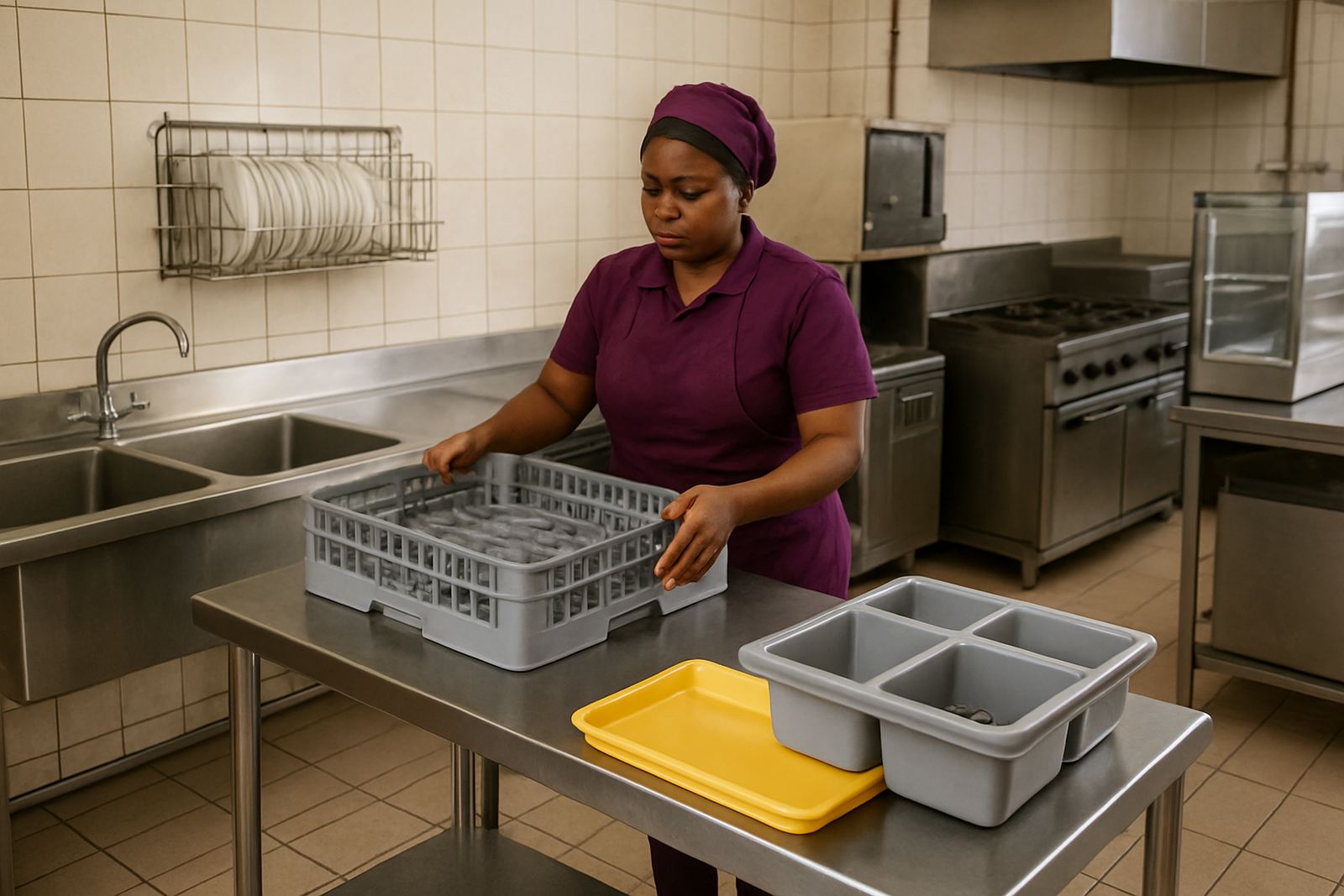
A dish landing table is a stainless support surface placed next to a sink, dishwasher or pot wash point so staff have somewhere to set down dirty returns, rinse items, and stage clean crockery before it moves back into service. In a takeaway kitchen, school canteen or restaurant back area, that extra landing space reduces pile-ups around the sink and helps one person keep the wash-up line moving without crossing paths too often.
Most clients order these tables as part of a wider prep and service layout. The top is normally flat, easy to wipe and sized to suit the adjacent machine or sink edge. If the area is near a scullery door, the table can be positioned so baskets, crates and tubs land on the dry side first, then move to the wash point. That small change often makes a real difference during lunch rushes and end-of-day close down.
- Used beside sinks, glass washers and pass-through wash points
- Useful for stacking trays, plates, baskets and cleaned items
- Helps keep wet and dry zones organised
- Can be made to match existing stainless equipment
Sizes, Gauge Options and Everyday Build Details
We build dish landing tables in practical sizes for South African kitchens, from compact units for small takeaway counters to longer tables for restaurants, butcheries and institutional wash-up areas. Common lengths are 900 mm, 1200 mm, 1500 mm and 1800 mm, with custom lengths available when you need the table to fit between a wall, sink and machine housing. Standard depth is often 600 mm or 700 mm, but wider tops can be made where there is more floor space.
The table top is usually made from stainless sheet over a braced frame for good load support. Legs can be plain, adjustable or fitted with cross bracing depending on the site and how much movement the table needs to take. On wetter sites, especially coastal or high-humidity areas, stainless is the sensible choice because it copes better with steam, splashes and regular cleaning than painted mild steel. For heavier use, we can specify a stronger top and add splash backs or upstands where needed.
- Standard top heights are typically around 850 mm to 900 mm
- Adjustable feet help on older floors that are not perfectly level
- Optional sink return lip, splash back or side upstand
- Custom cut-outs can be made for pipe runs or machine edges
Where It Suits Best in Benoni, the East Rand and Beyond
Dish landing tables are common in bakeries, hotels, school kitchens, retirement homes, butcheries and busy takeaway stores across Benoni, Boksburg, Brakpan, Springs, Kempton Park and Germiston. They are also useful in kitchens where the wash-up area sits close to the cooking line and there is little room for free-standing staging. If the site has a high daily plate count, even a short landing table can prevent a bottleneck at the sink.
For takeaway operations, the table often sits just after the rinse point so staff can sort crates and tubs before they go back to the front counter. In larger kitchens, it may sit between the pre-rinse sink and the machine so that clean items have a dry set-down point. Where municipal or landlord rules require easy cleaning around wet areas, a stainless unit is easy to maintain and keeps the scullery looking orderly enough for inspections.
- Takeaways and food counters
- Restaurant sculleries and hotel wash-up areas
- School, church and clinic kitchens
- Food prep rooms with limited floor space
Installation Checks Before the Table Is Fixed in Place
Installation is usually straightforward, but the site needs a proper check before final fitting. The floor must be level enough for the legs to sit correctly, and there should be enough clearance for doors, baskets and staff movement. If the table is joining to a sink, dishwasher or wall return, we measure the opening carefully so the landing surface does not pinch the passage or leave a gap that collects waste. On some sites a small wall flange or rear upstand helps keep water off the wall finish.
No power or gas connection is needed for the table itself, which makes it a simple addition to both new and existing kitchens. What does matter is the layout around it. If the landing table sits beside a heated unit, oven or dish machine, allow for safe working space and heat clearance. If drainage is involved, the drainage points and pipework should be checked before delivery so there is no last-minute cutting on site.
- Confirm the exact wall-to-wall or sink-to-machine opening
- Check floor level and drainage positions
- Allow enough working space for staff and trolley movement
- Plan clear access if the unit must fit through narrow doors
Care, Cleaning and Service Life in a Wet Kitchen
Stainless is easy to look after, but it still needs regular cleaning to stay in good condition. A daily wipe-down with warm water and a mild cleaner is usually enough for normal grime and water marks. In heavier use kitchens, remove food residue and detergent film at the end of each shift so the surface does not pick up staining. Drying the table after washing also helps keep it neat, especially where hard water leaves marks.
We recommend checking the legs, feet and joins during routine equipment cleaning, particularly in areas that get knocked by crates or pots. If a foot loosens or a brace works slightly out of square, it is better to fix it early before the table starts rocking. We also service and repair related stainless items such as prep tables, sinks, counter modifications and extractor supports, so a landing table can be matched to the rest of the wash-up area if anything changes later on.
- Avoid harsh scouring pads that can mark the finish
- Keep bleach use controlled and rinse after contact
- Wipe standing water off the top and legs
- Ask for re-fixing or adjustments if the floor settles
What to Confirm When Ordering a Dish Landing Table
To make the right table, we need a few simple details from the site. The most important is the exact length and depth available, followed by the height you want the landing surface to sit at. If the table must line up with an existing sink or machine, send those measurements too. It also helps to know whether the surface will hold trays, crates, heavy pots or just light dish returns, because that affects the top and support structure.
Clients should also tell us if they need a back upstand, side return, lower shelf or welded bracing. In some kitchens a plain open frame is best for cleaning, while in others a bottom shelf adds useful storage for chemical tubs or clean baskets. If the area is tight, we can also discuss rounded corners, wall clearance and access routes before fabrication starts. That way the table arrives ready for the site instead of needing last minute changes.
- Exact length, depth and working height
- Adjacent equipment sizes and opening positions
- Load type: trays, pots, baskets or mixed use
- Need for back panel, shelf, bracing or cut-outs
Key facts
| Product | Dish Landing Table |
|---|---|
| Material | Stainless steel |
| Common lengths | 900 mm, 1200 mm, 1500 mm, 1800 mm, custom |
| Common depth | 600 mm or 700 mm, custom available |
| Typical height | 850 mm to 900 mm, adjustable feet available |
| Use | Landing, staging and support beside sinks or washing machines |